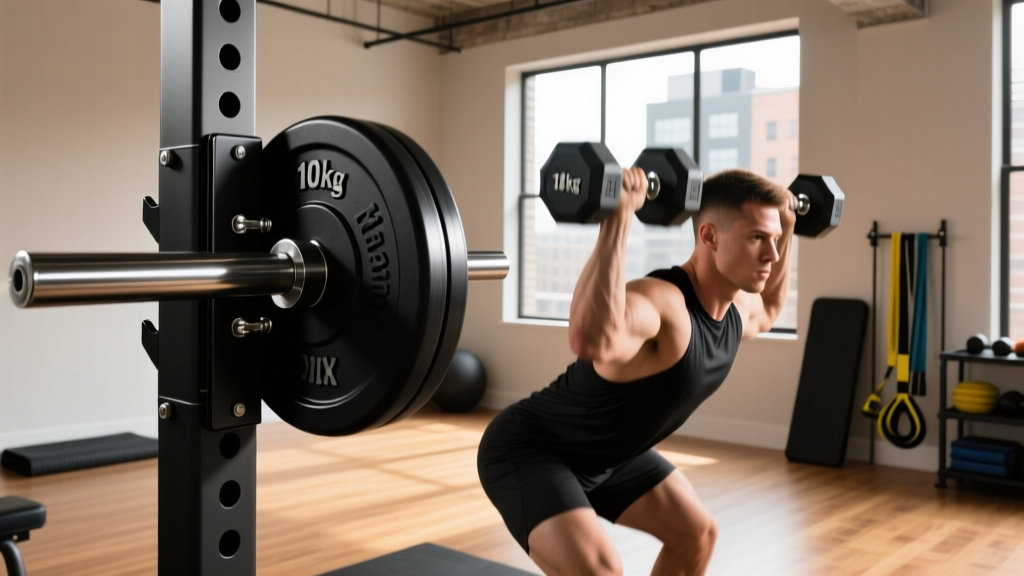
Barbell Collar Clamps & Behind the Head Dumbbell Raise Mistakes
Troubleshoot gym safety with our expert guide on barbell collar clamp failures and behind the head dumbbell raise biomechanical mistakes for 2026.

The Intersection of Equipment Failure and Joint Mechanics
In the realm of free weight training, catastrophic failures rarely happen without warning. Whether it is a 45-pound plate sliding off an unsecured barbell sleeve during a heavy eccentric, or a sudden rotator cuff impingement during an awkward isolation movement, the root cause almost always traces back to improper equipment selection or flawed biomechanics. As home gyms and commercial facilities upgrade their arsenals in 2026, understanding the micro-details of weight security and joint alignment is no longer optional—it is a prerequisite for longevity.
This troubleshooting guide bridges two seemingly disparate but equally critical aspects of free weight safety: the mechanical failure modes of barbell collar and clamp types, and the biomechanical equipment mismatches that plague the behind the head dumbbell raise. By diagnosing these specific issues, lifters can eliminate hidden variables that compromise both their hardware and their shoulders.
Barbell Collar and Clamp Types: A Troubleshooting Comparison
The Olympic barbell sleeve operates on a strict 50mm diameter standard. However, manufacturing tolerances vary wildly. A cheap import collar might measure 51.2mm internally, leaving a 1.2mm gap that allows rotational slip during dynamic movements. Conversely, competition-grade collars clamp down with zero margin for error. Below is a diagnostic comparison of the three primary collar categories found in modern gyms.
| Collar Type | Material & Build | Max Drop Tolerance | Price Range (2026) | Primary Failure Mode |
|---|---|---|---|---|
| Standard Spring Clip | Zinc-plated steel wire | Low (Static use only) | $8 - $15 | Hinge metal fatigue; loss of tension over 500+ uses |
| Ratcheting Nylon (e.g., Lock-Jaw) | Glass-filled nylon polymer | Medium (Up to 24" drops) | $22 - $28 | Polymer brittleness in cold environments (<40°F) |
| Competition Aluminum (e.g., Rogue HG 2.0) | Aircraft-grade aluminum, steel cam | High (IPF/IWF rated drops) | $35 - $65 | Rubber O-ring degradation from UV/ozone exposure |
Diagnosing Collar Slip and Barbell Sleeve Issues
If your aluminum collars are slipping despite being fully locked, the issue is rarely the collar itself. According to equipment specifications from Rogue Fitness, the internal rubber O-ring is designed to grip the steel sleeve. Over time, chalk dust, dead skin, and oxidized metal (especially on black oxide or bare steel bars) create a lubricated paste that defeats the friction seal.
⚠️ Troubleshooting Fix: Remove the collar. Scrub the barbell sleeve with a stiff nylon brush and isopropyl alcohol to remove chalk buildup. Apply a micro-thin layer of 3-in-One oil to prevent rust, then wipe it completely dry with a microfiber cloth before reattaching the collar. Never use WD-40, as it leaves a persistent slippery residue.Behind the Head Dumbbell Raise: Biomechanical & Equipment Mistakes
Transitioning from the barbell to the dumbbell rack, we encounter movements that demand extreme joint mobility and precise load management. The behind the head dumbbell raise—often utilized as a rear-deltoid and rhomboid isolation exercise where the dumbbell travels in a high arc behind the cervical spine—places the glenohumeral joint in a highly vulnerable position of extension and internal rotation.
When troubleshooting shoulder pain or grip failures during this movement, lifters often blame their mobility when the true culprit is their equipment choice and loading parameters.
Mistake 1: Ignoring Dumbbell Knurling Depth and Handle Diameter
During the behind the head dumbbell raise, the wrist is often forced into slight pronation and ulnar deviation at the peak contraction. If you are using standard rubber hex dumbbells with a shallow 1.0mm knurl and a thick 35mm handle, grip security plummets. As the rear deltoid fatigues, the lifter subconsciously over-grips, leading to medial epicondylitis (golfer's elbow).
- The Fix: Switch to urethane dumbbells with a 1.2mm to 1.5mm deep knurl pattern and a 30mm to 32mm handle diameter. Brands like Rep Fitness and Eleiko engineer their urethane lines with aggressive volcano knurling that bites into the calluses without tearing the skin, allowing for a relaxed but secure grip at extreme ranges of motion.
- Chalk Protocol: If your gym bans loose chalk, use a liquid chalk with a high magnesium carbonate-to-alcohol ratio (minimum 70% MgCO3) to ensure the sweat on your palms is neutralized before the dumbbell reaches the behind-the-head apex.
Mistake 2: Center of Mass Shifts with Bulky Hex Heads
Standard rubber hex dumbbells feature massive, bulky heads. When performing a behind the head dumbbell raise, the physical width of the rubber heads forces the lifter to alter their natural scapular tracking to avoid the dumbbells colliding with their own traps or skull. This artificial widening of the movement arc shifts the center of mass away from the joint axis, exponentially increasing shear force on the supraspinatus tendon.
Research highlighted by Stronger By Science emphasizes that managing the moment arm is critical for shoulder longevity. Urethane dumbbells, which are poured into high-density, compact molds, reduce the head width by up to 25% compared to rubber hex equivalents. This allows for a natural, unobstructed path of motion, keeping the load directly over the posterior deltoid rather than levering it outward.
Mistake 3: Scapular Dyskinesis and Load Ego
The most common biomechanical error is loading the behind the head dumbbell raise with weights suited for a chest-supported row. The rear deltoid is a small, pennate muscle. Attempting this movement with 45lb+ dumbbells almost guarantees that the lifter will use momentum, internally rotating the humerus and grinding the greater tubercle against the acromion process. For deep biomechanical mapping of shoulder impingement vectors, the ExRx.net Kinesiology Directory provides exhaustive anatomical breakdowns of why internal rotation under load compromises the subacromial space.
The Fix: Drop the weight by 60%. Use 10lb to 15lb urethane dumbbells. Focus on a 3-second eccentric phase, actively depressing the scapula (pulling the shoulder blades down into the back pockets) before initiating the raise.
2026 Troubleshooting Matrix: Symptom to Solution
Use this rapid-diagnostic matrix to identify and correct the most frequent equipment and form failures encountered in the free weight zone.
| Symptom / Failure | Root Cause (Equipment or Biomechanical) | Actionable Solution |
|---|---|---|
| Barbell plates rattle and shift during eccentrics | Spring collars lack lateral tension; barbell sleeve tolerance is undersized (e.g., 49.8mm) | Upgrade to ratcheting nylon or aluminum cam-lock collars; measure sleeve with digital calipers. |
| Nylon clamp cracks upon removal in winter | Glass-filled nylon becomes brittle below 40°F (common in unheated garage gyms) | Store nylon clamps indoors; switch to aluminum competition collars for cold environments. |
| Sharp anterior shoulder pain during behind the head raises | Bulky rubber hex dumbbell heads forcing external rotation; humerus gliding anteriorly | Switch to compact urethane dumbbells; cue scapular depression before initiating the pull. |
| Dumbbell slips from grip at peak contraction | Sweat accumulation on shallow 1.0mm knurling; handle diameter too thick (>34mm) | Use 30mm-32mm handles with deep volcano knurl; apply liquid magnesium carbonate. |
Expert Safety Protocols for the Modern Home Gym
Whether you are securing a 500-pound deadlift or isolating the rear delts with a 15-pound dumbbell, the margin for error is dictated by your respect for physics and anatomy. In 2026, there is no excuse for relying on degraded spring clips or poorly balanced rubber dumbbells. Invest in calibrated aluminum collars to protect your barbell sleeves and your shins, and audit your dumbbell rack to ensure your isolation tools feature the compact profiles and aggressive knurling required for high-risk, high-reward movements like the behind the head dumbbell raise. True strength is built on a foundation of meticulous troubleshooting and uncompromising equipment standards.
More gear to consider
All reviews
Dumbbell Exercises for Back Muscles: Loadable Dumbbell Maintenance

Bumper vs Iron Plates: Care & Tricep Workouts with Dumbbells at Home
Best Neoprene Dumbbells for a Dumbbell Only Workout Transformation
Define Dumbbell Storage: 2026 Rack Budget Breakdown

Rubber Hex vs Urethane for Your Hamstring Dumbbell Exercise
