Where to Donate Fitness Equipment & Avoid Storage Costs
Wondering where to donate fitness equipment? Compare 2026 gym storage costs against tax write-offs from donating heavy sports gear to local charities.

If your home gym is overflowing or your commercial facility is upgrading, figuring out where to donate fitness equipment is often more complicated than dropping off a bag of clothes at a local thrift store. Heavy, motorized, or specialized sports gear presents unique logistical challenges, and many gym owners mistakenly choose to stash their idle machines in self-storage units rather than navigate the donation process. However, when you run the math on 2026 commercial storage rates versus the tangible tax benefits of charitable contributions, the financial argument for liquidating or donating your idle gear becomes undeniable.
This guide breaks down the exact costs of storing heavy gym equipment, identifies the specific organizations that actually accept large fitness machines, and provides a step-by-step framework for preparing your gear for tax-deductible donation.
The True Cost of Gym Equipment Storage in 2026
Before deciding to lock your idle gear in a storage unit, you must calculate the physical footprint and the environmental requirements of the equipment. Fitness gear is notoriously dense and sensitive to environmental fluctuations.
- Motorized Cardio (Treadmills, Pelotons, Ellipticals): A standard commercial treadmill measures roughly 80x30 inches and weighs over 300 lbs. More importantly, the electronic consoles and internal motors are highly susceptible to humidity and temperature spikes. Storing these requires a climate-controlled unit.
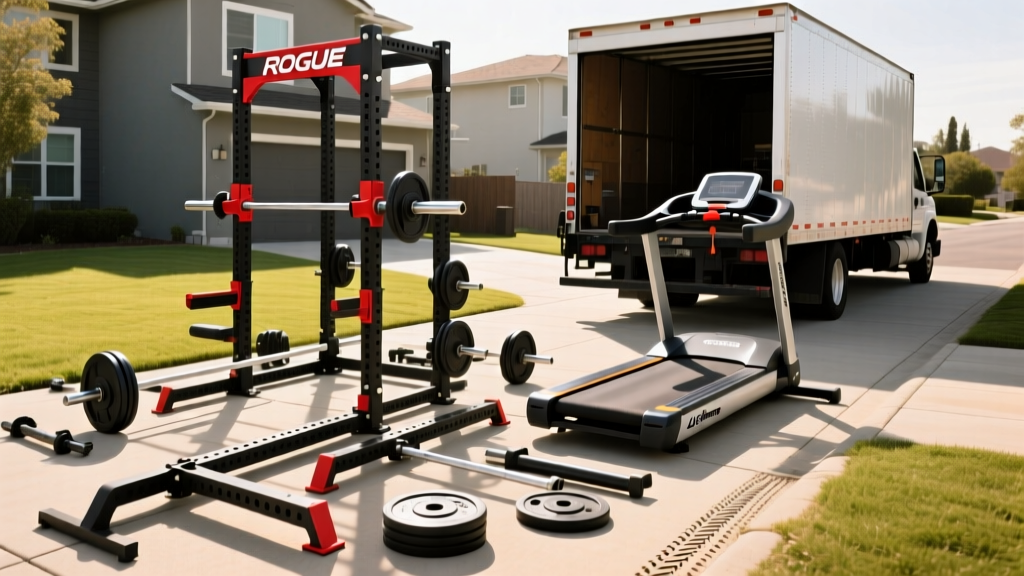
- Strength Rigs and Power Racks: A fully assembled 4-post power rack (like the Rogue RML-390F) requires a 48x48-inch footprint and 90+ inches of vertical clearance. While the steel itself won't degrade quickly, the attached pull-up bars, spotter arms, and rubber matting will warp or oxidize in non-climate-controlled environments.
- Free Weights and Plates: Urethane and rubber-coated bumper plates will off-gas and degrade if subjected to the extreme heat of a standard outdoor storage shed or non-climate-controlled unit.
According to 2026 self-storage market data, the national average for a 10x15 climate-controlled unit—roughly the minimum space required to store a full multi-station home gym or a small commercial circuit—is $2.45 per square foot. This translates to approximately $367 per month, or $4,404 annually. If you are storing equipment that has depreciated to a fair market value of $3,000, you are spending more on storage in a single year than the equipment is actually worth.
Where to Donate Fitness Equipment: Approved Charities and Programs
When researching where to donate fitness equipment, you will quickly find that mainstream thrift stores like Goodwill or The Salvation Army have strict limitations. They will gladly accept yoga mats, resistance bands, and light neoprene dumbbells, but they routinely reject heavy motorized equipment and large steel rigs due to liability, testing requirements, and lack of freight transport.
To offload heavy gear, you need to target specialized sports charities, municipal programs, and niche non-profits.
1. Leveling the Playing Field
Leveling the Playing Field is a premier non-profit that collects sports and fitness equipment to distribute to children in underserved communities. They have regional drop-off centers and frequently partner with local gyms to clear out upgraded inventory. They are an excellent destination for functional fitness gear, kettlebells, plyometric boxes, and agility equipment.
2. Local YMCAs and Boys & Girls Clubs
Independent chapters of the YMCA and Boys & Girls Clubs often operate on tight municipal budgets and rely heavily on in-kind donations to outfit their teen fitness centers. Reach out directly to the facility director (not the general front desk) to inquire about their current equipment needs. They are often equipped to accept commercial-grade strength machines and free weights, provided the gear is in safe, working condition.
3. University and High School Title IX Programs
Many collegiate and high school athletic departments are actively expanding their women's strength and conditioning facilities to meet Title IX equity requirements. Donating specialized gear, such as women's Olympic barbells, specific dumbbell increments, or specialized conditioning sleds, can be highly impactful. Contact the university's athletic compliance office or the head strength coach directly.
4. Adaptive Sports Organizations
Organizations supporting Paralympic athletes and adaptive sports leagues are frequently in need of specialized fitness equipment, including adjustable cable machines, recumbent bikes, and grip-adapted free weights. Donating to these organizations often yields high community impact and excellent local PR for commercial gym owners.

Storage Costs vs. Tax Deductions: The Financial Breakdown
The best answer to where to donate fitness equipment depends heavily on your financial goals. Donating to a registered 501(c)(3) non-profit allows you to claim a tax deduction based on the Fair Market Value (FMV) of the gear, not the original purchase price. The IRS outlines strict guidelines for valuing donated property in IRS Publication 561.
Below is a comparative breakdown of holding a $5,000 commercial home gym setup in storage versus donating it in the current tax year.
| Financial Metric | 12-Month Climate Storage | Charitable Donation (FMV) |
|---|---|---|
| Out-of-Pocket Cost | $4,404 (Storage Fees) | $350 (Freight / Dismantling) |
| Equipment Value Retained | $3,500 (Depreciated FMV) | $0 (Asset Transferred) |
| Tax Deduction Benefit | $0 | $3,500 (Assuming 24% bracket = $840 saved) |
| Net Financial Impact | -$4,404 (Cash Drain) | +$490 (Net Positive after freight) |
Note: If the total claimed FMV of your donated fitness equipment exceeds $5,000, the IRS requires a qualified written appraisal and the completion of Form 8283, Section B.
Step-by-Step Guide to Preparing Heavy Gear for Donation
Charities rarely have the manpower to dismantle a bolted-down power rack or disconnect a 220V treadmill. To ensure your donation is accepted, you must deliver the equipment in a 'ready-to-move' state.
- Deep Clean and Sanitize: Wipe down all upholstery with a commercial-grade disinfectant. Remove chalk dust from knurling on barbells and vacuum out the motor hood of any treadmills or ellipticals to prevent overheating during the charity's initial test.
- Partial Dismantling: Remove all removable weights, safety spotter arms, and accessory attachments. For motorized cardio equipment, detach the console and handrails if possible, and wrap the electronic components in anti-static bubble wrap.
- Consolidate Hardware: Place all bolts, washers, and specialized hex keys into a heavy-duty ziplock bag. Tape this bag securely to the main frame of the machine. Missing hardware is the number one reason charities reject heavy equipment donations.
- Document the Condition: Take high-resolution photos and a brief video of the equipment in working order before dismantling. This protects you during the FMV valuation process and provides the receiving charity with proof of functionality.
- Arrange Specialized Freight: If the charity does not offer a box truck for pickup, hire specialized fitness equipment movers (such as Gym Guys or local TaskRabbit professionals with appliance dollies) to transport the gear. Standard junk removal services will often damage the equipment or simply scrap it, voiding your tax deduction.
FAQ: Donating and Storing Sports Equipment
Can I get a tax write-off for donating heavy gym equipment?
Yes, provided you donate to a qualified 501(c)(3) organization and itemize your deductions. You must calculate the Fair Market Value (FMV)—what a willing buyer would pay for the used equipment today. Keep a detailed receipt from the charity, including a description of the items and a statement confirming no goods or services were exchanged.
Will charities pick up large fitness equipment from my home?
Most mainstream thrift stores will not pick up items weighing over 100 lbs. However, specialized sports charities, local municipal recreation centers, and adaptive sports non-profits often have volunteer teams or box trucks available for scheduled freight pickups, especially if you are donating a large volume of gear.
Is it better to sell or donate my used home gym gear?
It depends on your timeline and tax situation. Selling on platforms like Facebook Marketplace or specialized fitness forums yields immediate cash but requires dealing with lowball offers, stranger pickups, and potential liability if a buyer is injured moving a 400lb machine. Donating provides a hands-off removal process, a guaranteed tax deduction, and supports community health initiatives.
What should I do with broken or obsolete fitness equipment?
Charities cannot accept broken equipment. If your gear is non-functional, look for commercial gym equipment liquidators or specialized e-waste and scrap metal recyclers. Many commercial fitness repair shops will haul away broken treadmills or cable machines for free to harvest the OEM parts, alternators, and weight stacks.
How do I prove the value of used commercial gym machines to the IRS?
For individual items valued under $5,000, you can use comparable sales on eBay, specialized used fitness equipment dealer sites, or industry depreciation schedules. For a single item or a grouped batch of equipment valued over $5,000, you are legally required to hire a certified appraiser who specializes in commercial fitness assets to generate a formal valuation report.
More gear to consider
All reviews
Setup Alternatives to Head: Practical, Field-Tested Options for Tennis Racket Customization

Panel Care and Maintenance: A Technician’s Field-Tested Protocol for Sports Surfaces

How to Maintain Fitness Tracker Battery Life and Sensor Accuracy

How to Maintain Fitness Tracker Batteries and Optical Sensors

Equipment Equip Cardio Essentials: Maintenance Protocols, Calibration Standards, and Longevity Best Practices
