
Horizontal vs Vertical Barbell Storage Rack & Dumbbell Tree Rack Care
Compare horizontal vs vertical barbell storage rack impacts on bearing life, plus essential 2026 maintenance tips to extend your dumbbell tree rack longevity.

The Physics of Free Weight Storage: Why Orientation Matters
When designing a home gym in 2026, most lifters obsess over the concentric and eccentric phases of their training but completely neglect the physics of how their equipment rests between sessions. Storage is not merely an organizational afterthought; it is a critical variable in equipment longevity. The orientation of your barbells and the structural integrity of your secondary storage solutions directly dictate the lifespan of expensive bearings, bushings, and knurling. Understanding the mechanical differences between a horizontal vs vertical barbell storage rack, alongside rigorous maintenance for your dumbbell tree rack, will save you hundreds of dollars in premature equipment replacement.
Horizontal vs Vertical Barbell Storage Rack: A Biomechanical Breakdown
The debate between horizontal and vertical barbell storage is often framed around floor space, but from a maintenance perspective, it is entirely about gravity's effect on internal sleeve components. Modern Olympic barbells—whether they utilize high-end needle bearings like the Eleiko OP or durable bronze bushings like the Rogue Ohio Power Bar—rely on a precise distribution of internal lubricants.
Horizontal Storage: The Engineering Ideal
A horizontal barbell storage rack (such as the Rogue Monster Utility Barbell Holder or the Titan Fitness 3-Bar Horizontal Rack, typically priced between $85 and $160) supports the barbell at two points: the shaft and the sleeve. This orientation mimics the bar's natural state during use. Gravity pulls the bar evenly downward, keeping the internal grease or oil uniformly distributed across the bearing surface. Furthermore, premium horizontal racks feature UHMW (Ultra-High Molecular Weight) polyethylene liners on the cradles. This plastic barrier prevents steel-on-steel contact, protecting the bar's zinc or cerakote finish from micro-abrasions that lead to oxidation.
Vertical Storage: Space-Saver or Bearing Killer?
Vertical barbell storage racks (like the Rogue Vertical Barbell Holder, ~$145) are undeniably efficient for tight garage gyms, storing up to six bars in a 2-square-foot footprint. However, they introduce a severe long-term maintenance liability: oil migration. When a barbell is stored vertically for extended periods (30+ days), gravity causes the internal lubricants to pool at the bottom of the sleeve. The top bearing or bushing is left relatively dry. When you eventually load the bar and perform high-velocity Olympic lifts, the dry top bearing experiences extreme friction, leading to premature wear, sleeve seizing, and a 'gritty' spin feel.
⚠️ Expert Warning: If you must use a vertical storage rack due to space constraints, you must rotate your barbells. Pull the vertical bars out and perform 10-15 rapid, unloaded spins every two weeks to redistribute the internal grease across the needle bearings. According to BarBend's barbell maintenance guidelines, failing to redistribute lubricants in vertically stored bars can reduce bearing lifespan by up to 40%.Storage Impact Comparison Matrix
| Component | Horizontal Rack Impact | Vertical Rack Impact | Maintenance Action Required |
|---|---|---|---|
| Needle Bearings | Optimal; even lubricant distribution | Poor; oil pools at bottom sleeve | Spin vertical bars bi-weekly |
| Bronze Bushings | Excellent; low lateral stress | Moderate; bottom bushing takes full bar weight | Re-grease annually with white lithium |
| Knurling | Protected (if UHMW lined) | Exposed to humidity/dust accumulation | Brush and oil vertical bars monthly |
| Shaft Straightness | Neutral (supported evenly) | Neutral (resting on base plate) | None required |
Dumbbell Tree Rack Longevity: Structural and Material Care
While barbells get the spotlight, the humble dumbbell tree rack is the workhorse of the free-weight zone. Unlike a 3-tier A-frame rack that distributes weight across a wide base, a traditional dumbbell tree rack features a single central steel post with protruding cradles. This design creates massive sheer forces and a high center of gravity, making structural maintenance non-negotiable.
The Base Plate and Central Post Sheer Forces
When you load a 5-tier dumbbell tree rack with 150 lbs of urethane hex dumbbells, the leverage exerted on the central post's base weld is immense. Over time, the repeated lifting and replacing of dumbbells creates micro-vibrations that loosen the base plate hardware. If your tree rack is bolted to the floor, the concrete anchors can experience pull-out fatigue. If it is freestanding, the carriage bolts connecting the base plate to the post will gradually back out.
🔧 The 90-Day Torque Routine: Every 90 days, use a calibrated torque wrench on your dumbbell tree rack base bolts. For standard M10 or M12 Grade 8 carriage bolts, tighten to 65–85 ft-lbs. Do not overtighten, as this can strip the threads in the welded nutsert inside the post. Apply a single drop of medium-strength blue threadlocker (Loctite 243) to the threads during your annual deep-maintenance to prevent vibration-loosening.Urethane vs. Rubber: Environmental Degradation on the Tree
The materials resting on your dumbbell tree rack also dictate how you maintain the cradles. Premium CPU (Cast Polyurethane) dumbbells are highly resistant to tearing but are surprisingly vulnerable to UV degradation and extreme humidity, which can break down the ester bonds in the polyurethane, leading to a sticky, weeping surface. Conversely, cheap rubber dumbbells off-gas volatile organic compounds (VOCs) that can actually degrade the powder coating on your tree rack's steel cradles over time.
To protect both the dumbbells and the rack, the Titan Fitness equipment care guide and other industry experts recommend keeping your storage area climate-controlled. Wipe down the tree rack cradles with a pH-neutral cleaner (like Simple Green diluted 10:1) every month to remove acidic sweat residue and rubber off-gassing buildup that causes rust beneath the powder coat.
2026 Integrated Storage Maintenance Framework
To systematize the care of your horizontal racks, vertical holders, and dumbbell tree racks, implement this quarterly maintenance calendar:
- Week 1 (Inspection): Check all UHMW plastic liners on horizontal barbell racks. If the plastic is worn down to the steel bracket, order replacement liners immediately to prevent knurling destruction.
- Week 2 (Hardware): Torque all base bolts on freestanding dumbbell tree racks and vertical barbell holders to 75 ft-lbs. Inspect welds at the base of vertical posts for hairline fractures (a common failure point in budget imported racks).
- Week 3 (Lubrication): Remove all barbells from storage. Wipe down the shafts with a wire brush and apply a light coat of 3-in-One oil or mineral oil. For vertical storage, perform the bi-weekly sleeve spin routine to redistribute internal greases.
- Week 4 (Environment): Wipe down all steel storage cradles with a pH-neutral cleaner. Inspect rubber/urethane dumbbells stored on the tree rack for signs of UV weeping or drying, treating them with a UV-protectant like 303 Aerospace if they are near a garage window.
Frequently Asked Questions (FAQ)
Can I store my barbells vertically if I only use them once a week?
Yes, but with caveats. If the barbell is only stored vertically for 5-7 days between sessions, the internal oil migration is minimal. However, you should still perform 10 rapid sleeve spins before loading the bar to ensure the top bushing is lubricated. For long-term storage (months), horizontal is strictly required.
Why is my dumbbell tree rack wobbling even though the bolts are tight?
If the hardware is torqued correctly but the rack still wobbles, the issue is likely floor unevenness or a warped base plate. Budget dumbbell tree racks often feature thin 11-gauge steel base plates that bend under heavy asymmetric loading. Place heavy-duty rubber horse-stall mats under the base to level the footprint, or upgrade to a rack with a 3/16-inch thick base plate and structural gussets.
Do I need to oil the cradles of my dumbbell tree rack?
No. The cradles are typically finished with electrostatic powder coating. Oiling them will only attract dust, chalk, and dirt, creating an abrasive paste that will scratch your dumbbell handles. Keep them clean and dry using a microfiber cloth and a mild degreaser.
More gear to consider
All reviews
IKEA Home Gym Storage: Dumbbell Racks & Organizer Hacks (2026)

Best Small Weight Rack for Home Gym: 2026 Space-Saving Guide

Kettlebell Storage Solutions vs Wall Mounted Dumbbell Storage
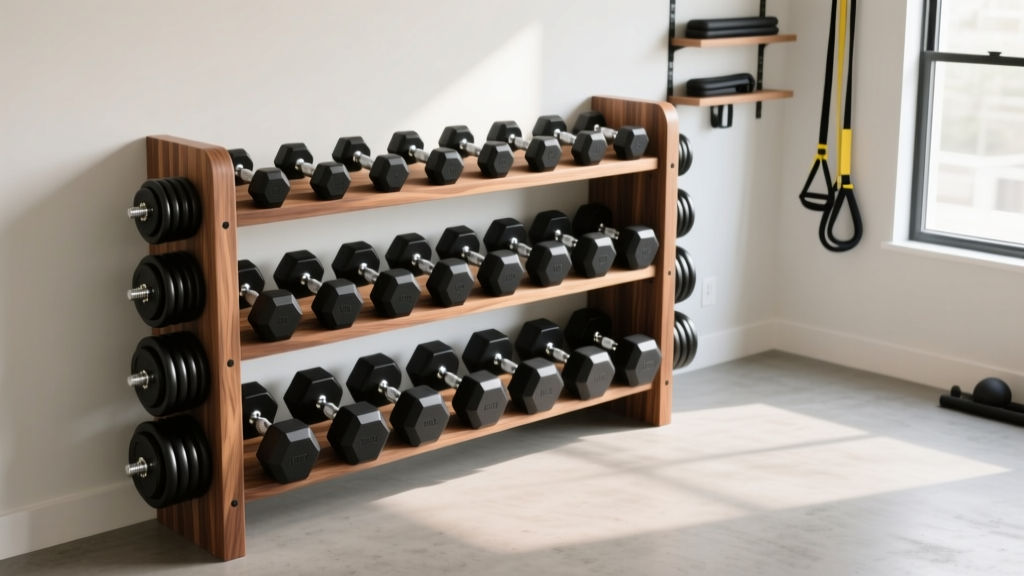
Wood Dumbbell Rack Setup: Complete Installation Walkthrough

2026 Storage Trends: Skull Crushers Dumbbell Standing & Band Gear
