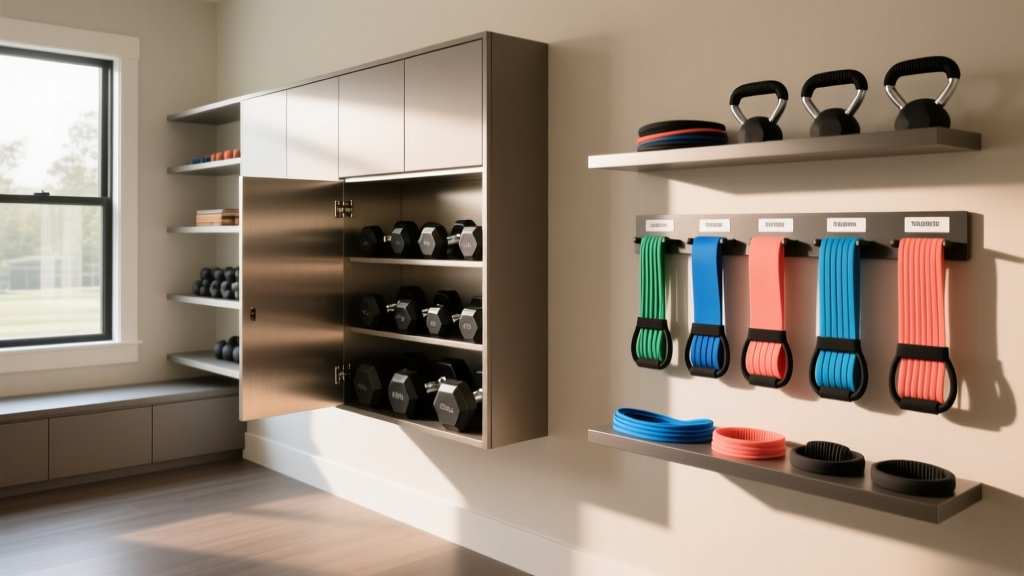
Beyond Hidden Dumbbell Storage: Resistance Band Organization
Master space optimization with our guide to resistance band organization and hidden dumbbell storage. Discover layout hacks for small home gyms.

The Spatial Dilemma: Weights vs. Elastomers
When designing a high-functioning home gym, most lifters obsess over rigid equipment. Achieving seamless hidden dumbbell storage often involves custom under-bench drawers or flush-mounted floor racks. But while iron and steel are easy to conceal, resistance bands present a completely different spatial and organizational challenge. They are awkward, prone to tangling, and highly susceptible to environmental degradation if shoved into a dark, poorly ventilated bin.
As of 2026, the shift toward compact, multi-use home gyms means that every square foot of wall and floor space must be optimized. According to layout design principles endorsed by the American Council on Exercise (ACE), proper equipment organization isn't just about aesthetics; it directly impacts workout flow, safety, and equipment longevity. This guide bridges the gap between heavy weight concealment and smart, accessible resistance band organization.
'A well-organized gym space reduces transition time between exercises by up to 22%, keeping heart rates in the target zone and minimizing the cognitive friction of searching for gear.' — Home Gym Layout & Ergonomics Report, 2025
The Science of Elastomer Degradation (Why Storage Matters)
Before hanging your bands, you must understand the material science of what you are storing. Most premium loop bands are made from natural latex, while newer 2026 market entrants increasingly use Thermoplastic Elastomer (TPE). Both materials have specific failure modes related to storage:
1. The Ozone Threat
Electric motors—like those found in treadmills, rowers, and smart bikes—generate trace amounts of ozone during operation. Ozone aggressively attacks the double carbon bonds in natural latex, causing micro-fissures that lead to catastrophic snapping under load. Rule: Never store latex bands within 6 feet of heavy electronic fitness equipment.
2. UV and Thermal Breakdown
Direct sunlight and heat sources (like nearby radiators or HVAC vents) accelerate polymer chain breakdown. Bands stored in direct UV light lose up to 40% of their tensile strength within 12 months.
3. Tension Memory
Storing 41-inch standard loop bands folded tightly in half or clipped under sustained tension creates 'memory creases.' These creases become weak points. Proper hanging storage requires a minimum of 22 inches of vertical clearance to allow the band to rest in its natural, relaxed teardrop shape.
Market Analysis: Commercial vs. DIY Storage Solutions
When integrating band storage into your layout, you have three primary avenues: rack-mounted, wall-mounted, or freestanding. Below is a 2026 market comparison of the most effective solutions.
| Storage System | Type | Dimensions (W x H x D) | Est. Price | Best Application |
|---|---|---|---|---|
| Rogue Monster Band Hanger | Rack-Attach | 6' x 3' x 2' | $35.00 | Existing 3x3' power rack uprights |
| Serious Steel Wall Rack | Wall-Mount | 24' x 4' x 3.5' | $49.99 | Dedicated wall space, high-capacity |
| DIY Masonite Pegboard | Custom Wall | 48' x 24' (Variable) | ~$45.00 | Mixed accessories (bands, belts, straps) |
| Freestanding Valet Stand | Floor | 18' x 60' x 18' | $129.00 | Renters / No-drill environments |
For those utilizing a power rack, the Rogue Fitness Monster Band Hanger remains the gold standard, utilizing existing upright hole spacing to keep bands off the floor without consuming additional wall real estate. However, for standalone layouts, wall-mounted solutions maximize the 'Triangle of Accessibility'—keeping bands within arm's reach of your primary lifting zone.
The Dual-Purpose Layout: Combining Concealed Weights and Bands
Space optimization in small home gyms requires furniture that serves multiple purposes. If you are already planning hidden dumbbell storage, you can easily integrate resistance band organization into the same footprint using a custom DIY storage ottoman or bench.
Blueprint: The Dual-Zone Storage Bench
Footprint: 48' Long x 18' Deep x 18' High
- Interior Base (Hidden Dumbbell Storage): Build a reinforced 3/4' birch plywood box with internal dividers. This lower compartment houses up to three pairs of heavy hex dumbbells (up to 50 lbs each), keeping the center of gravity low and the floor visually clear.
- Interior Lid (Band Organization): Mount 1.5' wooden dowels or heavy-duty steel pegs on the inside of the bench lid. When you open the bench to grab your dumbbells, your 41' loop bands are displayed on the underside of the lid, completely hidden when closed but instantly accessible when open.
- Hardware: Use heavy-duty 4' brass piano hinges (available at The Home Depot) to support the lid and the hanging weight of 10+ thick resistance bands.
This dual-zone approach perfectly marries the clean, minimalist aesthetic of hidden weight storage with the functional necessity of hanging elastomers, utilizing a single 6-square-foot footprint.
Categorization Strategy: Color-Coding and Tension Grading
Organization is useless without intuitive categorization. In the heat of a workout, you shouldn't have to guess the resistance level of a band. Standardize your storage layout by grouping bands by tension and color. Most major manufacturers follow this industry-standard color code for 41-inch loop bands:
- Yellow / Thin (1/4' width): 10-35 lbs (Mobility, stretching, physical therapy)
- Red / Medium (1/2' width): 30-60 lbs (Bicep curls, tricep pushdowns, light pull-up assistance)
- Black / Heavy (1-1/8' width): 50-120 lbs (Squat/bench accommodating resistance, heavy pull-up assistance)
- Purple / Extra Heavy (1-3/4' width): 80-200 lbs (Advanced powerlifting accommodating resistance)
- Green / Monster (2-1/2' width): 120-275 lbs (Deadlift accommodating resistance, strongman training)
Layout Tip: Arrange your wall pegs or rack hangers in ascending order of thickness from left to right. This mimics the logical progression of a traditional dumbbell rack, allowing your brain to automatically select the correct band without reading printed text.
Edge Cases: Tube Bands, Mini-Bands, and Mobility Floss
While 41-inch loop bands require vertical hanging, other elastomer types require different spatial solutions to prevent failure and clutter.
Tube Bands with Carabiners
Tube bands with plastic or metal carabiners should never be hung by the carabiner gate, as sustained gravity can warp the gate spring over time. Instead, use a multi-pronged bungee caddy or store them coiled in a dedicated acrylic drawer bin. Ensure the carabiners are unclipped from the handles during storage to prevent accidental tensioning.
Mini-Bands and Glute Loops
These small, high-tension bands are notorious for getting lost. Dedicate a small, wall-mounted acrylic mail sorter or a divided desk drawer (mounted under your storage bench) specifically for mini-bands. Sort them by tension in vertical slots. Fabric glute loops can be rolled and stored in a breathable mesh bag hung on a standard wall hook to prevent moisture buildup and odor.
Maintenance and Lifespan Extension Protocol
Proper storage must be paired with routine maintenance. To maximize the lifespan of your resistance bands in a home gym environment, implement this bi-annual protocol:
- Clean: Wipe down natural latex bands with a damp microfiber cloth and a mild, non-toxic soap. Avoid harsh chemical cleaners or alcohol-based wipes, which strip the natural oils from the latex.
- Condition: Apply a light coating of 100% pure silicone spray to natural latex bands. This restores surface lubrication, prevents the bands from sticking to themselves, and creates a microscopic barrier against ambient ozone and moisture. (Note: Do not use silicone spray on TPE or fabric bands).
- Inspect: Stretch each band to 2x its resting length and inspect the edges for micro-tears, discoloration, or a 'chalky' residue. If any of these are present, immediately retire the band to prevent snap-back injuries.
Summary: Designing for Flow and Longevity
Optimizing your home gym layout requires looking beyond the iron. While securing hidden dumbbell storage keeps your floors clear and your space visually appealing, implementing a dedicated, scientifically sound resistance band organization system ensures your elastomers remain safe, accessible, and structurally intact. By leveraging dual-purpose furniture, respecting the environmental vulnerabilities of latex and TPE, and categorizing by tension, you create a training environment that supports your fitness goals without compromising your living space.
More gear to consider
All reviews
Step-by-Step Guide to Organizing with a Neoprene Dumbbell Rack

DIY Wooden Dumbbell Rack & Band Storage: Budget Breakdown

Home Gym Weight Storage: Dumbbell Rack Setup & Installation Guide
Best Homegym Storage For Breakdown: Gear Racks, Cabinets, and Layouts That Survive Heavy Use

Kettlebell Storage vs Rogue 3 Tier Dumbbell Rack: Which Wins?
