Cap Barbell A-Frame Dumbbell Rack vs Kettlebell Racks: 2026 Guide
We compare the Cap Barbell A-Frame dumbbell rack against dedicated kettlebell storage solutions to find the safest, most space-efficient option for 2026.

When outfitting a home gym on a budget, the Cap Barbell A-Frame Dumbbell Rack is often the first storage solution added to the cart. It is affordable, compact, and does a decent job holding hex dumbbells. However, as fitness trends shift and more athletes incorporate ballistic movements into their routines, a common dilemma emerges: Can this popular A-frame double as a kettlebell rack? Many buyers search for the cap barbell a frame dumbbell rack hoping it serves as a universal storage solution for all their free weights.
In this head-to-head comparison, we are putting the Cap Barbell A-Frame Dumbbell Rack (specifically the widely used Model FMIS-150) up against dedicated kettlebell storage solutions and racks. We will examine the physics, failure modes, ergonomics, and real-world pricing to determine which storage system actually deserves a spot on your gym floor in 2026.
The Storage Dilemma: Dumbbell A-Frames vs. Kettlebell Physics
Dumbbells and kettlebells may both be free weights, but their geometries dictate entirely different storage requirements. Hexagonal or round dumbbells feature a flat, stable base and a centralized center of gravity. Kettlebells, conversely, are essentially cannonballs with a thick, offset handle.
When you place a kettlebell on a shelf, the spherical bell rests on the surface while the handle arches upward and outward. This creates a cantilever effect. If the shelf depth is insufficient, a significant portion of the kettlebell's mass hangs over the edge, shifting the center of gravity forward. On a lightweight, narrow-footprint A-frame rack, this forward shift creates a severe tipping moment.
⚠️ Safety Warning: According to equipment testing by Garage Gym Labs, using shallow-tiered dumbbell racks for heavy kettlebells (16kg and above) is a leading cause of home gym storage tip-overs, posing a crushing hazard to children and pets.Contender Profiles: Cap Barbell FMIS-150 vs. Dedicated KB Racks
1. Cap Barbell A-Frame Dumbbell Rack (Model FMIS-150)
The FMIS-150 is a staple in budget home gyms. Constructed from tubular steel, it features a three-tier A-frame design intended to hold up to 200 pounds of dumbbells.
- Price: $45 - $60
- Footprint: 18” x 18” (Base)
- Tier Depth: ~4.5 inches
- Material: Lightweight tubular steel with plastic end caps
2. Dedicated Kettlebell Racks (e.g., Rogue Fitness Kettlebell Rack)
Purpose-built kettlebell racks, such as the Rogue Fitness Kettlebell Rack, are engineered specifically for the offset weight distribution of kettlebells. They feature wide, flat shelves and a heavily weighted, extended base.
- Price: $165 - $225
- Footprint: 31” x 17” (Base)
- Tier Depth: 8 - 10 inches
- Material: 11-gauge or 7-gauge heavy-duty steel
Head-to-Head Specification Matrix
| Feature | Cap Barbell A-Frame (FMIS-150) | Rogue Kettlebell Rack | Rep Fitness KB Rack |
|---|---|---|---|
| Primary Intended Use | Hex/Round Dumbbells | Kettlebells | Kettlebells |
| Max Weight Capacity | ~200 lbs | 600+ lbs | 400+ lbs |
| Shelf Depth | 4.5 inches | 9 inches | 8.5 inches |
| Steel Gauge | Thin Tubular (Approx 18ga) | 11-Gauge | 14-Gauge |
| Kettlebell Stability | Poor (High Tip Risk) | Excellent | Very Good |
Failure Modes: Why the Cap Barbell A-Frame Dumbbell Rack Struggles
To understand why the Cap Barbell A-Frame dumbbell rack fails as a kettlebell storage solution, we have to look at the exact dimensions of standard competition and cast-iron kettlebells.
The Cantilever and Tipping Moment
A standard 16kg (35 lb) cast-iron kettlebell has a bell diameter of approximately 8.5 inches. The tier depth on the Cap Barbell FMIS-150 is only 4.5 inches. This means that when the kettlebell is placed on the rack, over 50% of the bell's mass is悬空 (cantilevered) off the front edge.
Because the A-frame has a narrow 18x18 inch base and is constructed from lightweight tubular steel, the rack itself weighs less than 15 pounds. Placing just two 16kg kettlebells on the top tier shifts the combined center of gravity outside the base of support. The rack will tip forward the moment you bump it, or worse, when you are lifting a weight off the tier and apply slight upward rotational force.
Handle Clearance and Tier Height
Kettlebell handles are tall. A standard 24kg kettlebell stands about 11.5 inches tall from the base of the bell to the top of the handle. The vertical clearance between the tiers on the Cap Barbell A-Frame is roughly 8 to 9 inches. If you attempt to store kettlebells on the bottom tier, the handles will strike the tier above them, forcing you to lay the kettlebells on their sides. Storing kettlebells on their sides is highly discouraged, as they can easily roll off the shallow 4.5-inch ledge and drop onto your feet.
"Attempting to force spherical, offset-handled weights onto shallow, lightweight A-frames is a biomechanical mismatch. The storage equipment must resist the forward sheer force generated by the kettlebell's overhanging mass." — Home Gym Facility Safety Guidelines
Ergonomics and Biomechanics of Kettlebell Retrieval
Beyond safety, dedicated kettlebell storage solutions win heavily on ergonomics. Kettlebell training relies on the hip hinge. Picking up a heavy kettlebell (like a 24kg or 32kg) requires you to hinge at the hips, grip the handle, and engage your lats before initiating the pull.
Dedicated kettlebell racks, like those from Rogue or Rep Fitness, space their tiers specifically to allow your hand to slide through the handle while your forearm remains vertical, maintaining a neutral wrist and proper lat engagement. The Cap Barbell A-Frame forces you into awkward, asymmetrical twisting motions to navigate the steep A-frame angles and shallow shelves, increasing the risk of lumbar shear and wrist impingement before your workout even begins.
Top Dedicated Kettlebell Storage Solutions for 2026
If you are retiring the idea of using a dumbbell A-frame for your kettlebells, here are the best dedicated storage solutions available this year:
- Rogue Fitness Kettlebell Rack: The gold standard for commercial and serious home gyms. Built from 11-gauge steel with a massive footprint that completely eliminates tipping. The 9-inch shelf depth easily accommodates even the widest 48kg 'Big Dog' kettlebells. (Price: ~$195)
- Rep Fitness Kettlebell Rack: A highly competitive alternative to Rogue, offering a slightly more budget-friendly price point without sacrificing the crucial 8.5-inch shelf depth required for safe KB storage. Features a bolt-together design that is incredibly rigid. (Price: ~$130)
- Wall-Mounted Kettlebell Shelves: For home gyms with limited floor space, heavy-duty wall-mounted brackets (capable of holding 300+ lbs into wooden studs or masonry) keep the floor clear and the weights at an ergonomic hip-hinge height. Brands like Franklin Sports and custom Etsy fabricators offer excellent 2-tier wall solutions. (Price: $80 - $150)
Final Verdict: Which Should You Buy?
The Cap Barbell A-Frame Dumbbell Rack remains an excellent, budget-friendly choice for its intended purpose: holding pairs of hex dumbbells up to 50 pounds each. Its tier depth and weight distribution are perfectly matched for flat-bottomed dumbbells.
However, as a kettlebell storage solution, it is a dangerous mismatch. The shallow 4.5-inch tiers, lightweight tubular frame, and narrow base footprint create an unacceptable tipping hazard when paired with the offset center of gravity inherent to kettlebells.
The Bottom Line: Do not compromise on floor safety. Keep the Cap Barbell A-Frame for your dumbbells, and invest in a dedicated, flat-shelved kettlebell rack from Rogue, Rep Fitness, or a heavy-duty wall-mounted system to store your kettlebells safely and ergonomically in 2026.
More gear to consider
All reviews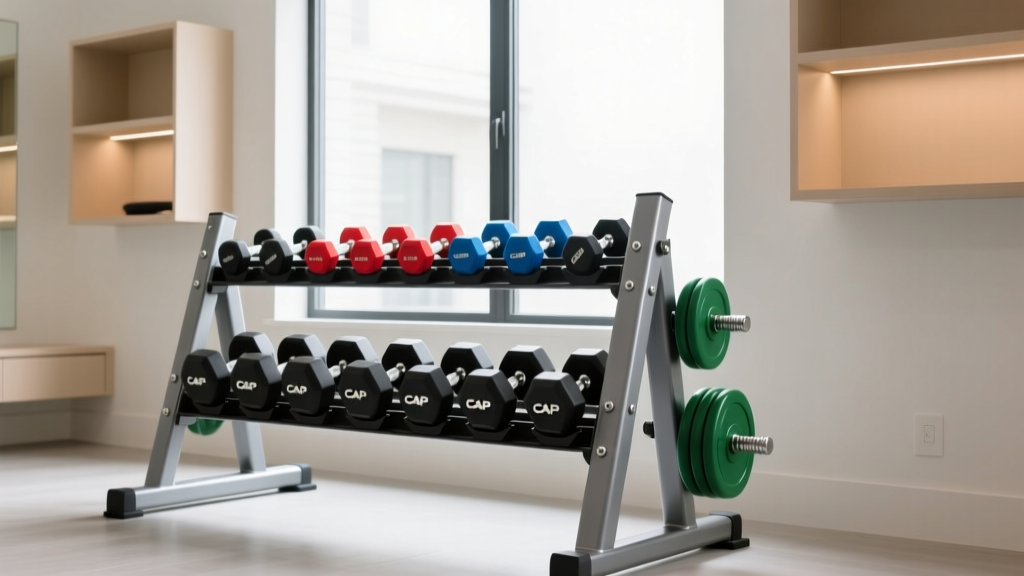
Cap Dumbbell Rack Troubleshooting: Fix Common Storage Mistakes

Horizontal vs Vertical Barbell Racks & Cybex Dumbbell Rack Review
Space Optimization: Resistance Bands & The Home Gym Storage Bench

The Ultimate Gym Dumbbell Rack Setup and Installation Guide

How To Repair Normatec: A Practical, Step-by-Step Guide for Home Gym Owners