
Ethos Dumbbell Rack Troubleshooting: Fix Common Storage Mistakes
Troubleshoot your Rogue Ethos dumbbell rack setup. Fix common assembly, weight distribution, and clearance mistakes to protect your home gym investment.

Investing in a premium storage solution like the Rogue Ethos dumbbell rack is a major step toward organizing a high-end home gym. Built from 11-gauge steel and featuring 3x3-inch uprights, the Ethos line is engineered for heavy-duty abuse. However, even the most robust equipment storage and organizer solutions can fail if they are assembled incorrectly, loaded improperly, or placed in a poorly measured footprint. As of 2026, the 3-tier Ethos configuration retails between $495 and $595 depending on the weight tier, making it a significant investment that demands proper setup.
Whether you are dealing with a wobbling base, scratched UHMW plastic liners, or awkward lifting ergonomics, this troubleshooting guide will help you diagnose and fix the most common mistakes home gym owners make with their dumbbell storage racks.
The Physics of Loading: Weight Distribution Errors
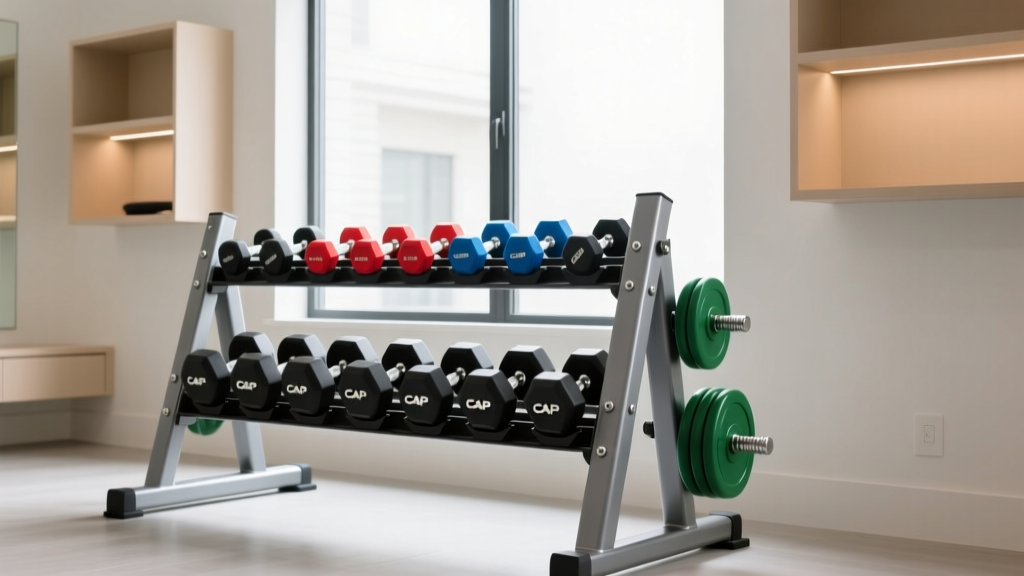
The most frequent mistake users make with multi-tier dumbbell organizers is ignoring the center of gravity. The Ethos 3-Tier rack features a wide, gusseted base designed to prevent tipping, but it is not immune to the laws of physics. Loading your heaviest pairs (e.g., 80lb to 100lb dumbbells) on the top tier while leaving the bottom tier empty creates a dangerous top-heavy load.
WARNING: Tipping HazardIf you place 100lb+ dumbbells on the top tier of an unbolted 3-tier rack, the center of gravity shifts upward. When you pull a heavy dumbbell off the top shelf, the lateral force can cause the rack to rock or tip forward, especially on slick rubber flooring.
The Fix: Always load your dumbbells in a pyramid or inverted pyramid structure based on the rack's specific tier design. For the standard 3-tier Ethos rack, the heaviest dumbbells (50lbs and above) must go on the bottom tier. Medium weights (25lb-45lb) belong on the middle tier, and light weights (5lb-20lb) go on the top. This keeps the center of gravity low and anchors the 11-gauge steel frame to the floor.
Assembly Troubleshooting: Wobbles, Squeaks, and Misalignment
A common complaint on fitness forums is a 'wobbly' or 'squeaking' rack after a few months of use. This is rarely a manufacturing defect; it is almost always an assembly or flooring issue. Garage floors and basement concrete pads are rarely perfectly level, which causes one of the four rubber feet to hover slightly off the ground.
Step-by-Step Base Leveling and Torque Protocol
- Identify the Gap: Load the rack with at least 100lbs of total weight to settle the frame. Use a feeler gauge or a simple piece of paper to find which rubber foot is not making full contact with the floor.
- Shim the Base: Do not bend the steel baseplate. Instead, use high-density rubber shims (cut from spare horse stall mats or specialized leveling pads) under the hovering foot until the paper test creates equal friction on all four corners.
- Check the UHMW Liners: Ensure the ultra-high-molecular-weight polyethylene (UHMW) protective liners are fully seated in the shelf brackets before tightening the shelf bolts. If a liner is pinched, it will warp and cause the shelf to sit unevenly.
- Apply Proper Torque: Using a calibrated torque wrench, tighten all 5/8-inch carriage bolts to 65-75 ft-lbs. Hand-tightening or using an impact driver without a torque limiter leads to loosening over time due to the vibration of dropping dumbbells nearby.
Ergonomic Clearance and Space Planning
When mapping out home gym equipment storage, many lifters measure the physical footprint of the rack but forget to measure the 'sweep arc' required to safely lift and return the weights. According to OSHA's guidelines on manual material handling, improper reach and twisting while lifting heavy loads from storage significantly increases the risk of lumbar and shoulder injuries.
If your Ethos rack is shoved into a tight corner, you will inevitably scrape your knuckles against the wall or adjacent power rack when maneuvering a 100lb hex dumbbell.
| Ethos Rack Spec | Physical Dimensions | Required Clearance Footprint |
|---|---|---|
| 3-Tier Width | 35.0 inches | 59 inches (adds 12" lateral sweep per side) |
| 3-Tier Depth | 33.0 inches | 57 inches (adds 24" frontal lifting stance) |
| 3-Tier Height | 47.0 inches | N/A (ensure no low-hanging shelves above) |
The Fix: Always maintain a minimum of 24 inches of clear, unobstructed floor space directly in front of the rack. This allows you to step into a proper hip-hinge position to lift heavy dumbbells off the bottom tier without rounding your lower back.
UHMW Liner Maintenance and Edge Cases
The Ethos dumbbell rack utilizes UHMW plastic liners on the shelves to protect both the steel rack and the knurled handles of your dumbbells. A common mistake is treating these liners as indestructible. While UHMW is highly impact-resistant, it is susceptible to deep gouging if you slide knurled steel handles horizontally across the shelf rather than lifting and placing them vertically.
"Deep gouges in your UHMW liners don't just look bad; they create friction points that will eventually strip the knurling off your expensive urethane or rubber-coated dumbbells over time."
Troubleshooting Gouges: If your liners develop deep ruts, you do not need to replace the entire shelf. You can carefully sand the UHMW surface with 220-grit sandpaper to smooth out the burrs. If a liner cracks or breaks entirely, refer to the Rogue Fitness Ethos specifications and support portal to order replacement UHMW strips, which are typically held in place by flush-mount hardware or heavy-duty industrial adhesive, depending on the exact production year of your unit.
System Expansion: Compatibility and Integration Mistakes
The Ethos ecosystem is modular, but users often buy incompatible add-ons. Because the Ethos line uses standard 3x3-inch uprights with 5/8-inch holes, many assume it is universally compatible with all 3x3 attachments on the market. This is a critical error.
- The Hole Spacing Issue: While the uprights are 3x3, the hole spacing on the Ethos dumbbell rack is optimized for shelf brackets, not necessarily for standard J-cups or spotter arms. Attempting to force third-party attachments into misaligned holes can strip the steel.
- The Weight Capacity of Add-ons: If you attach a kettlebell bell-horn or a band-peg attachment to the side of the Ethos uprights, remember that the base footprint was engineered for the specific load distribution of dumbbells. Adding 150lbs of kettlebells to one side of the rack will create a lateral imbalance.
Quick Troubleshooting FAQ
Q: My rubber feet are leaving black scuff marks on my epoxy garage floor. How do I stop this?
A: This is caused by micro-movements during weight loading. Place a 4x4 inch square of 3/4-inch thick horse stall mat under each foot. This provides a sacrificial, non-marking barrier that absorbs vibration and protects your floor finish.
Q: Can I bolt the Ethos rack to a wooden subfloor in my upstairs apartment?
A: Yes, but you must use structural lag screws (minimum 3/8-inch diameter, 3-inch length) driven directly into the floor joists, not just the plywood subfloor. Use a stud finder to locate the joists beneath your rubber gym flooring before drilling.
By avoiding these common setup, loading, and maintenance mistakes, your dumbbell storage rack will remain a safe, stable, and aesthetically pleasing centerpiece of your home gym for decades.
More gear to consider
All reviews
Barbell Rack Horizontal vs Vertical & Dumbbell Storage Cart 2026

Resistance Band Storage & VTX Dumbbell Rack: 2026 Budget Breakdown
Cap Dumbbell Rack Troubleshooting: Fix Common Storage Mistakes

Kettlebell Storage vs Rogue 3 Tier Dumbbell Rack: Which Wins?

Beyond Basic Dumbbell Storage Ideas: Step-by-Step Kettlebell Rack Guide
