Weight Selection Guide: Space Layouts & Home Gym Equipment Recall News
Learn how much weight you need for your space-optimized home gym. We cover storage layouts, loading math, and navigating home gym equipment recall news.

The Space vs. Safety Dilemma in Weight Selection
Designing a home gym in 2026 requires balancing two often conflicting goals: maximizing your lifting capacity and minimizing your floor plan footprint. When determining how much weight you need, the immediate follow-up question is always, where will I put it? A standard 300-pound iron plate collection requires dedicated vertical or horizontal storage racks, consuming valuable square footage in a garage or basement.
To solve this spatial puzzle, many lifters pivot toward compact, space-saving alternatives like adjustable dumbbells, loadable dumbbell handles, or wall-mounted folding power racks. However, this is where space optimization collides with structural safety. Over the past few years, home gym equipment recall news has frequently highlighted mechanical failures in compact gear—from shattering plastic dials on adjustable weights to shear-pin failures on folding squat racks. This guide will walk you through exactly how much weight you need, how to layout your space efficiently, and how to purchase compact gear without compromising your safety.
Calculating Your Baseline: How Much Weight You Actually Need
Before optimizing your layout, you must establish your baseline weight requirements based on your current strength level and 5-year progression goals. According to the ExRx Strength Standards, an intermediate 180-pound male should target a 245-pound squat and a 285-pound deadlift.
When calculating plate loads, remember that a standard Olympic barbell weighs 45 lbs, and standard bumper plate sleeves can only hold about 3 to 4 plates per side depending on the plate thickness.
| Lifter Profile | Target Max Load | Required Plates (Pairs) | Estimated Storage Footprint |
|---|---|---|---|
| Beginner (Year 1) | 155 - 225 lbs | 1x45, 1x25, 1x10, 1x5 | 2 sq ft (Vertical Tree) |
| Intermediate (Year 2-3) | 275 - 365 lbs | 3x45, 1x25, 1x10, 1x5 | 4 sq ft (A-Frame Rack) |
| Advanced (Year 4+) | 405 - 500+ lbs | 5x45, 2x25, 1x10, Micros | 6+ sq ft (Heavy Duty Horns) |
The Sleeve Capacity Problem
If you are an advanced lifter needing 405 lbs on the bar, you will load four 45-lb bumper plates per side. Standard urethane or rubber bumpers are roughly 3.25 inches wide. Four plates equal 13 inches, plus the collar. If you buy thicker, recycled rubber 'Hi-Temp' bumpers (which can be up to 4 inches wide per 45-lb plate), you will physically run out of sleeve space before you reach your target weight. Space optimization isn't just about floor plans; it's about barbell geometry.
Space-Optimized Weight Storage Layouts
For a standard 10x10 foot (100 sq ft) home gym, every inch matters. Here are the strict clearance measurements required for safe weight storage and movement:
- Behind the Rack: Leave 18 to 24 inches between the back of your power rack uprights and the wall. This allows you to mount wall-based plate storage and provides enough room to physically slide plates on and off the barbell without hitting drywall.
- Lateral Clearance: You need 48 inches of clear space on the left and right of the barbell sleeves to safely unload plates.
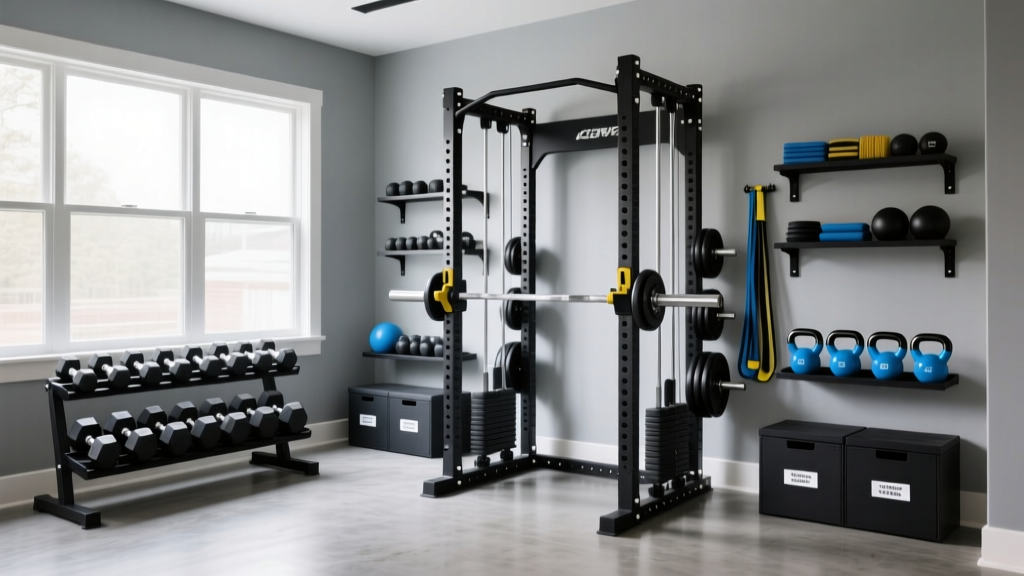
- Dumbbell Zone: If using fixed dumbbells up to 50 lbs, a 3-tier dumbbell rack requires an 8-square-foot footprint. Place this against a side wall, at least 36 inches away from the lifting platform to prevent tripping hazards.
Navigating Home Gym Equipment Recall News for Compact Gear
When lifters realize they lack the 8 square feet required for a traditional dumbbell rack or a massive A-frame plate tree, they turn to compact alternatives. This is where staying informed about home gym equipment recall news becomes a critical safety protocol. Compact gear relies on complex mechanical tolerances that traditional cast iron does not.
⚠️ Safety Warning: Adjustable & Folding Gear Failures
Before purchasing space-saving equipment, always cross-reference the model number with the Consumer Product Safety Commission (CPSC) recall database. Common failure modes in space-optimized gear include:
- Adjustable Dumbbell Dials: Models utilizing external plastic locking dials can crack if dropped from just 12 inches, causing the weight plates to detach mid-lift.
- Folding Wall Racks: Racks that fold flat against the wall rely on steel hinge pins and wall-mounted stringers. If installed into drywall anchors rather than structural studs, or if the hinge pins experience metal fatigue, the rack can collapse under heavy squats.
- Loadable Dumbbell Handles: Compact handles with short sleeves often use inferior spin-lock collars that can vibrate loose during dynamic movements like lunges or goblet squats.
If your space optimization strategy relies on adjustable dumbbells, prioritize models that use internal steel pin-locking mechanisms (like the Nuobell 80lb system, retailing around $450 in 2026) rather than external plastic twist-dials. For folding racks, ensure the stringer mounts require minimum 3/8-inch lag bolts driven directly into the center of wooden studs or poured concrete.
Traditional Iron vs. Adjustable: A Space & Safety Matrix
To help you decide how to allocate your budget and floor space, compare the traditional weight storage methods against their compact counterparts.
| Equipment Type | Space Footprint | Safety & Durability | Cost per Pound (Approx.) |
|---|---|---|---|
| Cast Iron Olympic Plates | High (Requires heavy-duty tree) | Indestructible; Zero mechanical failure risk. | $1.50 - $2.00 / lb |
| Urethane Bumper Plates | High (Thinner than rubber, but still bulky) | Excellent; protects floors and barbell sleeves. | $4.00 - $6.00 / lb |
| Adjustable Dumbbells (Steel Lock) | Extremely Low (1 sq ft for 5-80 lbs) | Good; safe if not dropped on hard surfaces. | $5.50 - $7.00 / lb |
| Adjustable Dumbbells (Plastic Dial) | Extremely Low (1 sq ft for 5-50 lbs) | Poor; high risk of casing/dial fracture upon impact. | $6.00 - $8.00 / lb |
Step-by-Step Layout for a 10x10 Foot Garage Gym
Here is a proven, safety-first layout for a 100-square-foot room that accommodates up to 315 lbs of barbell weight while avoiding the pitfalls of recalled compact gear.
- Anchor the Rack (Front-Center): Position a bolt-down half rack (e.g., Rogue R-3, footprint 34" x 48") in the front-center of the room. Bolt it directly into the concrete. Avoid folding racks to eliminate hinge-point failure risks.
- Install Vertical Plate Storage (On-Rack): Instead of a freestanding A-frame tree that eats up 6 square feet of walking space, purchase bolt-on plate storage horns that attach directly to the rear uprights of your half rack. This utilizes 'dead space' and keeps the center of gravity low.
- Use Loadable Handles for Accessories: Instead of buying a 500-pound set of fixed rubber dumbbells, invest in a pair of 16-inch loadable dumbbell handles (approx. $120/pair) and use your existing 10-lb and 5-lb iron change plates. This gives you up to 80-lb dumbbells while taking up the space of a single shoebox.
- Lay Interlocking Horse Stall Mats: Cover the lifting zone with 3/4-inch thick vulcanized rubber mats. If you must use adjustable dumbbells to save space, these mats will absorb the shock of a dropped weight, potentially preventing the plastic casing failures often cited in fitness equipment safety warnings.
Final Thoughts on Smart Weight Selection
Knowing how much weight you need is only the first step; engineering a space where that weight can be stored and utilized safely is the true mark of a well-planned home gym. By prioritizing structural integrity over extreme space-saving gimmicks, and by keeping a close eye on industry safety alerts, you can build a compact, heavy-duty training environment that will last a lifetime.
More gear to consider
All reviews
2026 Trends: Home Gym Decor Ideas for Ventilated Garage Setups

Home Gym Build UK: Budget Guide to Mirrors & Lighting
Compact AMP Fitness Home Gym Layouts & Foldable Solutions

Home Gym Shelving & Weight Selection: How Much Do You Really Need?

Wall Mount Home Gym Mirrors & Lighting: Tonal vs Rogue
