Body Solid G9S Home Gym: Expert Layout & Setup Guide
Master your home gym layout with our expert Body Solid G9S home gym setup guide. Learn exact clearances, flooring specs, and spatial optimization.

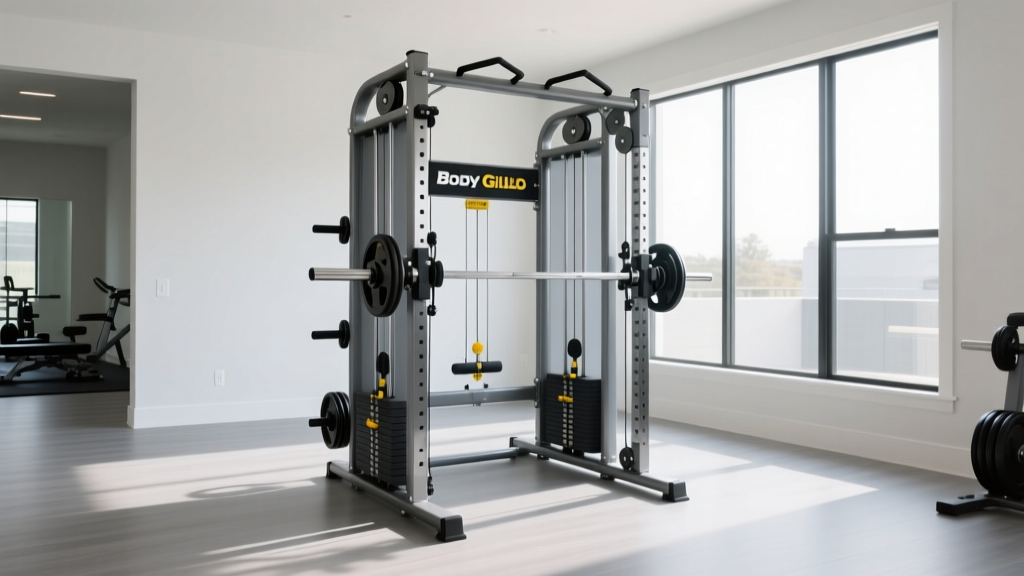
Designing a high-performance training space around a commercial-grade selectorized machine requires far more than just measuring the footprint and dropping it in the corner of your spare room. When integrating the Body Solid G9S home gym into your layout, you are dealing with a 635-pound, dual-stack behemoth that demands precise spatial planning. As a piece of equipment that rivals commercial health club staples, the G9S offers incredible versatility, but its 83-inch height and multi-vector cable paths mean that poor layout optimization will severely bottleneck your workouts and compromise safety.
In this hands-on layout guide, we break down the exact dimensional clearances, foundational requirements, and environmental controls needed to build a flawless training zone around the G9S in 2026. Whether you are retrofitting a two-car garage or converting a dedicated basement room, this blueprint ensures your equipment performs optimally and safely for years to come.
📐 Body Solid G9S Core Specifications
- Footprint: 83" L x 50" W (211 cm x 127 cm)
- Height: 83" H (211 cm)
- Machine Weight: ~635 lbs (unloaded)
- Stack Configuration: Dual 210 lb alloy steel stacks
- Minimum Ceiling Requirement: 8'0" (96")
Spatial Blueprint: Clearances and Zoning
The most common mistake home gym owners make with the Body Solid G9S home gym is pushing it flush against a wall. This machine is a multi-station hub, and according to facility design guidelines from the National Strength and Conditioning Association (NSCA), maintaining proper egress and operational clearances is critical for preventing biomechanical compensation and equipment damage. We divide the spatial planning into three distinct zones:
1. The Operator Zone (Front & Sides)
The front of the G9S houses the leg extension and leg curl pivot points. When a user is seated, their legs extend outward, and they need room to dismount. Furthermore, the dual weight stacks on the left and right sides require lateral clearance for cable inspection, stack maintenance, and attaching mid-pulley accessories.
2. The Ingress/Egress Zone (Rear)
The rear of the machine features the lat pulldown and low row station. The seat glides on a track, and users must step over the rear stabilizer bar to get into position. Cramping this space will make loading plates onto the low row bar or adjusting the thigh pad incredibly frustrating.
| Zone | Minimum Clearance | Optimal Clearance | Purpose & Edge Cases |
|---|---|---|---|
| Front (Leg Extension) | 36 inches | 48 inches | Allows full leg extension arc and easy entry/exit without hitting walls. |
| Sides (Weight Stacks) | 24 inches | 36 inches | Required for stack maintenance, cable inspection, and mid-pulley attachments. |
| Rear (Lat Pulldown) | 30 inches | 42 inches | Accommodates the sliding seat track and user ingress/egress. |
| Top (Overhead) | 12 inches | 24+ inches | Prevents head strikes during lat pulldowns and allows for overhead fan clearance. |
Flooring & Foundation: Supporting 600+ lbs of Steel
Do not underestimate the point-load physics of the Body Solid G9S home gym. At 635 pounds, the machine's weight is distributed across four primary stabilizer feet. If your flooring compresses unevenly, the frame will twist. This torsion causes the dual-stack cables to rub against the pulley housings, leading to premature fraying and a gritty, uneven resistance feel.
As noted in extensive durability testing by Garage Gym Reviews, selectorized mechanisms require a perfectly level foundation to prevent cable binding. Standard 1/2-inch EVA foam puzzle tiles are entirely insufficient; they will bottom out under the G9S's footprint.
Expert Layout Tip: If you are installing the G9S in a garage with a sloped concrete slab (typically pitched 1/4 inch per foot for water drainage), you must use heavy-duty rubber shims under the front feet to achieve a true level. Use a 24-inch machinist level across the main cross-beams to verify before tightening the final frame bolts.
The Solution: Invest in 3/4-inch thick vulcanized rubber mats with a Shore A hardness rating of 80 or higher. Horse stall mats or specialized gym flooring tiles provide the necessary density to absorb the dynamic shock of 210-pound weight stacks dropping, while protecting your concrete or subfloor from cosmetic and structural damage.
Ceiling Height & Vertical Constraints
The G9S stands at a towering 83 inches (nearly 7 feet). If you are placing this in a basement with standard 7-foot ceilings, you have a critical problem. Not only will the top pulley housing scrape the drywall, but the vibration from the weight stacks will cause ceiling dust and paint flecks to fall directly into your eyes during lat pulldowns.
For optimal layout integration, your ceiling must be a minimum of 8 feet (96 inches). This provides a 13-inch buffer, allowing for adequate air circulation, the installation of overhead LED panels, and enough physical space so you don't feel claustrophobic when standing near the machine to swap out handles.
Mirror Placement & Lighting Optimization
Strategic mirror placement is vital for form correction, especially when utilizing the G9S's mid-pulley and functional training add-ons. However, placing a massive wall mirror directly behind the lat pulldown seat is a layout error. It creates a visual distraction and limits your ability to mount the machine smoothly.
- Optimal Mirror Zones: Install shatter-resistant gym mirrors on the lateral walls, aligned with the chest press and seated row stations. This allows you to monitor shoulder retraction and spinal alignment without twisting your neck.
- Lighting Temperature: Avoid warm, yellow lighting (2700K) which casts shadows and makes it difficult to read the weight stack selector pins. Opt for 4000K to 5000K LED panel lights, positioned at a 45-degree angle to the machine to eliminate glare on the chrome guide rods.
Environmental Controls: Airflow and Dust Management
Selectorized machines are dust magnets. The exposed alloy steel guide rods on the dual 210-lb stacks require periodic lubrication, which inherently attracts airborne particulate matter. If your home gym layout places a high-velocity fan directly facing the weight stacks, you are effectively creating a sandblaster that will degrade the nylon bushings inside the stack.
Position your ventilation and oscillating fans to blow across the user's seating area, rather than directly onto the machine's mechanical housing. If your space lacks cross-ventilation, consider installing a ceiling-mounted air purifier with a HEPA filter to capture drywall dust and skin cells before they settle on the G9S's moving parts. Always verify exact dimensional tolerances and maintenance clearances against the manufacturer's current schematics available via Body-Solid.
Expert Verdict: Is the G9S Right for Your Layout?
The Body Solid G9S home gym is a phenomenal investment for serious lifters who want commercial-grade resistance training without the monthly membership fees. However, it is not a space-saving miracle. It demands a dedicated footprint of roughly 120 square feet when accounting for optimal clearances.
Pros for Spatial Integration
- Consolidation: Replaces 5-6 individual machines (squat rack, cable crossover, leg extension, lat pulldown), ultimately saving space compared to buying separate stations.
- Vertical Storage: The dual-stack design keeps the weight entirely vertical and contained, eliminating the need for sprawling dumbbell racks or plate trees.
Cons & Edge Cases
- Immovability: Once assembled and loaded, moving the G9S requires a pallet jack or a team of four people. Your initial layout must be final.
- Low Ceiling Incompatibility: Strictly disqualifies rooms with drop-ceilings or soffits lower than 90 inches.
By respecting the spatial blueprint, reinforcing your flooring, and optimizing your environmental controls, the G9S will serve as the undisputed centerpiece of your home gym for decades.
More gear to consider
All reviews
Top Home Gym Tips and Hacks for Budget Renovations

How To Repair Performance: A Home Gym Maintenance & Optimization Protocol
PRX Home Gym Remodel: Budget Breakdown & Reno Tips

Beginner Starter Kit for Your Marcy Home Gym Routine

Best Care for Longevity: Extending the Lifespan of Your Home Gym Equipment