Making the Planet Fitness Change: Home Gym Strength Setup & Care
Transitioning from Planet Fitness to a home gym? Discover how to configure your strength training setup and master essential maintenance for longevity.

The Configuration Shift: Escaping the Smith Machine
Making the Planet Fitness change to a home gym is a rite of passage for serious lifters. Commercial budget gyms serve a purpose, but their strict limitations—no free-weight barbells, a 75-pound dumbbell ceiling, and a reliance on guided Smith machines—eventually bottleneck your strength progression. When you finally take the leap into building a dedicated strength training configuration at home, the paradigm shifts entirely. You are no longer just the end-user; you are now the facility manager.
According to Mayo Clinic's guidelines on resistance training, progressive overload using free weights is fundamental for long-term musculoskeletal health and hypertrophy. To facilitate this, your home gym must be configured around a central power rack, a high-quality Olympic barbell, and calibrated plates. But unlike a commercial facility with a dedicated maintenance crew on payroll, the longevity of your home strength setup rests entirely in your hands. Improper care can turn a $2,500 equipment investment into a rusted, squeaking hazard within three years.
Space Planning and Flooring: The Foundation of Heavy Lifting
Before addressing equipment care, your physical configuration must protect both your gear and your subfloor. A standard power rack (like the Rogue SML-2 or Rep Fitness PR-4000) requires a minimum footprint of 8 feet by 8 feet to safely accommodate barbell sway and plate loading.
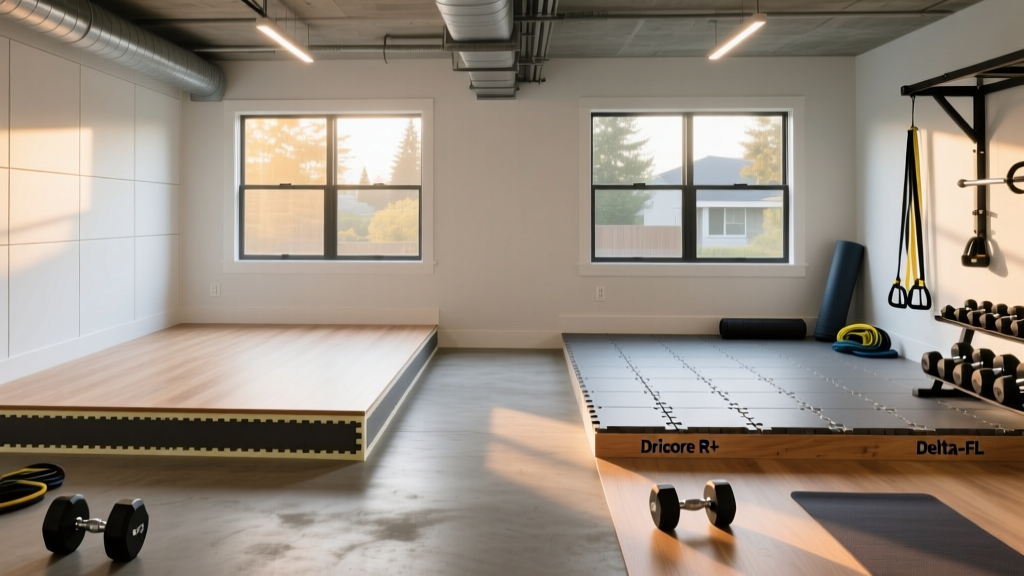
- The Flooring Mistake: Many beginners buy interlocking EVA foam tiles. These compress permanently under heavy deadlifts and squats, creating an unstable base that accelerates wear on your equipment's leveling feet.
- The Expert Solution: Invest in 3/4-inch (19mm) thick vulcanized rubber mats. Standard horse stall mats (widely available from agricultural suppliers for roughly $55 each in 2026) provide the necessary shock absorption and density to protect both your concrete slab and your bumper plates from impact degradation.
Barbell Maintenance: Protecting Your Most Touched Asset
In a commercial gym, barbells are wiped down and occasionally oiled by staff. At home, your barbell is exposed to the corrosive effects of sweat, ambient humidity, and skin oils. The maintenance protocol depends entirely on the bar's finish.
The 5-Minute Weekly Barbell Care Routine
- Brush the Knurling: After every heavy session, dead skin and chalk pack into the knurling valleys, trapping moisture. Use a stiff nylon-bristle brush to scrub the shaft. Never use a wire or brass brush on Cerakote or Zinc finishes, as this causes micro-scratches and galvanic corrosion.
- Wipe the Shaft: Use a microfiber cloth lightly dampened with isopropyl alcohol to remove sweat salts.
- Lubricate (If Applicable): Apply 3-5 drops of mineral oil or specialized barbell oil (like Rogue's 3-in-One equivalent) to the shaft, rubbing it into the knurling. Wipe off the excess.
Finish-Specific Care Matrix:
• Bare Steel: Requires weekly oiling to prevent flash rust.
• Zinc (e.g., Titan Performance Bar): Requires light monthly oiling; avoid heavy petroleum products.
• Cerakote (e.g., Rogue Ohio Bar - $325): A ceramic-polymer coating that requires zero oiling. Brushing alone is sufficient.
Power Rack Longevity: Bolts, J-Cups, and Safety Straps
Modern home gym racks are constructed from 3x3-inch 11-gauge steel. While the steel itself will outlast you, the hardware and attachments will not. The repeated eccentric loading of heavy squats and dynamic kipping movements creates micro-vibrations that slowly back out structural bolts.
Hardware Torque and UHMW Plastic Wear
Every six months, you must perform a structural audit of your rack. Using a calibrated torque wrench, check all primary M20 structural bolts. Most manufacturers recommend a torque setting between 40 Nm and 55 Nm. Over-tightening can strip the threads on welded nuts, while under-tightening leads to rack sway and metal fatigue at the weld joints.
Additionally, inspect your J-Cups and Spotter Arms. High-quality racks use UHMW (Ultra-High-Molecular-Weight) polyethylene liners where the barbell rests. This dense plastic protects your barbell's knurling from being ground down by steel brackets. However, UHMW plastic is a sacrificial wear item. After roughly 2,000 heavy squats, the plastic will groove or crack. Replace these liners immediately (typically a $15 to $25 investment) before the exposed steel bracket gouges your $300+ barbell.
Bumper Plates and Urethane: Environmental Degradation
Planet Fitness uses steel plates encased in thick, low-grade rubber that rarely sees extreme temperature shifts. If your home gym is in a garage or basement, your plates face environmental threats.
- Rubber Bumper Plates: Virgin and crumb rubber bumpers (like the Rogue Echo Bumpers) are highly susceptible to UV degradation and ozone exposure. If stored in direct sunlight or a poorly ventilated garage, the rubber will oxidize, turn chalky, and eventually crumble at the edges. Store them indoors or use UV-blocking window films.
- Urethane Plates: Premium urethane plates (e.g., Fringe Sport or Rep Fitness urethane lines, ranging from $3.50 to $5.00 per pound) are UV and moisture-resistant. However, urethane is brittle in cold temperatures. Dropping urethane plates on concrete in an unheated winter garage can cause the outer shell to shatter.
- Storage Protocol: Never leave heavy bumpers stacked on a barbell overnight. The constant downward pressure can warp the inner steel hub or cause the rubber to 'flat-spot'. Always unload the bar and store plates vertically on a weighted plate tree.
Cable Machine Tension and Pulley Lubrication
If your strength configuration includes a functional trainer or cable crossover (such as the Bells of Steel Gladiator or Rep FT-5000), you are managing a complex system of aircraft-grade cables and nylon pulleys. Commercial gyms replace frayed cables quarterly; you must monitor them monthly.
Run your fingers along the length of the steel cables. If you feel any 'snags' or broken wire strands, replace the cable immediately—a snapped cable under 100 lbs of tension can cause severe injury. Furthermore, cables naturally stretch over the first 50 hours of use. Utilize the tension-adjustment knobs located at the base of the weight stack to remove slack. For the pulleys, apply a small amount of white lithium grease to the central bearing axis every 12 months. Avoid silicone sprays, which can degrade the rubber belts found in some magnetic resistance systems.
The Home Gym Maintenance Matrix
To systematize your care routine, the American Council on Exercise (ACE) and leading equipment reviewers like those at BarBend's equipment testing facility emphasize the importance of scheduled maintenance over reactive repairs. Use this matrix to keep your strength setup pristine:
| Frequency | Equipment Target | Action Required | Tools Needed |
|---|---|---|---|
| Daily | Barbell Shaft | Brush knurling, wipe sweat | Nylon brush, microfiber cloth |
| Weekly | Upholstery (Benches) | Sanitize vinyl to prevent cracking | Mild soap, damp cloth |
| Monthly | Cable Machine Pulleys | Inspect cables for fraying, check tension | Visual inspection, tension knobs |
| Bi-Annually | Power Rack Hardware | Check and re-torque all structural bolts | Torque wrench (40-55 Nm) |
| Annually | J-Cup Liners & Pulleys | Replace worn UHMW plastic, grease bearings | White lithium grease, replacement UHMW |
Final Thoughts on Protecting Your Investment
The transition from a commercial fitness center to a home strength configuration is deeply rewarding. You gain the freedom to train with chalk, play your own music, and load a barbell well past the 75-pound limits of your old gym. By treating your equipment with the same respect you apply to your training program—utilizing proper flooring, adhering to metallurgy-specific cleaning routines, and strictly monitoring structural hardware—you ensure your home gym will safely support your strength journey for decades to come.
More gear to consider
All reviews
Outdoor Home Gyms for Renters: No-Damage Setup Mistakes

Where to Donate Fitness Equipment: Hidden Costs & Tax Breakdown

Shared Home Gym Weights Setup: A Step-by-Step Couple's Guide

Marcy Stack Home Gym Setup: Mirror Placement & Lighting Kits Compared

Bowflex Revolution Home Gym: Apartment Setup & Maintenance Guide