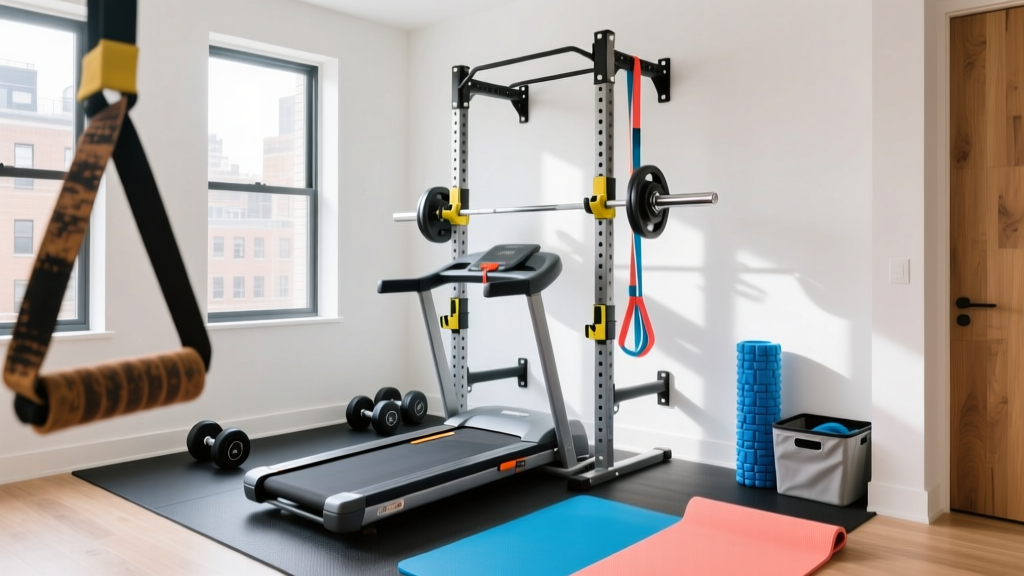
Marcy Platinum Home Gym Configuration and Care Guide
Learn how to configure and maintain your Marcy Platinum home gym for strength training. Expert tips on cable care, pulley lubrication, and longevity.

Configuring a home gym for heavy strength training requires more than just assembling parts and loading weight plates. When investing in a premium multi-station setup like the Marcy Platinum home gym series (such as the PM-5750 Smith Cage or PM-4300 Cable Crossover), the initial configuration and ongoing maintenance dictate whether your machine will last five years or twenty. The Marcy Platinum line is engineered with 11-gauge steel frames, 7x19 strand aircraft steel cables, and commercial-grade linear bearings. However, improper setup and neglected maintenance will rapidly degrade these high-end components.
This comprehensive guide bridges the gap between home gym configuration for strength training and long-term mechanical preservation. By following these precise setup protocols and maintenance schedules, you will eliminate binding, prevent cable fraying, and ensure your strength training environment remains safe and biomechanically sound.
Precision Configuration: The Foundation of Equipment Longevity
The most common failure point in selectorized home gyms is not the weight stack, but the frame geometry. A fully assembled Marcy Platinum Smith machine can weigh upwards of 550 pounds. If placed on an uneven concrete floor, the frame twists under its own static load. This micro-twist transfers directly to the Smith bar's linear bearings, causing them to bind and wear out the internal bushings within months.
Floor Leveling and Shimming Protocols
Do not rely on standard carpenter levels for gym equipment configuration. Use a 48-inch machinist level or a digital laser level to map the floor variance across the machine's footprint. If the variance exceeds 1/8th of an inch across the base rails, you must shim the frame.
- Never use wood shims: Wood compresses under dynamic strength training loads and absorbs ambient moisture, leading to uneven settling.
- Use steel or high-density UHMW plastic: Cut steel plates or ultra-high-molecular-weight polyethylene shims to fit precisely under the base pads.
- Anchor strategically: If bolting to concrete, use 3/8-inch wedge anchors. Tighten them in a star pattern to avoid pulling the frame out of its leveled plane.
The Cable and Pulley Ecosystem: Your Maintenance Core
The Marcy Platinum home gym utilizes high-tensile 7x19 strand aircraft steel cables routed through glass-filled nylon pulleys. This configuration provides a smooth 2:1 or 1:1 weight ratio essential for hypertrophy and strength training. However, cables and pulleys are the most vulnerable consumable components in your setup.
Inspection and Swage Point Integrity
Cables rarely snap in the middle of a span; they fail at the swage points (the crimped metal sleeves where the cable loops back on itself). Every 90 days, inspect the copper or aluminum swage fittings. Look for 'bird-caging'—a phenomenon where the outer wire strands push outward, away from the core. If you see this, or if individual wire strands are snapping near the crimp, the cable must be replaced immediately. As of 2026, OEM replacement cable kits for the Platinum series typically cost between $95 and $130, a minor expense compared to the risk of a mid-set failure.
Pulley Lubrication: The Polymer Rule
A frequent and costly mistake is applying petroleum-based lubricants (like standard WD-40 or 3-in-One oil) to squeaky pulleys. Petroleum distillates chemically degrade glass-filled nylon, causing micro-fractures that eventually shatter the pulley wheel under load.
"To maintain nylon pulleys and extend cable life, exclusively use a 100% silicone spray or a dedicated PTFE (Teflon) dry lubricant. Apply it to the cable itself and the pulley axle bearing, wiping away any excess to prevent dust accumulation."
— Equipment Maintenance Best Practices, National Strength and Conditioning Association (NSCA)
Routine Maintenance Matrix for Strength Training Setups
Consistency is the key to longevity. Implement this structured maintenance schedule to keep your home gym configuration optimized for heavy lifting.
| Frequency | Component | Action Required |
|---|---|---|
| Weekly | Guide Rods & Smith Bar | Wipe down with a dry microfiber cloth to remove chalk, sweat, and dust. |
| Monthly | Cables & Pulleys | Inspect for fraying; apply 100% silicone spray to cable runs and pulley axles. |
| Bi-Annually | Frame Hardware | Check all M8 and M10 bolts with a torque wrench; re-tighten to spec if settled. |
| Annually | Weight Stack Pins | Inspect magnetic or spring-loaded selector pins for bent tips or weakened springs. |
Weight Stack and Linear Bearing Optimization
The selectorized weight stack is the engine of your Marcy Platinum home gym. The stack rides on dual chrome-plated guide rods. Over time, gym chalk, dead skin, and airborne dust settle on these rods. If left uncleaned, this debris mixes with ambient humidity to form an abrasive paste that scores the chrome finish and destroys the internal UHMW bushings of the weight plates.
The Dry Lube Mandate
Never use wet oils on guide rods. Instead, clean the rods with isopropyl alcohol (90% or higher) and a lint-free cloth. Once dry, apply a light coat of PTFE dry lubricant. PTFE dries completely, leaving a microscopic, frictionless film that repels dust and chalk. This single practice will double the lifespan of your weight stack bushings.
For the Smith machine component, the linear bearings require similar care. If the barbell begins to stutter or bind during the eccentric phase of a squat, it is almost always due to debris on the guide shafts or a lack of lubrication on the bearing seals. Apply a specialized linear bearing grease (such as Super Lube Multi-Purpose Grease with Syncolon) directly to the shafts, cycling the bar up and down to distribute it evenly.
Environmental Controls and Corrosion Prevention
Where you configure your home gym drastically impacts its lifespan. Garages and basements are popular locations for strength training setups, but they are hostile environments for electrostatic powder-coated steel and chrome.
- Humidity Control: Keep the ambient relative humidity (RH) below 50%. In damp basements, run a continuous dehumidifier. High humidity causes flash rust on unprotected chrome guide rods and weight plates, sometimes within 48 hours of a heavy sweat session.
- Temperature Swings: Uninsulated garages experience massive temperature fluctuations, leading to condensation on cold steel frames. If your gym is in a garage, consider installing a mini-split HVAC system or, at minimum, use heavy-duty rubber flooring (3/4-inch thick) to create a thermal and moisture barrier between the concrete slab and the machine base.
- UV Degradation: If your setup is near a window, UV rays will degrade the vinyl upholstery on the lat pulldown and preacher curl seats, causing it to crack and peel. Apply a UV-protectant vinyl conditioner (like 303 Aerospace Protectant) quarterly, or use UV-blocking window film.
Troubleshooting Common Marcy Platinum Failure Modes
Even with meticulous care, heavy strength training configurations will experience wear. Recognizing early failure modes allows you to intervene before catastrophic damage occurs. The Consumer Product Safety Commission (CPSC) regularly advises home gym owners to halt use immediately if mechanical anomalies are detected to prevent severe injury.
Issue: Uneven Weight Stack Lift
Diagnosis: If the weight stack tilts to one side as it rises, one of the guide rods is likely bent, or the top plate's cable attachment is off-center. Solution: Remove the weight stack entirely. Roll the guide rods on a perfectly flat surface (like a granite countertop) to check for bends. If straight, inspect the top plate's cable swage to ensure it hasn't slipped, causing uneven tension.
Issue: Excessive Cable Slack at the Top of the Movement
Diagnosis: Aircraft cables stretch slightly during their first 50 hours of heavy use. This is normal, but excessive slack means the tensioner pulley has maxed out its adjustment travel. Solution: Locate the cable tension adjustment bolts (usually found near the bottom weight stack or the top idler pulleys). Tighten these evenly, a half-turn at a time, until the slack is removed but the weight stack still rests fully in the down position without the top plate hovering.
Issue: Squeaking Pulleys Under Heavy Load
Diagnosis: The sealed ball bearings inside the nylon pulleys have dried out or accumulated fine dust. Solution: Remove the pulley from the bracket. Flush the bearing with a fast-evaporating electrical contact cleaner to blow out dust, then apply a drop of light machine oil (like sewing machine oil) directly into the bearing seal. Wipe the exterior completely clean before reinstallation to prevent dust attraction.
Final Thoughts on Long-Term Strength Training Setups
Configuring a Marcy Platinum home gym for serious strength training is an investment in your physical development. By treating the initial setup as a precision mechanical installation and adhering to a strict, chemistry-aware maintenance routine, you ensure the equipment remains as safe and effective on day 1,000 as it was on day one. Protect your investment, respect the mechanical tolerances, and your home gym will support your strength goals for decades to come.
More gear to consider
All reviews
Space-Saving Body Craft Home Gym Setup for Apartments

Foldable Home Gym Cost: Compact Setup Pricing Guide
Outdoor Home Gym Setup: Weather Care & Home Gym Neon Sign Tips
Building a Gold Gym Home Gym Setup Under $500: Value Analysis