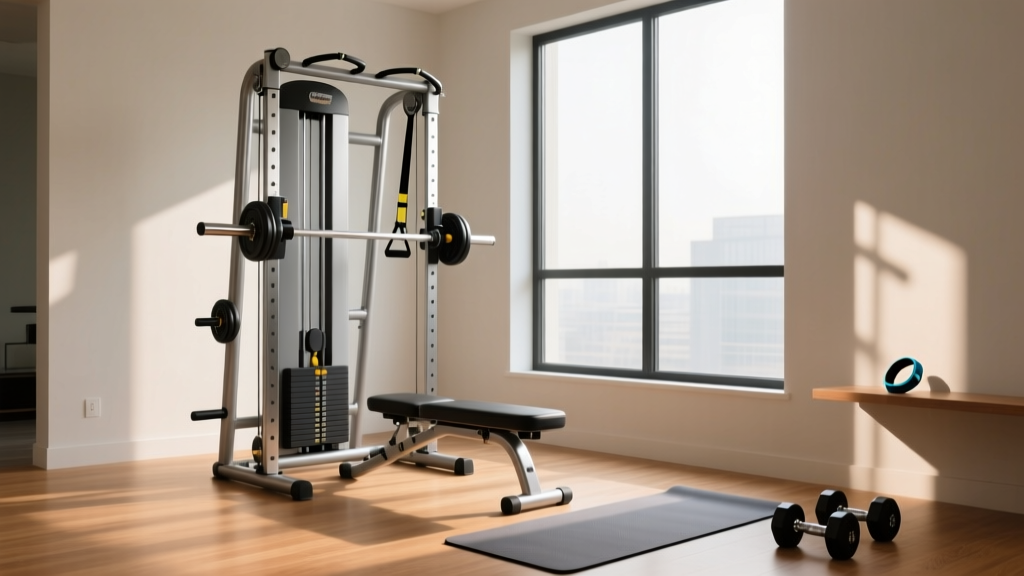
Best Foldable All-in-One Home Gym Solutions for 2026
Discover the best compact foldable all-in-one home gym solutions for 2026. Compare space-saving functional trainers, wall-mounted rigs, and smart cabinets.

The Space-Saving Revolution: Why Go Foldable?
As urban living spaces shrink and remote work permanently claims the spare bedroom, the demand for high-performance, zero-footprint fitness equipment has skyrocketed. According to the American College of Sports Medicine (ACSM) annual fitness trends report, space-efficient home fitness technology remains a top priority for consumers. The modern all-in-one home gym is no longer a massive, bolted-down power cage dominating a two-car garage. In 2026, the market is dominated by compact, foldable, and wall-mounted systems that deliver commercial-grade resistance while disappearing into the wall or folding into a sleek console when not in use.
But sacrificing square footage should never mean sacrificing structural integrity or biomechanical range of motion. This in-depth buying guide dissects the engineering, installation realities, and hidden limitations of today’s top foldable home gym solutions.
⚠️ The Dynamic Load Warning: When evaluating foldable or wall-mounted gyms, never look solely at the static weight capacity. A 200-lb lat pulldown generates upward dynamic force that can exceed 300 lbs of pull on the wall anchor points. Always verify the mounting hardware requirements before purchasing.2026 Comparison Matrix: Top Compact Foldable Systems
Below is a side-by-side breakdown of the leading compact and foldable all-in-one home gym systems available this year, categorized by their mechanical approach.
| Model | Type | Folded Depth | Max Resistance | Est. Price (2026) |
|---|---|---|---|---|
| PRx Performance Profile One | Mechanical Fold-Away Rig | 4 inches | 1,000 lbs | $3,200 - $3,800 |
| Speediance Gym Monster 2 | Smart Fold-Down Cabinet | 11.5 inches | 220 lbs (per arm) | $2,499 |
| Tonal 2 | Wall-Mounted Smart Trainer | 5.25 inches | 200 lbs (digital) | $3,995 + Sub |
| Vitruvian Trainer+ | Floor Platform (Stowable) | 3.5 inches (flat) | 440 lbs | $3,299 |
Deep Dive: Engineering and Edge Cases
1. PRx Performance Profile One: The Mechanical Heavyweight
For lifters who refuse to compromise on iron and plates, the PRx Profile One is the gold standard for foldable mechanical rigs. Utilizing a gas-strut-assisted hinge system, the entire 3x3-inch steel upright assembly folds flat against the wall, protruding just 4 inches.
- The E-E-A-T Insight: The folding mechanism relies on heavy-duty locking pins that engage automatically when the rack is raised. The failure mode to watch for here is hinge sag over time if the unit is repeatedly slammed down rather than lowered with control.
- Clearance Requirement: Requires a minimum ceiling height of 8 feet to accommodate the pull-up bar arc and standard plate loading.
- Best For: Garage conversions, basement gyms, and serious powerlifters who need Westside hole spacing (1-inch) and traditional barbell paths.
2. Speediance Gym Monster 2: The Renter-Friendly Smart Cabinet
The Speediance Gym Monster 2 represents the pinnacle of electromagnetic resistance. When active, it occupies roughly 21.5 square feet. When finished, the dual articulating arms fold down, and the main console lowers into a sleek, baseboard-like footprint.
- The E-E-A-T Insight: Electromagnetic motors generate resistance via magnetic fields, meaning there are no physical weight stacks to wear out. However, a known edge case with early-generation digital gyms was motor overheating during prolonged isometric holds (e.g., a 45-second heavy bicep curl hold). The 2026 Gym Monster 2 features upgraded liquid-cooling thermal management to mitigate this thermal throttling.
- Installation: Zero drilling required. The base is weighted and utilizes a counter-balance algorithm to prevent tipping during heavy lat pulldowns.
- Best For: Apartment dwellers, renters, and tech-forward users who want guided programming without destroying their drywall.
3. Tonal 2: The Premium Architectural Integration
Tonal pioneered the wall-mounted smart gym, and the Tonal 2 refines the form factor. The articulating arms fold inward, and the main screen recesses slightly, creating a profile that mimics a high-end bathroom mirror or smart home hub.
"The biggest mistake consumers make with wall-mounted digital gyms is assuming any stud will work. Tonal requires mounting directly into 2x4 or 2x6 wooden studs, or solid concrete. Mounting into metal studs commonly found in modern high-rise condos requires specialized toggle engineering and often voids the warranty."
— FitGearPulse Structural Installation Team
Installation Realities: Wall Studs, Concrete, and Floor Loading
The most critical point of failure in any compact or foldable all-in-one home gym is the anchor point. According to safety guidelines highlighted by the U.S. Consumer Product Safety Commission (CPSC), unanchored or improperly anchored heavy furniture and fitness equipment poses a severe tip-over hazard.
The Hardware Breakdown
If you are mounting a PRx rig or a Tonal system, you must understand sheer vs. pull-out strength. When you perform a heavy overhead press or a lat pulldown, the top mounting brackets experience massive pull-out force, while the bottom brackets experience sheer (downward) force.
- Wood Studs (Standard 2x4): A standard 1/2-inch x 3-inch structural lag screw driven 2.5 inches into the center of a Douglas Fir stud provides roughly 400 lbs of pull-out strength per screw. Always use a stud finder that detects the edges of the stud to ensure you are drilling dead center.
- Concrete Walls: Requires wedge anchors or sleeve anchors. A 1/2-inch wedge anchor embedded 2.75 inches into 3,000 PSI concrete yields over 2,000 lbs of pull-out strength. You will need a rotary hammer drill with a carbide-tipped masonry bit.
- The Drywall Trap: Never rely on drywall toggle bolts for dynamic fitness equipment. While a toggle bolt might hold 100 lbs of static weight, the cyclic loading and vibration of dropping weights or rapid cable movements will pulverize the gypsum core, leading to catastrophic wall failure.
For a comprehensive understanding of load-bearing capacities in residential framing, refer to the American Wood Council's prescriptive wood construction guidelines, which detail the exact shear and withdrawal values for various fasteners in residential lumber.
Biomechanics and Cable Routing: The Hidden Compromise
When a manufacturer designs a foldable all-in-one home gym, they are fighting a war against physics and geometry. The primary casualty is often the cable routing angle.
The "Converging Angle" Problem
In a commercial 8-foot-wide cable crossover machine, the cables pull from wide angles, allowing for a natural converging path during chest flyes or lat pulldowns. In a compact, 3-foot-wide foldable rig, the cables originate from a narrow point. This forces the user to adapt their grip and elbow path, which can place undue stress on the rotator cuff during heavy pressing movements. Pro-Tip: When using narrow-profile foldable gyms for chest work, utilize a neutral-grip (palms facing each other) tricep rope or Swiss bar attachment to align your wrists and elbows with the narrow cable trajectory.
Hidden Costs and Subscription Fatigue
When budgeting for a smart foldable gym like Tonal or Speediance, the hardware is only the entry fee.
- Proprietary Attachments: Unlike standard mechanical rigs that accept any 1-inch hole accessory, smart gyms use proprietary quick-release carabiners and custom-machined handles. A specialized smart-bar or rope attachment can cost $150 to $250.
- Mandatory Subscriptions: Tonal requires a $59/month membership to access the digital resistance profiles and classes. Without it, the machine functions only in basic free-lift mode, stripping away the adaptive weight and eccentric overload features that justify the $4,000 price tag.
- Electrical Requirements: Smart cabinets draw significant peak wattage during heavy eccentric loading phases (when the motors act as generators to brake the weight). Ensure the room's circuit can handle a 15-amp continuous draw without tripping, especially if sharing a circuit with space heaters or AC units.
Final Verdict: Matching the Rig to Your Living Situation
Choosing the right compact foldable all-in-one home gym comes down to your structural limitations and training philosophy:
- Choose the PRx Profile One if: You own your home, have wooden studs or concrete walls, and demand the tactile feel of iron plates and traditional barbell mechanics.
- Choose the Speediance Gym Monster 2 if: You are renting, cannot drill holes in the walls, and want a high-tech, all-in-one cable system that folds away into a baseboard.
- Choose the Tonal 2 if: You have a dedicated wall with verified 2x4/2x6 studs, value guided coaching and adaptive digital resistance, and don't mind a recurring monthly software subscription.
- Choose the Vitruvian Trainer+ if: You want massive 440-lb resistance in a platform that slides under a bed or sofa, and you primarily train with a barbell or straight-bar attachment.
The era of sacrificing heavy resistance for square footage is over. By understanding the mounting requirements, mechanical limitations, and cable geometries of these systems, you can build a world-class training environment that vanishes the moment your workout is complete.
More gear to consider
All reviews
Fitness Care and Maintenance: A Practical, Brand-Specific Guide for Home Gym Longevity and Safety
2026 Garage Gym Trends: Flooring, Ventilation & Bowflex Home Gym Models

How To Repair Gear: A Practical, Step-by-Step Home Gym Maintenance Handbook
Weatherproof Outdoor Home Gym Flooring Installation Guide

Wall Mount Home Gym Mirrors & Lighting: Tonal vs Rogue
