
How to Create a Home Gym in Small Spaces: Maintenance Guide
Learn how to create a home gym in small spaces and keep it running. Expert maintenance tips for adjustable dumbbells, foldable racks, and smart gyms.

The Unique Wear-and-Tear of Compact Apartment Gyms
Figuring out how to create a home gym in a 400-square-foot apartment or a cramped spare bedroom requires a strategic approach to equipment selection. Space-saving gear—such as foldable wall racks, dial-adjustable dumbbells, and electromagnetic smart gyms—is mandatory when square footage is at a premium. However, compact fitness equipment endures mechanical stresses that traditional, full-sized commercial gear simply does not face.
Folding hinges bear dynamic loads they weren't originally designed for, adjustable dumbbell dials accumulate microscopic chalk dust that jams internal gears, and wall-mounted rigs place immense sheer force on residential drywall and studs. If you want your investment to last beyond the first year, routine maintenance is non-negotiable. This guide provides a deep-dive, expert-level maintenance framework for the most popular small-space gym equipment available in 2026.
Adjustable Dumbbells: Preserving the Dial and Selector Mechanisms
Adjustable dumbbells are the undisputed kings of the apartment gym. Models like the Nuobell 80lb ($429), Bowflex SelectTech 552 ($399), and PowerBlock Elite EXP ($299) replace an entire rack of fixed weights. Yet, they are also the most fragile pieces of equipment in your setup.
The Chalk Dust Hazard
The number one failure mode for dial-based adjustable dumbbells (specifically Nuobell and Bowflex) is chalk dust ingress. When you use lifting chalk and subsequently grip the dumbbell handle, microscopic magnesium carbonate particles fall into the dial housing. Over time, this dust mixes with ambient humidity and factory lubricants, creating a cement-like paste that locks the selector gear.
- The Fix: Every two weeks, use a can of compressed air (held at a 45-degree angle) to blow out the dial housing. Follow this with a soft-bristled detailing brush to dislodge caked chalk.
- Lubrication: Once a quarter, apply a single drop of 3-IN-ONE Silicone Spray to the selector rod. Never use standard WD-40, as its petroleum base attracts more dust and degrades the internal plastic gears.
Foldable Racks and Wall-Mounted Systems
When learning how to create a home gym in a bedroom or living room, foldable squat racks like the PRx Performance Profile ($395) or the Gymreapers Wall-Mounted Folding Rack ($289) are game-changers. They fold flat against the wall, reclaiming your floor space. But the pivot points and wall anchors require strict maintenance schedules.
Checking Lag Bolt Torque and Stud Integrity
Foldable racks must be anchored directly into wooden wall studs (typically spaced 16 inches on-center). The dynamic load of a 200lb lifter plus a 200lb barbell creates massive sheer force on the top lag bolts and pull-out force on the bottom bolts.
- Initial Installation: Use 3/8-inch or 1/2-inch structural lag bolts (not standard wood screws) that penetrate at least 2.5 inches into the stud.
- Bi-Annual Torque Check: Every six months, use a torque wrench to check the lag bolts. They should be tightened to approximately 60 ft-lbs. If you notice the bolt turning easily, the wood stud may be stripped, requiring you to fill the hole with epoxy wood filler or move the rack to a new stud.
- Hinge Lubrication: The folding pivot pins will develop a metallic squeak and grind over time. Apply White Lithium Grease to the pivot hinges every 90 days to prevent metal-on-metal degradation.
Compact Equipment Maintenance Matrix
To keep your apartment gym running smoothly, adhere to this structured maintenance schedule. Consistency prevents catastrophic failures and expensive replacements.
| Equipment Type | Maintenance Task | Frequency | Required Tools / Materials |
|---|---|---|---|
| Adjustable Dumbbells | Purge chalk dust from dial housing | Bi-Weekly | Compressed air, soft brush |
| Foldable Wall Racks | Lubricate pivot hinges | Every 90 Days | White lithium grease |
| Foldable Wall Racks | Check lag bolt torque | Bi-Annually | Torque wrench, socket set |
| Smart Gyms (Cable) | Inspect cables for fraying | Monthly | Microfiber cloth, flashlight |
| Rubber Flooring | Deep clean and sanitize | Monthly | pH-neutral cleaner, mop |
Smart Gyms and Magnetic Resistance Systems
All-in-one smart gyms like the Tonal ($3,995) or the compact Speediance Gym Monster 2 ($1,799) are popular for apartments because they require zero weight plates. Instead, they use electromagnetic resistance. While you don't have to worry about rusting iron, you must manage dust ingress and cable integrity.
Electromagnetic motors generate heat, which requires internal cooling fans. These fans act as vacuums, pulling apartment dust, pet dander, and lint into the machine's housing. According to equipment longevity experts at Consumer Reports, dust accumulation on internal electronics is a leading cause of premature motor failure in smart fitness equipment.
- Venting Maintenance: Use a vacuum with a brush attachment to clean the exterior exhaust vents on your smart gym every month.
- Cable Care: The Kevlar-coated cables on machines like the Speediance are incredibly strong but vulnerable to fraying where they exit the pulley housing. Wipe the cables down with a dry microfiber cloth monthly to remove abrasive dust. If you see individual wire strands breaking, cease use immediately and contact the manufacturer for a warranty replacement.
Environmental Control: Humidity and Flooring
Small spaces like spare bedrooms or enclosed sunrooms often lack the dedicated HVAC zoning of a living room. This creates micro-climates that can destroy gym equipment.
Managing Humidity to Prevent Knurling Rust
Olympic bars and cast-iron dumbbells feature knurling (the cross-hatch grip pattern) which traps sweat and ambient moisture. In a small, unventilated room, this leads to rapid surface rust. The Environmental Protection Agency (EPA) recommends keeping indoor relative humidity between 30% and 50% to prevent both mold growth and metal oxidation. If your apartment gym is in a basement or a humid spare room, invest in a compact 35-pint dehumidifier.
"Proper environmental control is just as critical as mechanical maintenance. Sweat and high humidity will degrade the protective coatings on home gym equipment far faster than physical wear and tear." — Fitness Facility Maintenance Guidelines
Flooring Care in Compact Spaces
Apartments often rely on interlocking EVA foam tiles because they are lightweight and easy to store. However, EVA foam compresses permanently under heavy point-loads (like a squat rack) and degrades when exposed to acidic sweat. For true longevity, upgrade to 3/4-inch vulcanized rubber horse stall mats (available at Tractor Supply Co. for roughly $55 per 4x6 mat). To maintain rubber flooring and prevent it from drying out and cracking, mop it monthly with a pH-neutral floor cleaner. Never use bleach or ammonia-based products, as they break down the vulcanization bonds.
Frequently Asked Questions
Can I use WD-40 on my foldable rack hinges?
No. Standard WD-40 is a solvent and water-displacer, not a long-term lubricant. It will strip away existing factory grease and attract dust, eventually causing the hinge to grind. Always use White Lithium Grease or a dedicated silicone spray for metal-on-metal pivot points.
How do I protect my apartment floor from dropped weights?
Even with thick rubber mats, the acoustic shockwave of dropping a 45lb bumper plate can anger downstairs neighbors and crack floor joists over time. Use crash pads or high-density foam silent drop pads (approx. $120-$150) specifically designed to absorb acoustic impact in multi-family housing.
Is it safe to mount a pull-up bar on apartment drywall?
Absolutely not. Drywall anchors cannot support the dynamic downward and outward force of a human body. The American Council on Exercise (ACE) emphasizes that all wall-mounted bodyweight and lifting equipment must be secured directly into structural wooden or steel studs. If you cannot locate studs, use a doorway-mounted telescopic pull-up bar with locking safety brackets instead.
More gear to consider
All reviews
Designing Your Home Gym Wellness Space: A Beginner Layout Guide

Jeff Nippard Home Gym Setup: 2026 Renter-Friendly Trends
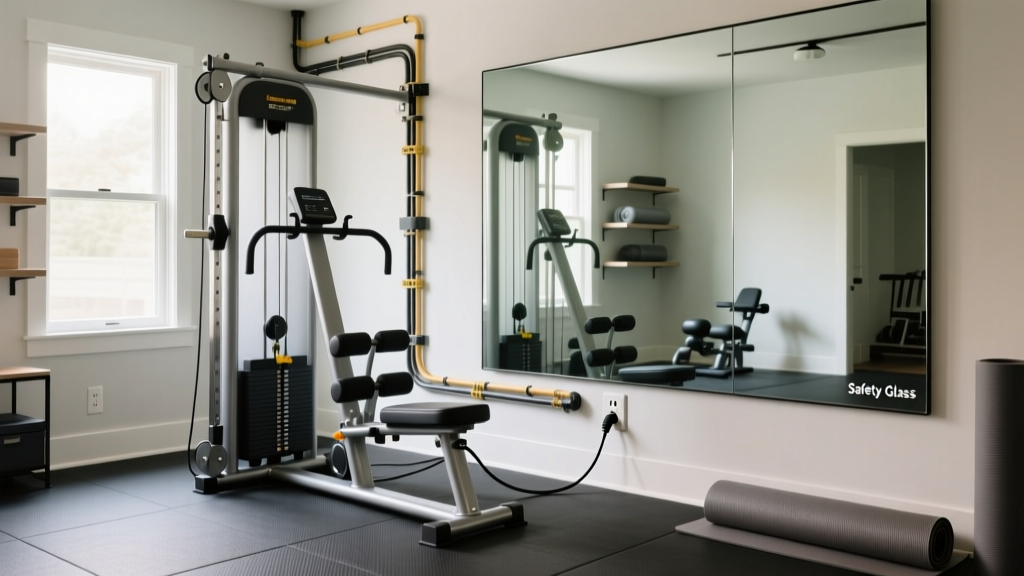
Troubleshooting Electrical Safety and Mirrors for a Home Gym Setup

Great Home Gym Ideas: Complete Setup & Floor Plans

Weatherproof Guide to Creating a Home Gym Outdoors
