
Good Flooring for Home Gym: 2026 Shared Setup Review
Discover the best good flooring for home gym setups shared by couples. We review top 2026 picks for mixed workouts, noise reduction, and zoning.

The Couples' Dilemma: Clashing Workout Styles
When two people share a home gym, finding good flooring for home gym setups becomes a complex negotiation of biomechanics, aesthetics, and acoustic tolerance. One partner might be dropping 50lb kettlebells during high-intensity interval training, while the other requires a firm, forgiving surface for barefoot Vinyasa yoga or Pilates. In 2026, the modern shared home gym is rarely a single-use space; it is a multi-modal fitness hub that demands versatile infrastructure.
Most generic buying guides recommend a single type of rubber mat and call it a day. But as experts who have tested and reviewed dozens of shared garage and basement gyms, we know that a one-size-fits-all approach usually results in one partner being unhappy. Heavy rubber ruins barefoot mobility work, while soft foam compresses dangerously under heavy barbells. To solve this, we have developed a hands-on review of the top flooring solutions specifically tailored for couples and shared spaces.
The Zoning Framework for Shared Gyms
Instead of compromising on a single flooring material that fails both users, we highly recommend the Zoning Strategy. Divide your square footage into a 'Drop Zone' (high-density 3/4-inch rubber for free weights and machines) and a 'Flex Zone' (EVA foam or high-density cork for bodyweight, stretching, and mobility). Use aluminum transition strips to bridge the height differential safely, preventing trip hazards during fast-paced shared circuits.
Hands-On Review: Top 4 Good Flooring for Home Gym Environments
Below are our expert top picks for shared home gyms, evaluated on shock absorption, joint impact, acoustic dampening, and long-term durability under mixed-use conditions.
1. Rep Fitness 3/4" Interlocking Rubber Tiles (Best Overall Hybrid)
For couples who want a unified look without sacrificing heavy-duty protection, the Rep Fitness 3/4" interlocking tiles are our top 2026 pick. With a Shore A durometer rating of roughly 60, they offer an excellent balance between shock absorption for dropped dumbbells and enough surface firmness for dynamic movements.
- Price: ~$140 per 6-pack (covers 24 sq. ft., roughly $5.83/sq. ft.)
- Shared-Space Edge Case: The interlocking teeth are robust, but if one partner frequently performs lateral lunges or agility drills across the seams, you must use double-sided carpet tape on the perimeter. Otherwise, the friction from side-to-side shoe drag can slowly separate the tiles over a 6-month period.
- Verdict: The best single-material compromise for couples who both lift weights but have slightly different stylistic preferences.
2. RubberMat Inc. 3/4" Horse Stall Mats (Best for Heavy Drop Zones)
If one partner is a serious powerlifter or Olympic weightlifter, horse stall mats are the undisputed champions of impact protection. These 4x6 foot vulcanized rubber mats weigh roughly 100 lbs each and are virtually indestructible.
- Price: ~$55 to $65 per mat (roughly $2.50/sq. ft.)
- Shared-Space Edge Case: Off-gassing. Fresh vulcanized rubber emits a strong odor that can easily permeate shared living spaces or attached garages. According to EPA guidelines on indoor air quality, proper ventilation is critical when introducing new VOC-emitting materials. We mandate a 72-hour outdoor curing period before bringing these into a shared indoor gym.
- Verdict: Unbeatable for the heavy lifting zone, but too hard and unyielding for the partner doing floor-based core work or yoga.
3. ProSourceFit 1/2" EVA Foam Tiles (Best for Dedicated Flex Zones)
For the partner prioritizing joint health, stretching, and bodyweight flow, high-density EVA foam is essential. The ProSourceFit 1/2" tiles provide the necessary cushioning for barefoot work and kneeling exercises that standard rubber simply cannot offer.
- Price: ~$35 for a 36 sq. ft. pack (under $1.00/sq. ft.)
- Shared-Space Edge Case: Never place a squat rack or heavy dumbbell rack on EVA foam. Under sustained static loads (like a 300lb barbell resting on a rack), the foam will permanently compress and fail to rebound, creating an uneven surface hazard.
- Verdict: The perfect, budget-friendly material for the designated 'Flex Zone' in a zoned shared gym layout.
4. IncStores 8mm Rubber Rolls (Best for Seamless Aesthetic Compromises)
Couples who share a basement gym that doubles as a multi-purpose room often prioritize aesthetics and easy cleaning. IncStores 8mm rolled rubber provides a sleek, nearly seamless appearance that mimics commercial boutique studios.
- Price: ~$2.75 per sq. ft. (sold in custom-cut rolls)
- Shared-Space Edge Case: At 8mm, it is too thin to protect unprotected concrete from heavy deadlift drops. However, it is excellent for couples who primarily use machines, dumbbells, and cardio equipment. It also prevents sweat from seeping into subfloor cracks, a major plus for shared basement spaces.
- Verdict: Ideal for machine-heavy, aesthetics-focused shared gyms where extreme impact protection is not required.
Shared Space Specs: Sound, Sweat, and Seams
When sharing a gym—especially in townhomes, apartments, or directly beneath shared living spaces—acoustic dampening is just as important as physical protection. Impact noise (structure-borne sound) travels through floor joists and can easily disrupt a partner working from home or sleeping in the adjacent room.
| Flooring Type | Thickness | Best Shared Use Case | Impact Noise Reduction | Sweat Resistance |
|---|---|---|---|---|
| Rep Fitness Tiles | 3/4" (19mm) | Mixed lifting & conditioning | High (Excellent IIC rating) | High (Non-porous) |
| Horse Stall Mats | 3/4" (19mm) | Heavy barbell drop zones | Very High (Dense mass blocks sound) | Moderate (Seams trap moisture) |
| EVA Foam Tiles | 1/2" (12mm) | Yoga, Pilates, mobility | Low (Poor for low-frequency thuds) | Low (Absorbs sweat/bacteria) |
| 8mm Rubber Rolls | 5/16" (8mm) | Machine circuits, light dumbbells | Moderate | Very High (Seamless surface) |
As noted in comprehensive flooring evaluations by Wirecutter's home gym flooring guide, thicker rubber with a higher mass-to-volume ratio is the most effective way to decouple impact vibrations from the subfloor. If your shared gym is on a second floor or in a basement with bedrooms above, pairing 3/4" rubber mats with an underlying acoustic underlayment (like Soundproof Cow's Impact Mat) is a non-negotiable investment for domestic harmony.
Installation Edge Cases for Shared Garages and Basements
Installing flooring in a shared space introduces unique environmental variables that single-user setups often ignore. Here are the critical edge cases you must address during your 2026 setup:
1. The Moisture Barrier Requirement (Basements)
Concrete basement slabs are notoriously porous. When two people are working out, the ambient humidity and sweat accumulation increase dramatically. If you lay rubber directly on an unsealed basement floor, trapped moisture will breed black mold beneath the mats. The Fix: Apply a penetrating silane-siloxane concrete sealer before laying down any flooring, and leave a 1/2-inch expansion gap around the perimeter of the room to allow moisture to escape.
2. Thermal Expansion in Uninsulated Garages
If your shared gym is in an uninsulated garage, temperature swings between summer and winter will cause horse stall mats to expand and contract. In the summer heat, 4x6 mats can buckle in the center; in the winter, they can pull apart, creating 1/4-inch trip hazards. The Fix: Use a heavy-duty mastic adhesive or double-sided outdoor carpet tape specifically at the seams if your garage experiences temperature swings greater than 30°F throughout the year.
3. Transitioning to Shared Hallways
Thick rubber mats create a dangerous lip where the gym meets the shared hallway or garage entryway. Tripping over a 3/4" mat edge while carrying laundry or groceries is a common household friction point. The Fix: Install a beveled aluminum or heavy-duty rubber transition ramp at all doorways. This not only protects the edges of your expensive flooring from peeling but also keeps the shared home environment safe and accessible.
Expert Verdict: How to Split the Budget
Building a shared home gym requires strategic budget allocation. Do not blow the entire flooring budget on wall-to-wall 3/4" premium tiles if half the space will only be used for stretching and kettlebell flows.
Our recommended blueprint for a standard 200-square-foot two-car garage gym is to purchase three 4x6 horse stall mats (approx. $180) to create a dedicated 72-square-foot heavy lifting platform in the center or rear of the space. Then, use the remaining budget to outfit the perimeter with 8mm rolled rubber or interlocking EVA foam (approx. $150) for the flex zones. This hybrid approach costs under $350 total, provides elite protection for heavy loads, preserves joint health for floor work, and drastically reduces acoustic transfer to the rest of the house. By embracing the zoning framework, both partners get the exact biomechanical support they need without compromise.
More gear to consider
All reviews
Outdoor Home Gyms for Renters: No-Damage Setup Mistakes
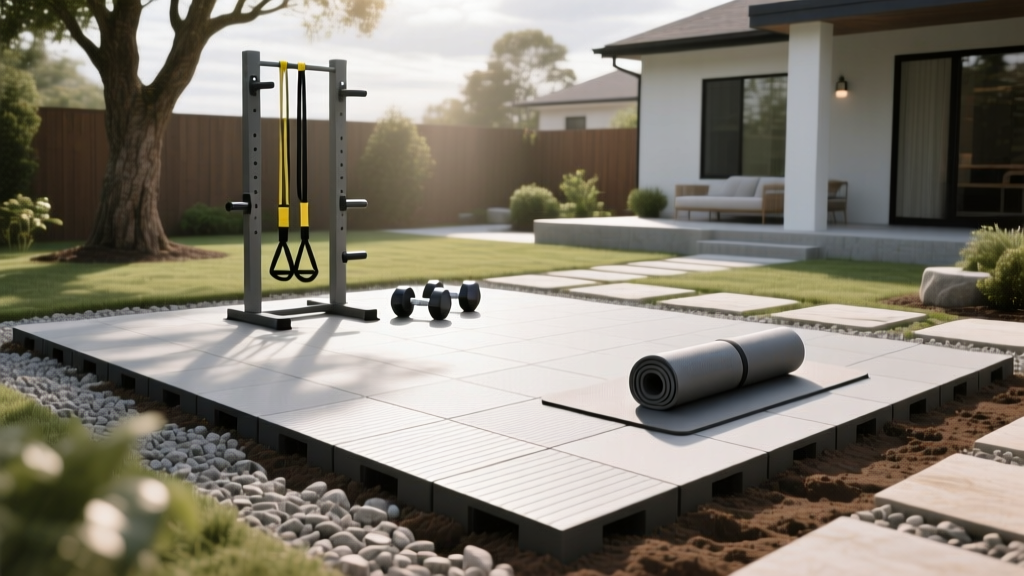
Weatherproof Outdoor Home Gym Flooring Installation Guide

How to Switch Home Gyms Planet Fitness Memberships for a Couples Setup

Is the Trump Home Gym Tax Break Real? Building a Setup Under $500

Apartment Home Gym Size Dimensions: Avoid These No-Damage Mistakes
