Where to Donate Fitness Equipment: A Research-Backed Channel Guide
Analyze the best channels for donating used gym gear. Compare tax deductions, charity acceptance rates, and heavy equipment logistics.

If you are a home gym owner upgrading your setup or downsizing your space, finding reliable organizations to accept heavy gear is challenging. The best places to donate fitness equipment include national charities like Goodwill Industries International and The Salvation Army, local community centers, high school athletic departments, and specialized nonprofits like Exercise Equipment for Youth. For large items like power racks or motorized treadmills, organizations with free pickup services, such as Habitat for Humanity ReStore, are your most practical option.
Key Takeaways
- Habitat for Humanity ReStore offers free pickup for heavy items up to 300 pounds.
- Goodwill Industries International accepts smaller gear under 50 pounds at local drop-off centers.
- Internal Revenue Service guidelines allow tax deductions for gear valued over $500 using Form 8283.
Table of Contents
Top National Charities for Fitness Gear
Habitat for Humanity ReStore
Habitat for Humanity ReStore specializes in accepting large, heavy home goods and building materials. They provide free pickup services for fitness equipment weighing up to 300 pounds, making them ideal for squat racks and elliptical machines. Scheduling a pickup typically requires a 72 hours advance notice through their local branch portal.
Goodwill Industries International
Goodwill Industries International is best suited for smaller, portable fitness accessories. Local donation centers generally accept items like dumbbells, yoga mats, and resistance bands provided they weigh under 50 pounds. You must transport these items to a physical drop-off location yourself to receive a standard tax receipt.
The Salvation Army
The Salvation Army accepts moderately sized fitness gear, such as adjustable weight benches and stationary bikes, for their thrift stores. They offer pickup services in select metropolitan areas, though availability varies heavily by zip code. Always call your local chapter to verify current acceptance policies for sporting goods.
Local Community and Educational Options
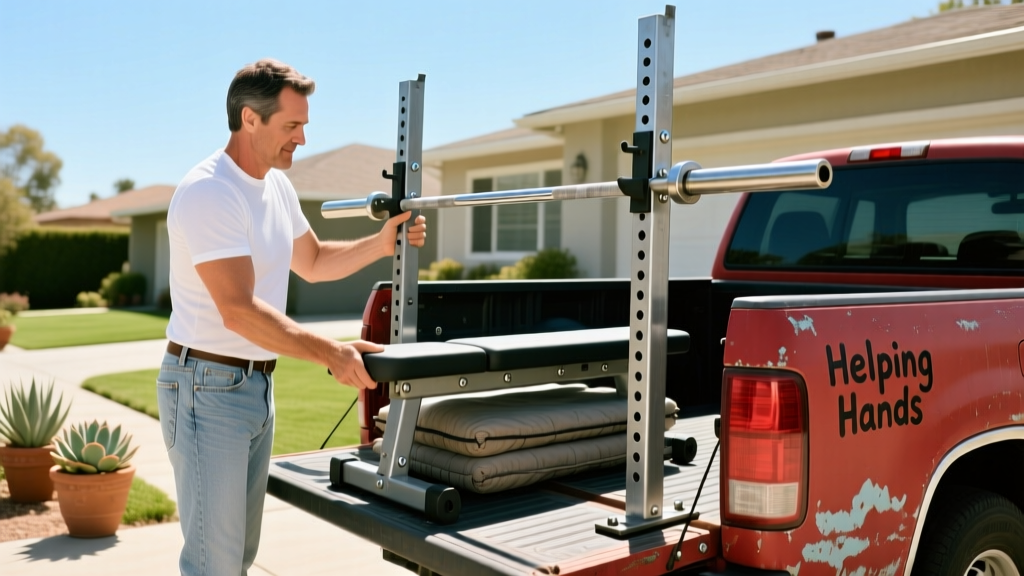
Public high schools and local Parks and Recreation departments frequently accept used fitness equipment to outfit their athletic facilities. Contacting the head strength and conditioning coach at a nearby high school is a highly effective way to donate heavy barbells and bumper plates. Local YMCA branches also accept commercial-grade cardio machines if they are less than five years old and fully functional.
Free Pickup vs. Drop-Off Logistics
Choosing between a pickup service and a drop-off depends entirely on the weight and dimensions of your gym gear. Use the comparison matrix below to determine the most efficient removal method for your specific equipment.
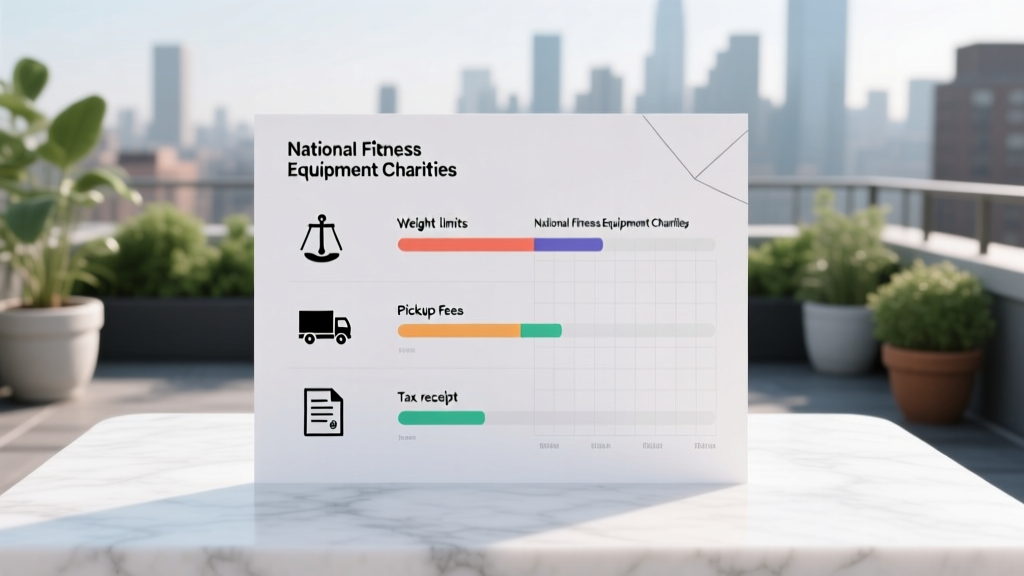
| Organization | Max Weight Limit | Pickup Availability | Tax Receipt Provided |
|---|---|---|---|
| Habitat for Humanity ReStore | 300 pounds | Free scheduled pickup | Yes, itemized |
| Goodwill Industries International | 50 pounds | Drop-off only | Yes, blank receipt |
| The Salvation Army | 150 pounds | Varies by zip code | Yes, itemized |
| Local High Schools | Unrestricted | Requires self-delivery | Yes, school letter |
Maximizing Your Tax Deduction
Donating fitness equipment can yield significant financial benefits during tax season if documented correctly. The Internal Revenue Service requires you to itemize your deductions and assign a realistic value to the donated gear. For any single item or group of similar items valued over $500, you must complete and attach Form 8283 to your federal tax return, as detailed in the Internal Revenue Service Charitable Contribution Deductions guidelines.
Understanding Fair Market Value
Fair Market Value is the price that property would sell for on the open market. It is the price that would be agreed on between a willing buyer and a willing seller, with neither being required to act, and both having reasonable knowledge of the relevant facts. Never use the original retail price; instead, check current listings on secondary marketplaces to determine the accurate used value.
Recycling Unusable Fitness Equipment
If your treadmill or power rack is broken beyond repair, charities will reject the donation. A standard motorized treadmill contains up to 45 pounds of recyclable steel, copper wiring, and electronic components that should not enter a landfill. You must take these broken machines to a certified e-waste facility or a local scrap metal yard, following the Environmental Protection Agency Electronics Donation or Recycling protocols to ensure safe material recovery.
Frequently Asked Questions
Where can I donate a used treadmill near me?
The fastest way to donate a used treadmill locally is to contact your nearest Habitat for Humanity ReStore or a local community recreation center. If the treadmill is fully functional and under five years old, local university athletic departments may also accept it for their student fitness lounges.
Do charities pick up heavy gym equipment?
Yes, but only specific organizations have the logistics to handle heavy gym equipment. Habitat for Humanity ReStore and specialized junk removal charities operate box trucks with lift gates capable of safely extracting 300-pound power racks and commercial weight machines from your home.
How do I donate fitness equipment for a tax write-off?
To claim a tax write-off, you must donate to a registered 501(c)(3) nonprofit organization and obtain a written acknowledgment receipt. You must then determine the Fair Market Value of the gear, keep photographic evidence of the items, and file Form 8283 if the total deduction exceeds $500.
Next Steps for Your Home Gym
Clearing out old fitness gear requires matching the physical size of your equipment with the logistical capabilities of the receiving charity. Your immediate next step is to take a complete inventory of your unused gear, measure the heaviest items, and call your local Habitat for Humanity ReStore to schedule a free heavy-item pickup.
More gear to consider
All reviews
Troubleshooting Pacific Fitness Home Gym Older Models in Rentals
Best Paint Color for a Home Gym: Optimizing Compact Foldable Setups

The DIY Home Gym Makeover: Compact Foldable Solutions
Marcy Home Gym MWM-989 Garage Setup: Flooring & Ventilation Mistakes
Clever Home Gym Ideas for Small Apartments: Full Setup Guide