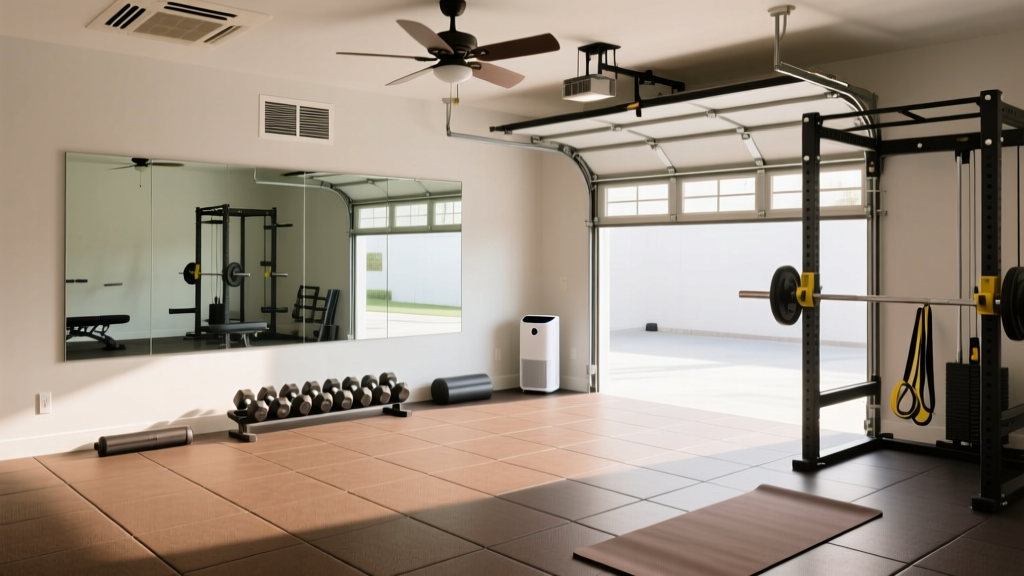
Garage Gym Setup: Flooring, Ventilation & Mirror Installation Service
Troubleshoot common garage gym setup mistakes. Learn proper flooring, ventilation dynamics, and when to hire a mirror installation service for home gyms.

The Hidden Dangers of a Poorly Planned Garage Gym
Converting a garage into a dedicated training space is one of the most popular home fitness projects in 2026. However, a garage is fundamentally designed to house vehicles, not to serve as a climate-controlled, high-impact athletic facility. When athletes rush the build-out process, they inevitably fall victim to three critical environmental failures: moisture-trapping flooring, inadequate airflow, and catastrophic mirror mounting errors. This troubleshooting guide breaks down the exact science behind these mistakes and provides actionable, professional-grade solutions to retrofit or plan your space correctly.
Mistake #1: Ignoring Moisture and Ventilation Dynamics
The most common point of failure in a garage gym is treating the space like a standard interior room. Garages experience massive temperature fluctuations, leading to condensation on cold concrete slabs and metal equipment. According to the U.S. Department of Energy's Whole-House Ventilation guidelines, spaces with high humidity generation and poor natural airflow require dedicated mechanical exhaust to prevent mold proliferation and equipment rust.
The Dew Point Problem
When you heat a garage gym in the winter or cool it in the summer, you alter the dew point. If warm, moist air from your breath and sweat hits a cold, uninsulated garage wall or concrete floor, condensation forms immediately. This creates a slip hazard, rusts your squat rack sleeves, and rots drywall.
💡 Pro-Tip: Calculate Your CFM RequirementsFor a standard 2-car garage (approx. 400 sq ft with an 8-foot ceiling), you have 3,200 cubic feet of air. To achieve 6 air changes per hour (ACH) during intense workouts, you need an exhaust fan rated for at least 320 CFM (Cubic Feet per Minute). Look for continuous-run, low-sone models like the Panasonic WhisperCeiling series to maintain baseline airflow without sounding like a jet engine.
Mistake #2: Choosing the Wrong Flooring for Concrete Slabs
Concrete is essentially a hard sponge. It constantly wicks moisture from the soil beneath it through a process called Moisture Vapor Emission (MVE). Dropping standard recycled rubber stall mats directly onto an unsealed garage floor traps this vapor, creating a breeding ground for black mold and a permanent, foul odor.
The Calcium Chloride Test
Before laying down any flooring, perform a calcium chloride test (ASTM F1869). If your Moisture Vapor Emission Rate (MVER) exceeds 3 lbs per 1,000 square feet per 24 hours, you must install a 6-mil polyethylene vapor barrier or apply a penetrating silane-siloxane concrete sealer before laying rubber.
| Flooring Material | Thickness | Moisture Resistance | 2026 Avg. Cost (per sq ft) |
|---|---|---|---|
| Recycled Rubber (Stall Mats) | ¾" | Low (Porous, traps odors) | $1.50 - $2.00 |
| Vulcanized Rubber (e.g., Regupol) | ⅜" (8mm) | High (Non-porous, dense) | $2.50 - $3.80 |
| Interlocking EVA Foam | ½" | Medium (Traps water in seams) | $1.00 - $1.50 |
Mistake #3: DIY Mirror Mounting in High-Humidity Environments
Nothing opens up a cramped garage gym like a wall of mirrors, allowing you to check your lifting form. However, mirrors in garages face extreme environmental stress. The most frequent troubleshooting issue we see is desilvering—the black, creeping rot that forms on mirror edges when moisture reacts with the silver backing.
Furthermore, garage walls are often constructed from CMU (Concrete Masonry Unit) blocks or poorly finished drywall that bows under weight. A standard 4x6 foot sheet of ¼" gym mirror weighs roughly 85 pounds. Mounting this directly to uneven block walls using drywall anchors is a severe safety hazard.
When to Hire a Professional
If your garage features uneven masonry walls, lacks proper wooden studs, or experiences high humidity swings, DIY mounting is a liability. This is exactly when you should hire a professional mirror installation service for home gym environments. Specialists utilize specialized laser leveling, furring strips to create plumb mounting surfaces, and commercial-grade mirror mastic that will not degrade the silver backing.
"The biggest mistake DIYers make is using standard construction adhesive like Liquid Nails. The solvents in those adhesives eat right through the mirror's protective backing paint. Within six months, the humidity in the garage penetrates the glass, and the mirror turns black. We only use neutral-cure, mirror-specific mastic like Palmer's Mirror Mastic."
— Certified Glazing Specialist, Architectural Glass Association
For more on how moisture impacts indoor materials and structural integrity, refer to the EPA's Brief Guide to Mold, Moisture, and Your Home, which emphasizes the critical need to control indoor humidity levels between 30% and 50% to prevent material degradation.
Troubleshooting Checklist: Fixing Existing Garage Gym Flaws
If your garage gym is already suffering from environmental issues, follow this step-by-step retrofit protocol:
- Audit the Airflow: Install a digital hygrometer. If humidity consistently spikes above 60% during workouts, install a dedicated exhaust fan or a mini-split dehumidifier (e.g., MrCool DIY 12k BTU).
- Lift and Inspect Flooring: Pull back a corner of your rubber mats. If the concrete is dark, damp, or smells musty, remove the mats, clean the slab with a TSP (Trisodium Phosphate) solution, and apply a penetrating siloxane sealer.
- Upgrade to Vulcanized Rubber: Replace porous recycled mats with ⅜" vulcanized rubber tiles, which feature a tight cellular structure that repels sweat and moisture.
- Assess Mirror Integrity: Check the edges of your mirrors. If black spots are forming, the seal is broken. If the mirror bows or shifts when pushed, immediately brace it and contact a mirror installation service for home gym retrofits to re-mount the glass using proper J-channels and masonry anchors.
Frequently Asked Questions
Can I use a dehumidifier instead of an exhaust fan?
Yes, but they serve different purposes. An exhaust fan removes stale air, CO2, and odors, replacing it with fresh outdoor air. A dehumidifier only removes moisture from the existing air. For a garage gym, a combination of a low-CFM continuous exhaust fan and a high-capacity portable dehumidifier (rated for 1,500 sq ft) is the gold standard for 2026 setups.
Do I need a vapor barrier under my rubber flooring?
If you are laying flooring directly on a concrete slab that is on-grade (at ground level), a vapor barrier or a chemical concrete sealer is highly recommended. Concrete is porous and will continuously wick ground moisture upward, which can degrade the adhesive on interlocking tiles and cause mold growth under non-porous rubber.
How much does a professional mirror installation service for home gym setups cost?
In 2026, professional glass installation typically ranges from $150 to $300 per large-format sheet (4x6 or 4x8), plus the cost of the custom-cut ¼" safety-backed glass. While it represents a higher upfront cost than buying pre-cut Home Depot mirrors, professional mounting ensures the glass is safely anchored to masonry or drywall and sealed against garage humidity, preventing costly replacements down the line.
More gear to consider
All reviews
Budget Mirror & Lighting Guide for Folding Home Gyms

Space-Saving Home Gym Gift Ideas: Weight Selection Guide

Home Gym Equipment Assembly in Philadelphia: Apartment Setup Guide
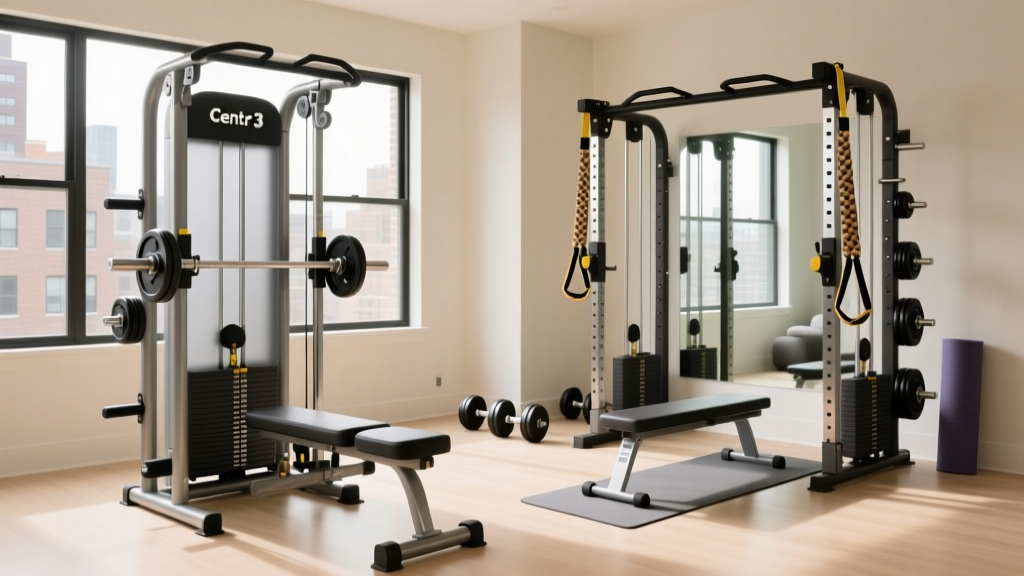
Centr 3 Home Gym vs Custom Budget Setup Under $500

Bells of Steel All-In-One Home Gym: Outdoor Setup & Weather Guide
