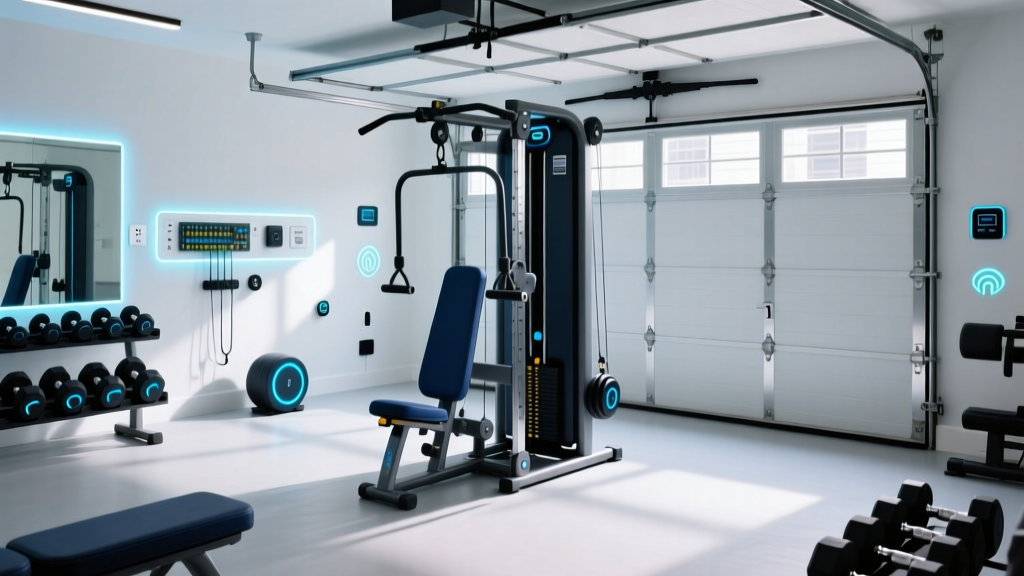
2026 Garage Home Gym Inspiration: Electrical & Safety Trends
Discover 2026 garage home gym inspiration focused on electrical upgrades, smart safety tech, and circuit requirements for high-draw fitness equipment.

The Evolution of Garage Home Gym Inspiration in 2026
When searching for modern garage home gym inspiration, the visual focus has historically been on aesthetic upgrades: interlocking rubber tiles, LED accent lighting, and wall-to-wall mirrors. However, as we move through 2026, the most coveted and highly engineered garage gyms are defined by what you cannot see. The proliferation of high-draw smart fitness equipment—ranging from electromagnetic resistance trainers to motorized spotter arms—has transformed the garage from a simple storage space into a high-demand electrical environment.
According to recent market analyses, the smart home gym equipment sector has grown by over 22% year-over-year, driven by systems that require clean, uninterrupted power. A shared 15-amp lighting circuit is no longer sufficient. Today’s premium garage setups prioritize dedicated power infrastructure, advanced climate control, and stringent safety protocols. This trend report breaks down the exact electrical and safety requirements you need to consider when building a future-proof garage gym.
Market Analysis: The Surge in High-Draw Fitness Tech
Modern digital resistance systems do not use traditional weight stacks; they rely on internal alternators and electromagnetic motors to generate resistance. These components draw significant peak wattage, especially during eccentric overload phases or when utilizing automated spotter features. Voltage drops of even 5% on a shared circuit can trigger logic board errors, void warranties, or permanently damage the internal inverters of machines like the Tonal 2 or Vitruvian Trainer Pro.
2026 Equipment Power & Circuit Matrix
The table below outlines the baseline electrical requirements for the most popular high-draw garage gym equipment available in 2026. Note that manufacturers strictly require dedicated circuits to maintain warranty compliance.
| Equipment Category | Peak Wattage | Minimum Circuit | Wire Gauge | Receptacle Type |
|---|---|---|---|---|
| Smart Electromagnetic Trainer (e.g., Tonal 2) | 1,200W - 1,500W | 15A / 120V Dedicated | 14 AWG (12 AWG preferred) | NEMA 5-15R |
| Motorized Smart Rack / Spotter Arms | 1,800W - 2,200W | 20A / 120V Dedicated | 12 AWG | NEMA 5-20R |
| Premium Motorized Treadmill (e.g., Peloton Tread+) | 1,800W | 20A / 120V Dedicated | 12 AWG | NEMA 5-20R |
| Garage Mini-Split HVAC (9k - 12k BTU) | 1,500W - 3,000W | 20A / 240V Dedicated | 12 AWG or 10 AWG | Hardwired / NEMA 6-20 |
Navigating NEC Codes and the GFCI Dilemma
One of the most common failure modes in DIY garage gym builds involves Ground Fault Circuit Interrupter (GFCI) nuisance tripping. Under the National Electrical Code (NEC / NFPA 70), all 125-volt, single-phase, 15- and 20-ampere receptacles in garages must have GFCI protection.
However, the high inductive loads and harmonic distortion generated by the AC/DC inverters in smart treadmills and motorized racks can cause standard GFCI breakers to trip mid-workout. The 2026 industry workaround involves two strategies:
- Hardwiring 240V Equipment: Bypassing the 120V receptacle requirement entirely by hardwiring 240V commercial-grade fitness equipment, which falls under different NEC articles.
- Upgrading to Active-Shield GFCI Breakers: Utilizing advanced GFCI breakers (such as the Square D HOM220GFIC) designed specifically to filter out the high-frequency noise generated by modern fitness electronics, preventing false trips while maintaining life-safety protection.
Smart Panel Upgrades vs. Standard Subpanels
As garage gyms integrate with home EV chargers and whole-home battery backups, load management has become a critical safety concern. Running four new dedicated 20-amp circuits from a maxed-out main panel is a fire hazard. Homeowners are currently split between two infrastructure upgrade paths:
Option A: The Traditional 60-Amp Subpanel
Installing a standard 60-amp subpanel in the garage costs between $800 and $1,400 (including trenching, 6 AWG feeder wire, and labor). This provides ample room for gym circuits but offers no intelligent load shedding. If you start your EV charger while the mini-split HVAC and treadmill are running, you risk tripping the main 60-amp feeder breaker.
Option B: The Smart Electrical Panel (2026 Trend)
The premium trend in high-end garage builds is the installation of a smart panel, such as the SPAN Drive or SPAN Panel. While the upfront cost is significant ($4,500 to $6,500 fully installed), it allows you to prioritize circuits via a smartphone app. If the total load approaches the threshold, the panel will automatically throttle power to the EV charger to ensure your gym's HVAC and motorized spotter arms never lose power mid-set.
Climate Control, Air Quality, and Fire Safety
A garage is not a conditioned living space, which introduces severe safety and comfort variables. According to the Environmental Protection Agency (EPA), attached garages are primary sources of carbon monoxide (CO) and volatile organic compounds (VOCs) that can migrate into living spaces or accumulate in poorly ventilated workout areas.
Ventilation and Sealing Protocols
Before installing any gym equipment, the physical envelope of the garage must be secured. This involves sealing the rim joists and the door connecting the garage to the house with closed-cell spray foam ($2.50 to $3.00 per board foot). Furthermore, installing a hardwired CO/VOC monitor (like the Airthings View Plus, ~$299) is a non-negotiable safety standard for 2026 garage gyms, especially if you utilize gas-powered lawn equipment or park vehicles in the same space.
Fire Safety and Emergency Power
What happens if the power grid fails while you are under a motorized spotter arm? Relying solely on grid power for automated safety features is a critical edge-case failure. The Electrical Safety Foundation International (ESFI) emphasizes the importance of backup power for critical home systems. For smart racks, integrating a 1500VA / 900W Pure Sine Wave UPS (Uninterruptible Power Supply), such as the CyberPower CP1500PFCLCD ($220), ensures the system retains enough battery to safely lower the barbell and unlock the safety catches during a blackout.
Your 2026 Garage Gym Safety & Electrical Checklist
To ensure your build meets modern safety standards and supports high-performance equipment, follow this actionable checklist before bringing in your gear:
- Audit the Main Panel: Verify you have at least 4 to 6 open breaker slots and a minimum of 200A total home service before adding gym circuits.
- Run Dedicated Lines: Never use extension cords or power strips for smart fitness equipment. Run dedicated 12 AWG / 20A lines directly from the panel to the equipment location.
- Install Anti-Slip Flooring: Ditch standard EVA foam tiles. Upgrade to a polyaspartic floor coating with an aluminum oxide anti-slip aggregate ($6 to $9 per sq. ft.) to prevent catastrophic slips during heavy lifts.
- Upgrade Lighting to High-CRI LEDs: Install 5000K (daylight) LED shop lights with a CRI (Color Rendering Index) of 90+ to reduce eye strain and improve depth perception during dynamic movements.
- Mount Emergency Stops: If utilizing heavy motorized equipment, install a physical, wall-mounted emergency kill switch wired to the equipment's dedicated circuit.
Expert Insight: 'The biggest mistake I see in modern garage gym builds is treating high-tech fitness equipment like standard household appliances. These machines are essentially industrial robotics; they demand clean, dedicated power and rigorous environmental controls to operate safely and maintain their multi-thousand-dollar warranties.' — 2026 Smart Home Integration Report
Conclusion: Powering the Future of Home Fitness
True garage home gym inspiration in 2026 goes far beyond aesthetics. It is about creating a resilient, safe, and highly engineered environment that supports the next generation of fitness technology. By investing in dedicated electrical circuits, smart load management, and stringent air quality controls, you are not just building a place to work out—you are future-proofing your home's most valuable wellness asset.
More gear to consider
All reviews
How to Maintain Your Murphy Bed Home Gym for Longevity

Marcy Home Gym Instruction Manual: Electrical & Safety Troubleshooting

Compact Luxury Home Gym Trends 2026: Mirror & Lighting Budget Guide

Home Gym Shelving & Weight Selection: How Much Do You Really Need?

Troubleshooting Pacific Fitness Home Gym Older Models in Rentals
