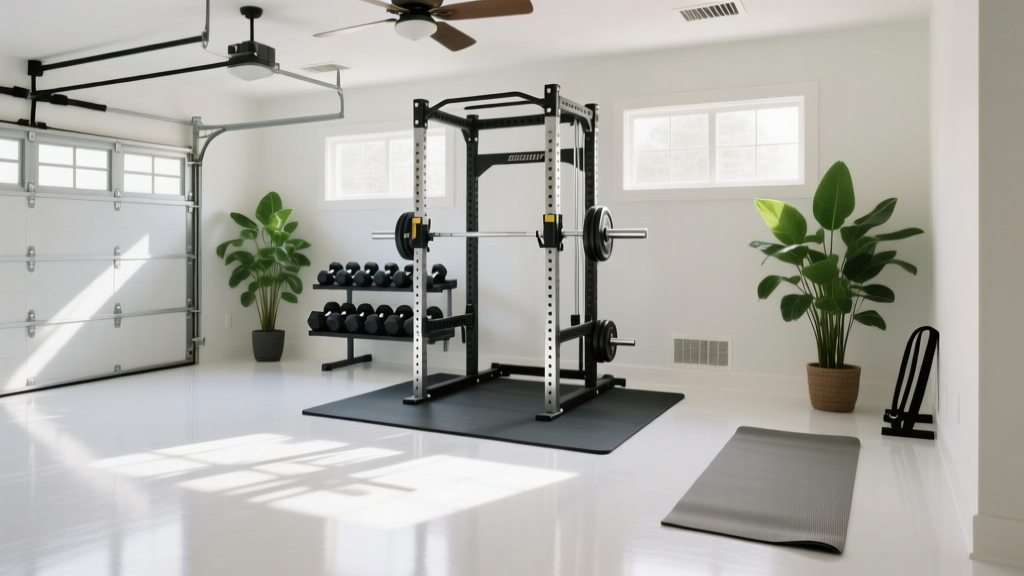
Garage Gym Mistakes Ruining Good Home Gym Workouts (And Fixes)
Don't let bad flooring and poor airflow sabotage your training. Troubleshoot common garage gym setup mistakes to ensure safe, effective, and good home gym workouts.

The Hidden Saboteurs of Garage Gym Training
You have invested thousands of dollars into a power rack, a high-quality Olympic barbell, and calibrated bumper plates. Yet, your training logs are stagnant, your joints ache unexpectedly, and you dread walking into your garage. The problem is rarely your programming; it is your environment. To consistently execute good home gym workouts, your physical space must support biomechanical stability and physiological recovery. Unfortunately, most garage gym builders treat flooring and ventilation as afterthoughts, leading to catastrophic setup failures that ruin equipment, compromise safety, and destroy motivation.
In this troubleshooting guide, we will dissect the most expensive and dangerous mistakes made during garage gym setups in 2026. We will move beyond generic advice and provide exact material specifications, environmental calculations, and actionable protocols to salvage your training space.
⚠️ CRITICAL WARNING: Never install interlocking EVA foam tiles under a squat rack or deadlift platform. EVA foam has a low Shore C hardness rating, meaning it compresses unevenly under heavy axial loads. This creates a microscopic lateral shift during heavy squats, transferring dangerous shear forces directly to your meniscus and ACL.Flooring Failures: Why Your Foundation is Crumbling
The most common mistake in garage gym construction is laying rubber mats directly over uninsulated, unsealed concrete slabs. While 3/4-inch vulcanized rubber mats (often marketed as horse stall mats) are the gold standard for impact absorption, they are entirely porous on their underside. When placed on raw concrete, they create a micro-climate that traps moisture vapor.
The Moisture Vapor and Anaerobic Bacteria Trap
Concrete is essentially a hard sponge. According to building science standards, an unsealed 1,000-square-foot concrete slab can emit up to 10 gallons of water vapor every 24 hours. When this vapor hits the impermeable top layer of your rubber gym mats, it condenses. Within 60 to 90 days, this trapped moisture breeds anaerobic bacteria, resulting in a pervasive, sulfuric 'rotten egg' or 'dirty gym sock' odor that will make executing good home gym workouts utterly miserable.
The Fix: Before a single mat is laid, you must perform a moisture test and seal the slab. Use a penetrating siloxane sealer like Armor SX5000 (approximately $0.25 per square foot). Unlike topical acrylics that peel under the friction of dropped bumper plates, siloxane penetrates up to 4 inches into the concrete pores, chemically reacting to form a hydrophobic barrier that stops vapor transmission without altering the surface grip.
Material Comparison: Choosing the Right Subfloor
Not all rubber is created equal. The durometer (hardness) rating of your flooring dictates force production and joint health. Here is how the most common 2026 garage gym flooring options stack up:
| Material Type | Thickness | Shore Hardness | Avg. Cost (per sq ft) | Primary Failure Mode |
|---|---|---|---|---|
| EVA Foam Tiles | 1/2' - 3/4' | Shore C (Soft) | $1.00 - $1.50 | Bottoms out under >200 lbs; tearing at seams. |
| Vulcanized Rubber (Stall Mats) | 3/4' | Shore A 60-70 | $2.20 - $2.80 | Seam separation; off-gassing if not low-VOC. |
| Virgin Rubber Rolls | 3/8' - 1/2' | Shore A 75+ | $3.50 - $5.00 | Insufficient drop protection for heavy bumper plates. |
For a comprehensive breakdown of specific brands and durability tests, industry experts at Garage Gym Reviews consistently highlight the necessity of high-density vulcanized rubber for heavy lifting zones, reserving softer rolls strictly for turf sled tracks or stretching areas.
Ventilation Blunders: Suffocating Your Performance
You cannot out-train a hostile micro-climate. A standard uninsulated two-car garage acts as a solar oven in the summer and a meat locker in the winter. When the ambient temperature exceeds 80°F (26°C) with high humidity, your body diverts blood flow from working muscles to the skin's surface for cooling. This drastically reduces your VO2 max and time-to-failure, making it physiologically impossible to sustain good home gym workouts at your normal intensity.
The Cross-Breeze Myth and CFM Calculations
Opening the main garage door and a side door does not create adequate ventilation unless there is a significant external wind gradient. Relying on passive airflow is a critical error. You must calculate the required Cubic Feet per Minute (CFM) for active mechanical exhaust.
The Formula: To achieve a minimum of 6 Air Changes per Hour (ACH) in a standard 400-square-foot garage with a 9-foot ceiling (3,600 cubic feet), you need an exhaust fan rated for at least 360 CFM. However, because gym environments generate massive localized heat and humidity from human respiration and sweat, you should target 10 to 15 ACH. This requires a high-velocity exhaust system pushing 600 to 900 CFM, paired with a make-up air inlet.
Combating the Dew Point and Rust
Ventilation is not just about temperature; it is about moisture control. If you pull hot, humid summer air into a garage where the concrete slab is still cool from the night, the air temperature drops below the dew point. The result? Condensation forms on your concrete, your rubber mats become a slip hazard, and your unprotected cast-iron weight plates will develop surface rust within 48 hours.
According to the EPA's guidelines on moisture and mold, keeping indoor relative humidity below 50% is critical to preventing structural degradation and respiratory irritants. In a garage gym, this requires a commercial-grade dehumidifier. A standard 35-pint residential unit will burn out its compressor within a month in an uninsulated garage. Invest in a 50-pint to 70-pint unit with a built-in condensate pump (such as the AlorAir or Midea commercial lines, costing between $450 and $700) and route the drain line directly into your garage floor sink or exterior grading.
💡 EXPERT INSIGHT: The Mini-Split InvestmentIf your budget allows, a ductless mini-split heat pump (e.g., MrCool DIY 12,000 BTU) is the ultimate 2026 garage gym upgrade. Priced around $900 to $1,300, it provides both heating and cooling while actively dehumidifying the space. Ensure you hire a licensed HVAC tech to perform a vacuum test on the lines; improper installation is the leading cause of refrigerant leaks and compressor failure in DIY setups.
The 4-Step Garage Gym Troubleshooting Protocol
If your current setup feels 'off,' run through this diagnostic protocol before buying new equipment.
- The ASTM D4263 Tape Test (Moisture): Tape a 2x2 foot square of clear 4-mil plastic sheeting tightly to your concrete floor. Wait 72 hours. If condensation forms under the plastic or the concrete darkens, your slab is emitting excessive moisture vapor. You must strip your mats and apply a penetrating siloxane sealer immediately.
- The Barbell Knurling Audit (Rust/Humidity): Run a microfiber cloth over the knurling of your Olympic barbell. If it picks up orange or black residue, your garage's relative humidity is consistently spiking above 60%. You need to introduce a high-capacity dehumidifier and begin wiping your bars down with a light coat of 3-in-One oil or a specialized barbell lubricant after every session.
- The Lateral Shift Test (Flooring): Load a barbell to 80% of your 1RM squat. Set up under the bar and perform a controlled eccentric descent. Have a partner film your feet from the floor level. If the rubber mat visibly compresses and your heel shifts outward by even a few millimeters, your flooring lacks the Shore A hardness required for heavy loading. Add a dedicated 3/4-inch plywood lifting platform over the rubber.
- The Thermal Mapping Check (Airflow): Place three digital thermometers at different heights: ankle level, chest level, and near the ceiling. Run your typical 45-minute workout. If the temperature differential between the floor and ceiling exceeds 8°F, your air is stratifying. Install a High-Volume, Low-Speed (HVLS) ceiling fan or a heavy-duty oscillating pedestal fan angled upward to destratify the air and push the cool, dehumidified air down into your breathing zone.
Frequently Asked Questions
Can I use a standard box fan for garage gym ventilation?
A standard 20-inch box fan moves roughly 2,000 CFM, which seems adequate on paper. However, box fans lack the static pressure required to push hot air out of a garage if there is any resistance (like a partially open door or window screen). They are best used for direct, localized cooling on the lifter rather than whole-room air exchange. For true exhaust, use a high-velocity drum fan or a hardwired gable exhaust fan.
Will rubber mats damage my epoxy garage floor?
Generally, no. High-quality vulcanized rubber is safe for cured epoxy. However, if your epoxy was applied in high humidity or without proper concrete etching, the plasticizers in cheaper, non-vulcanized rubber mats can chemically react with the epoxy topcoat, causing it to yellow or peel. Always opt for 100% vulcanized rubber with low-VOC certifications to protect both your floor and your indoor air quality, a crucial factor highlighted in the EPA's introduction to indoor air quality.
How do I stop my garage gym mats from sliding during sled pushes?
Friction is your enemy here. Do not use chemical adhesives, as they will destroy the concrete or epoxy underneath. Instead, use double-sided acrylic carpet tape specifically designed for heavy-duty commercial applications (such as Roberts 50-555) along the perimeter seams. For the interior, ensure your mats are tightly wedged against the garage walls; the natural expansion of the rubber in summer heat will lock them into a unified, immovable floating floor.
Building a garage gym is an exercise in environmental engineering as much as it is in fitness. By addressing the foundational errors in flooring compression and air moisture management, you eliminate the hidden friction points in your routine. Secure your footing, control your climate, and reclaim the consistency required for truly good home gym workouts.
More gear to consider
All reviews
Weider Pro 4950 Home Gym: Best Mirrors and Lighting Compared
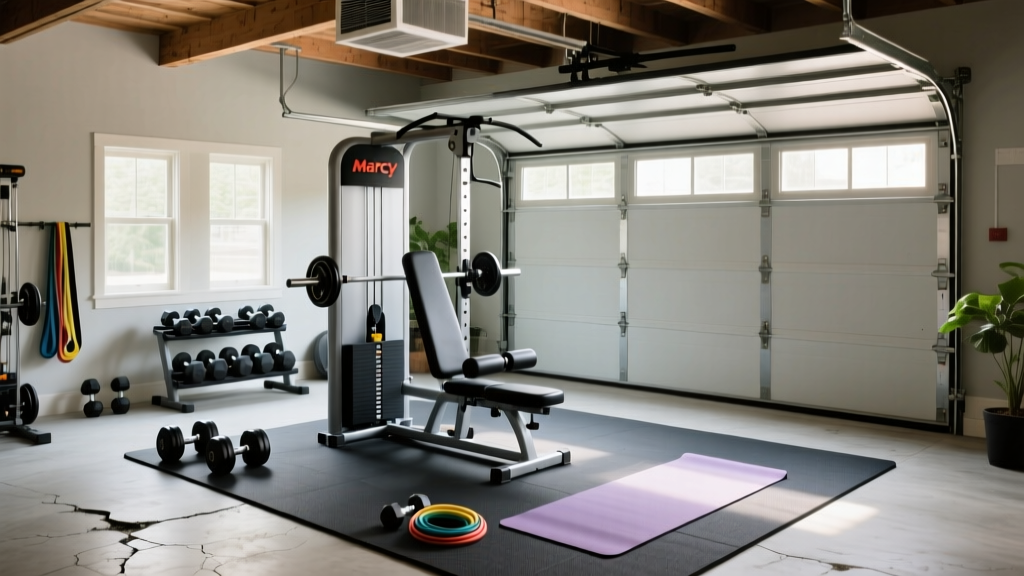
Marcy Home Gym MWM-989 Garage Setup: Flooring & Ventilation Mistakes
Home Basement Gym Electrical Safety: Top Mistakes and Fixes
Space-Saving Home Gym Design Layout: Essential Beginner Starter Kit

Why Your Garage Home Gym Idea Needs Better Flooring and Airflow
