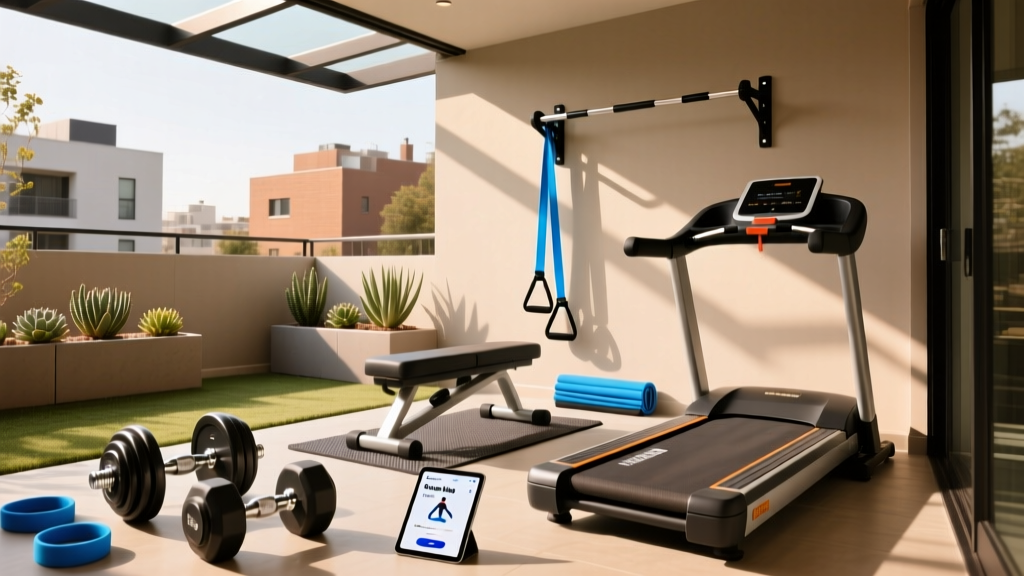
Outdoor Gym Weather Care & Home Gym Club Training App Tracking
Protect your outdoor home gym from weather damage. Learn maintenance protocols, material choices, and how a home gym club training app tracks equipment wear.

The Elements vs. Your Iron: Understanding Outdoor Degradation
Building an outdoor home gym offers unparalleled benefits: fresh air, natural light, and a rugged training atmosphere. However, exposing thousands of dollars of fitness equipment to the elements introduces severe longevity challenges. According to corrosion data from the Association for Materials Protection and Performance (AMPP), untreated carbon steel can lose up to 0.005 inches of thickness per year in high-humidity, coastal, or industrial environments. When you factor in UV radiation, thermal expansion, and freeze-thaw cycles, standard indoor equipment will rapidly fail outdoors.
Maintenance for an exposed gym is not just about wiping down benches; it requires a proactive, data-driven approach to combat galvanic corrosion, polymer breakdown in rubber matting, and micro-fractures in load-bearing cables. In 2026, the most successful outdoor gym owners combine advanced weatherproofing chemicals with digital tracking to predict and prevent catastrophic equipment failures.
⚠️ Critical Warning: The WD-40 MythNever use standard WD-40 on your outdoor gym guide rods or barbell knurling. WD-40 is primarily a solvent and water displacer, not a long-term lubricant. It will strip away existing protective oils, leaving your bare steel highly vulnerable to flash-rusting within 48 hours of exposure to morning dew.
The Ultimate Weatherproofing Maintenance Protocol
To maximize the lifespan of your outdoor rig, power rack, and free weights, you must implement a tiered maintenance schedule using specialized, marine-grade protectants.
1. Monthly: Guide Rods and Linear Bearings
Cable machines and Smith machines exposed to ambient humidity will develop surface rust on guide rods, leading to jerky movements and destroyed linear bearings. Wipe rods with a microfiber cloth and apply Boeshield T-9. Originally developed by Boeing for aviation, T-9 dissolves light corrosion and leaves a dry, waxy film that repels moisture without attracting dust and pollen—a major issue for outdoor setups.
2. Bi-Annually: Crevice Protection for Rigs and Racks
Where steel tubes meet, water pools and rust begins from the inside out. Twice a year (spring and fall), spray Fluid Film NAS into all bolt holes, gusset plates, and the open tops of your uprights. This lanolin-based compound creeps into microscopic seams, displacing water and halting oxidation. Expect to spend about $18 per can, but it will save a $600 power rack from structural compromise.
3. Annually: Cable and Pulley Inspection
Outdoor temperature fluctuations cause nylon pulleys to become brittle and steel aircraft cables to expand and contract, accelerating internal fraying. Inspect your 1/4-inch 7x19 galvanized cables for 'fishhooks' (broken micro-strands). Replace cables every 18 to 24 months in an outdoor environment, regardless of visual wear, as internal rust weakens the core long before the exterior jacket fails.
Integrating a Home Gym Club Training App for Predictive Maintenance
Most lifters rely on a home gym club training app strictly for logging progressive overload, tracking 1RM estimates, and following periodized programming. However, elite outdoor gym owners are now leveraging these platforms for predictive equipment maintenance.
When your gym is exposed to the weather, equipment wear is no longer just a function of time; it is a function of total mechanical stress combined with environmental degradation. Here is how to use your app to protect your investment:
- Tonnage-Based Cable Replacement: Use your home gym club training app to track total monthly tonnage on your cable stack. If your app data shows you are moving over 40,000 lbs per month on a lat pulldown, the combination of high mechanical friction and outdoor humidity means you should replace the aircraft cable at 12 months instead of the standard 24 months.
- Custom Maintenance Routines: Create a 'Gym Upkeep' routine within the app. Set it to trigger every 30 days as a 'workout.' This prompts you to perform specific checks: inspecting the knurling on your Olympic bars for pitting, checking UHMW plastic bench pads for UV warping, and tightening hardware that has loosened due to thermal expansion.
- Environmental Notes Logging: Use the app's session notes feature to log extreme weather events (e.g., 'Heavy rainstorm, humidity 95%'). If you notice rust forming on your bare steel plates, you can cross-reference the app's history to see how long the equipment sat exposed post-storm, helping you refine your tarping and storage habits.
Material Selection Matrix for Exposed Environments
If you are still in the planning phases of your outdoor setup, or looking to replace degraded gear, material selection is your first line of defense. The ASTM International Committee on Fitness Equipment outlines strict durability standards for outdoor installations, but consumer gear varies wildly. Use this matrix to guide your purchases.
| Material / Finish | Outdoor Viability | Estimated Cost Premium | Primary Failure Mode |
|---|---|---|---|
| Cerakote (Ceramic) | Excellent (9/10) | + $150 - $300 per rack | Chipping from heavy barbell impact exposing raw steel |
| Galvanized Steel | Very Good (8/10) | + $100 - $200 per rack | White rust (zinc oxidation) in high-salt coastal air |
| Stainless Steel (304) | Superior (10/10) | + 40% to 60% total cost | Surface tea-staining (cosmetic only, no structural loss) |
| Standard Powder Coat | Poor (3/10) | Base Price | Micro-cracking from UV/heat, leading to under-film rust |
| Bare Steel / Black Oxide | Unacceptable (1/10) | Base Price | Rapid scale rust, knurling degradation, structural failure |
For barbells, always opt for stainless steel shafts and sleeves. Black oxide or bare steel bars left outside will develop severe pitting within weeks, destroying the knurling and creating a high risk for skin tears and staph infections.
Seasonal Winterization and Spring Commissioning
Temperature extremes require specific seasonal protocols to prevent catastrophic material failure.
Winterization (Late Autumn)
- Remove UHMW and Plastic Components: Ultra-High-Molecular-Weight polyethylene (used in J-cup liners and bench pads) becomes incredibly brittle below freezing. A dropped barbell on a frozen UHMW liner will shatter it. Bring these indoors.
- Implement Breathable Covers: Never wrap your power rack or cable machine in a plastic tarp. Plastic traps ground moisture and condensation, creating a greenhouse effect that accelerates rust. Use heavy-duty, breathable canvas covers or specialized outdoor gym covers with bottom ventilation vents.
- Elevate Free Weights: Do not leave bumper plates or steel plates directly on concrete or dirt. Freeze-thaw cycles will cause the ground to heave, and trapped snowmelt will rust the center rings. Store plates on elevated, slotted racks.
Spring Commissioning (Early Spring)
- Hardware Torque Check: Thermal contraction in winter and expansion in spring will loosen structural bolts. Use a torque wrench to re-tighten all structural hardware on your rig to the manufacturer's specifications (typically 60-80 ft-lbs for 5/8-inch bolts).
- Matting Inspection: Standard vulcanized horse stall mats will degrade, curl, and leach black residue when exposed to UV rays and snowmelt. If your mats have curled more than 1/2 inch at the seams, replace them with UV-stabilized, interlocking rubber tiles designed for outdoor patios.
- Deep Clean and Re-Lubricate: Wash all equipment with a mild, non-abrasive detergent (avoid bleach or ammonia-based cleaners which strip protective coatings). Once dry, re-apply your Boeshield T-9 and Fluid Film protocol.
Expert Insights on Long-Term Facility Safety
Maintaining an outdoor gym is ultimately about safety. The National Strength and Conditioning Association (NSCA) emphasizes that facility maintenance is directly tied to injury prevention. A rusted cable snapping during a heavy tricep pushdown, or a compromised structural bolt failing during a kipping pull-up, can result in severe trauma.
Furthermore, industry experts at Garage Gym Reviews consistently note that the initial upcharge for weather-resistant finishes like Cerakote or stainless steel pays for itself within three years in an outdoor environment. By combining premium, weather-rated materials with a disciplined, app-tracked maintenance schedule, your outdoor home gym will remain a safe, high-performance training ground for decades, regardless of what the sky decides to throw at it.
More gear to consider
All reviews
Small Space Pacific Fitness Home Gym: Apartment Setup Guide

Home Gym Build UK: Budget Guide to Mirrors & Lighting

Designing Beautiful Home Gyms: Compact Foldable Gear

Small At Home Gym Ideas: 2026 Garage Flooring & Ventilation Trends

How Much Weight Do You Need for a Tiny Home Gym?
