Compact AMP Fitness Home Gym Layouts & Foldable Solutions
Discover how to design a compact AMP fitness home gym using foldable racks, smart wall-mounted gear, and space-saving layout strategies.

The Reality of Small-Space Training: Why Layout is Everything
Transitioning from a commercial facility to a residential space requires a fundamental shift in spatial awareness. When designing a high-performance workout area in a spare bedroom, apartment corner, or narrow garage, every square inch dictates the functionality of your routine. The concept of an amp fitness home gym revolves around amplifying your training capabilities—maximizing resistance, versatility, and biomechanical efficiency—without allowing the equipment to dominate your living space. In 2026, the market for compact, foldable, and modular fitness solutions has matured significantly, moving past flimsy resistance bands to offer commercial-grade structural integrity in wall-mounted and collapsible formats.
According to facility design guidelines referenced by the National Strength and Conditioning Association (NSCA), a standard free-weight training zone requires a minimum of 35 to 50 square feet per user to ensure safe barbell clearance and spotting access. However, by utilizing foldable squat racks and smart cable systems, we can compress this footprint by up to 70 percent when the equipment is not in active use. This guide breaks down the exact measurements, structural requirements, and layout strategies needed to build a premium compact gym.
Space Optimization Rule of Thumb: Never measure your room based on the equipment's folded dimensions. Always map the 'active deployment footprint,' which includes the length of a standard 7-foot Olympic barbell (86 inches) plus 12 inches of clearance on either side for plate loading and lateral movement.Defining the AMP Fitness Home Gym Concept
What exactly separates a standard closet gym from a true AMP fitness home gym? The distinction lies in modularity and technological integration. An optimized compact setup relies on three core pillars:
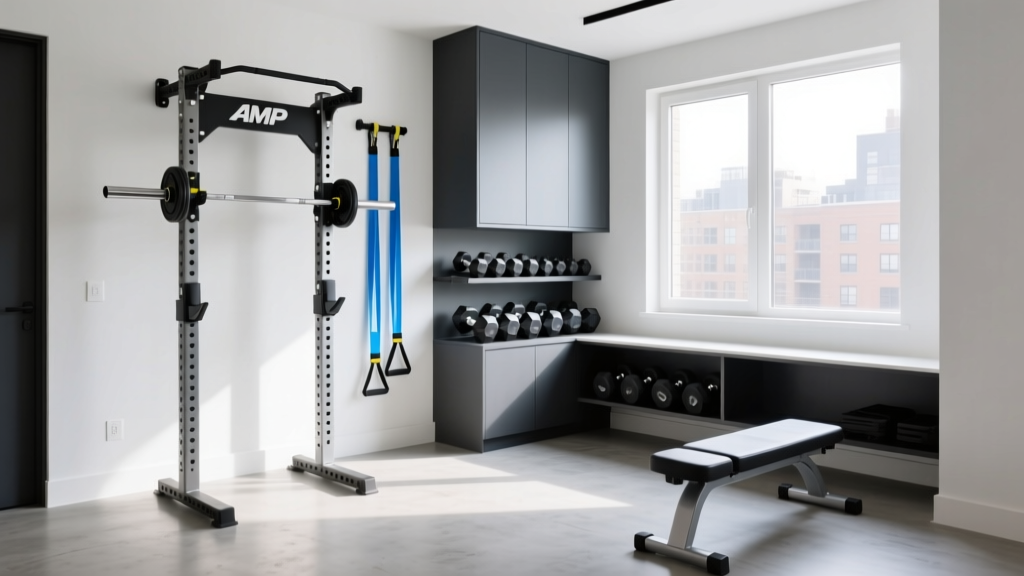
- Verticality over Horizontality: Utilizing wall-mounted functional trainers and foldable pull-up rigs that draw the eye upward and keep the floor clear for kettlebell flows or yoga.
- Digital Resistance Integration: Incorporating smart gyms that use electromagnetic resistance rather than gravity-based iron stacks, eliminating the need for bulky weight trees.
- Multi-Planar Hinges: Equipment that physically folds flat against the wall, transforming a dedicated training zone back into a functional living space in under 30 seconds.
Clearance and Footprint Calculations
Before purchasing any foldable rig, you must verify your ceiling height and wall depth. Standard residential ceilings are 96 inches (8 feet). If you plan to perform overhead presses or pull-ups, your rig's highest point must not exceed 84 inches, leaving a 12-inch buffer to prevent drywall damage from knurled bars or dropped collars. Furthermore, foldable racks require a 'swing arc.' Ensure that the deployment path of the uprights is not obstructed by baseboards, which typically protrude 0.5 to 0.75 inches from the wall.
Top Foldable and Wall-Mounted Equipment for 2026
Selecting the right hardware is the most critical phase of space optimization. Below is a comparison matrix of the leading compact solutions that define the modern amp fitness home gym ecosystem.
| Equipment Model | Deployed Depth | Folded Depth | Max Load Capacity | Est. Price (2026) | Best Application |
|---|---|---|---|---|---|
| PRx Performance Profile ONE | 21 inches | 4 inches | 1,000 lbs | $499 - $550 | Heavy barbell lifting in narrow garages |
| Fitness Reality Foldable Cage | 48 inches | 14 inches | 800 lbs | $250 - $299 | Budget-friendly powerlifting basics |
| Speediance Gym Monster 2 | 32 inches | 11 inches (flat) | 220 lbs (digital) | $3,499 | Apartments & tech-driven hypertrophy |
| Tonal 2 Smart Home Gym | 14 inches (arms) | Wall-flush | 200 lbs (digital) | $3,995 + sub | Executive suites & luxury small spaces |
For those prioritizing heavy, traditional barbell movements, the PRx Performance Profile ONE remains the gold standard. Its patented hinge mechanism allows the uprights to fold to a mere 4 inches from the wall. Conversely, if your amp fitness home gym is located in a high-rise apartment where dropping iron plates is prohibited, the Speediance Gym Monster 2 offers up to 220 lbs of electromagnetic resistance with a footprint of just 3.2 square feet when collapsed.
Step-by-Step Layout Optimization for a 10x10 Room
Designing a 100-square-foot room requires a strict adherence to zoning. Follow this sequential framework to maximize utility and safety.
- Step 1: Wall Stud Verification and Reinforcement
Foldable racks generate immense lateral torque when folded and unloaded. You must mount the primary hinges directly into wooden or steel wall studs. Use a magnetic stud finder to locate the center of the stud. If your walls feature metal studs (common in modern apartments), you must use toggle bolts rated for sheer force or install a 3/4-inch plywood backer board spanning multiple studs to distribute the load. - Step 2: Strategic Flooring Installation
Do not wall-to-wall carpet the room. Instead, use 3/4-inch thick vulcanized rubber stall mats (typically 4x6 feet) placed only in the 'drop zone' beneath the foldable rack. This saves money, reduces off-gassing in small, poorly ventilated rooms, and allows the perimeter of the room to remain accessible for vacuuming. - Step 3: The Mirror Illusion and Form Correction
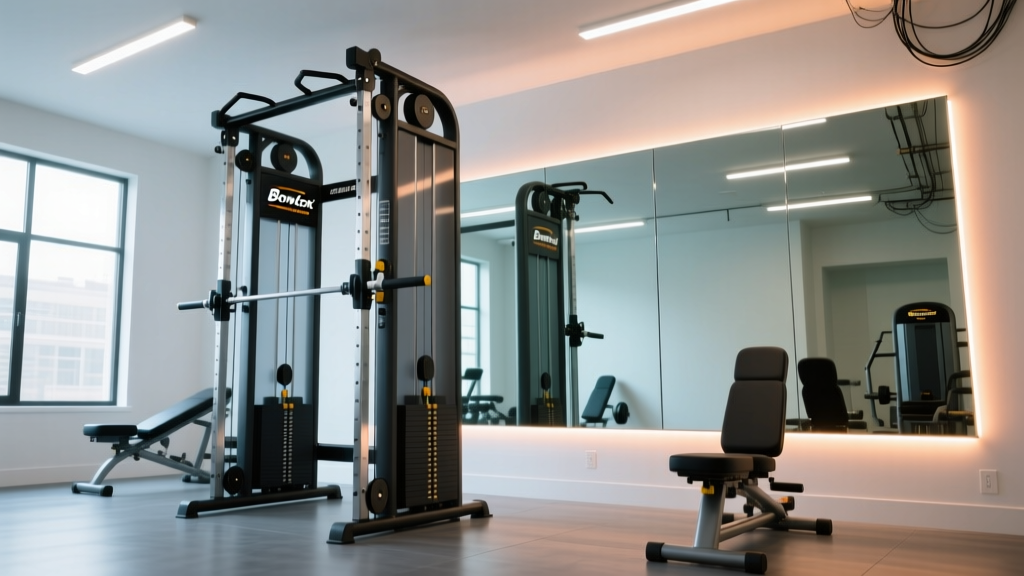
Mounting a large, shatterproof acrylic mirror on the wall opposite your primary training station serves two purposes: it allows for biomechanical form checks during heavy lifts, and it visually doubles the perceived depth of a 10x10 room, reducing the claustrophobia often associated with compact gyms. - Step 4: Peripheral Storage Integration
Utilize the vertical space above the folded rack. Install heavy-duty slatwall panels or magnetic weight plate holders on the adjacent walls. Keeping kettlebells and dumbbells off the floor is non-negotiable in a compact amp fitness home gym layout.
Acoustic Dampening and Environmental Control
Small spaces inherently amplify sound and trap heat. The American Council on Exercise (ACE) frequently highlights the importance of environmental comfort in maintaining long-term workout adherence. In a compact room, the sound of a barbell racking or a smart gym's internal cooling fans can become overwhelming.
'In spaces under 150 square feet, acoustic reverberation can increase perceived exertion and fatigue. Implementing soft goods and acoustic treatments is just as critical as the fitness equipment itself.' — Sports Facility Design Guidelines
Actionable Acoustic Solutions:
- Install 2-inch thick acoustic foam panels on the wall directly behind the smart gym's cooling exhaust to absorb high-frequency motor whine.
- Use a high-velocity, low-decibel floor fan (such as the Vornado Pivot) mounted on the ceiling or high on a wall to circulate air without consuming valuable floor space.
- Apply felt pads to the bottom of all adjustable bench legs to eliminate the sharp 'clack' of metal on rubber flooring when repositioning your gear.
Common Failure Modes in Compact Gym Setups
When optimizing for space, consumers often push equipment to its physical limits. Be aware of these specific failure modes associated with compact gear:
- Hinge Fatigue on Budget Racks: Racks priced under $300 often use metal-on-metal hinges without bushings. Over time, the friction grinds down the steel, causing the uprights to sag when deployed. Always look for UHMW (Ultra-High Molecular Weight) plastic bushings in the hinge joints.
- Cable Friction in Smart Gyms: Wall-mounted digital gyms route cables through tight internal pulleys. If you frequently perform lateral movements that pull the cable at an extreme angle against the housing, you risk fraying the Kevlar-reinforced cords. Always maintain a direct, linear pull relative to the pulley exit point.
- Lag Bolt Shear: If a foldable rack is mounted into drywall anchors instead of structural studs, the dynamic movement of racking a heavy barbell will eventually rip the bolts from the wall. Always use 3/8-inch by 3-inch structural lag screws driven at least 2 inches into solid wood.
Final Verdict: Maximizing Your Square Footage
Building a highly functional amp fitness home gym in a compact space is no longer about compromising on the quality of your lifts. By leveraging advanced foldable squat racks, integrating digital resistance platforms, and strictly adhering to spatial zoning principles, you can engineer a training environment that rivals commercial facilities. The key lies in respecting the geometry of your room, investing in structurally sound hinges and mounts, and treating your floor and wall space as premium real estate. Whether you are outfitting a 10x10 spare bedroom or a narrow corner of your garage, the right layout ensures that your gym works for you, and then disappears when your workout is done.
More gear to consider
All reviews
Weider Crossbow Home Gym Layout: A Beginner Setup Guide

Beyond the Garage: Practical Space Alternatives for Home Gym Setup When Square Footage Is Limited

Gold's Home Gym XRS 50: 2026 Electrical & Safety Setup Trends
Weider Pro 4950 Home Gym: Best Mirrors and Lighting Compared

Home Gym in Shed: How Much Weight Do You Actually Need?