Why Are They Called Dumbbells? Loadable Dumbbell Maintenance Guide
Discover why they are called dumbbells and learn expert maintenance tips to extend the lifespan of your loadable dumbbells and interchangeable plates.

Most lifters treat their free weights as indestructible hunks of iron, tossing them onto rubber mats and ignoring them until rust sets in. But when it comes to loadable dumbbells with interchangeable plates, neglect leads to seized sleeves, stripped collar threads, and compromised safety. Before diving into the mechanical upkeep of these versatile modular tools, let us address a piece of fitness trivia that puzzles many beginners: the origin of the name.
The Etymology: Why Are They Called Dumbbells?
If you have ever asked, "why are they called dumbbells," the answer lies in 16th-century English church towers. Bell ringers used heavy, weighted apparatuses to practice their change-ringing sequences without disturbing the town. By removing the clapper, the bells were rendered silent—or "dumb." According to the Online Etymology Dictionary, the term "dumb-bell" was first recorded in the 1710s to describe these silent exercise devices. In 1711, the essayist Joseph Addison even wrote in The Spectator about exercising with a "dumb bell" in his lodgings to build upper body strength without the noise.
Over the centuries, these wooden and rope contraptions evolved into the solid iron spheres with handles we recognize today. As Wikipedia's historical overview of dumbbells notes, the transition from silent bell-ringing simulators to cast-iron free weights was complete by the late 19th century, cementing the name in the global fitness lexicon.
The Shift to Loadable Interchangeable Systems
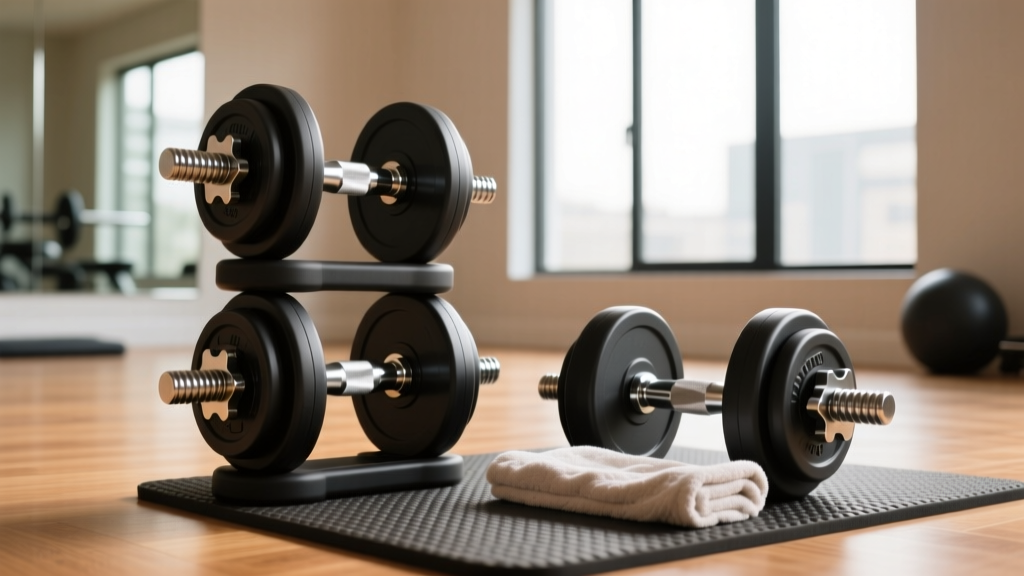
While the original "dumb bells" were solid, stationary wooden contraptions, today’s loadable dumbbell handles are precision-engineered steel instruments. Systems like the Rogue Loadable Dumbbell Handles (priced around $150 per pair) or Titan Fitness Olympic Handles allow lifters to slide standard 2-inch interchangeable plates onto a steel shaft. This modular approach saves space and money, but it introduces moving parts—specifically, rotating sleeves, bronze bushings, and locking collars—that demand rigorous maintenance to ensure longevity and safety.
Sleeve and Bushing Maintenance
The rotating sleeve is the heart of a loadable dumbbell. During dynamic movements like dumbbell snatches or cleans, the sleeve must spin independently of the handle to reduce torque on your wrists and prevent the plates from spinning out of alignment.
Cleaning the Bronze Bushings
Most premium loadable handles use bronze bushings rather than needle bearings to support the sleeve. Bronze is self-lubricating and highly durable, but it is porous. Gym chalk, dead skin, and iron dust inevitably work their way into the microscopic gap between the shaft and the sleeve.
- Step 1: Use a can of compressed air to blow out the gap between the handle shaft and the rotating sleeve. Do this weekly to prevent chalk compaction.
- Step 2: Apply a PTFE-based synthetic lubricant (such as Super Lube 31110 Multi-Purpose Synthetic Grease with Syncolon PTFE). Never use standard WD-40, which is a solvent that will strip existing lubrication and attract more abrasive dust.
- Step 3: Spin the sleeve manually for 60 seconds to work the PTFE into the bronze pores. Wipe away excess with a microfiber cloth.
Knurling Preservation and Grip Hygiene
The knurling on a loadable dumbbell handle is designed to bite into your skin for a secure grip, but those microscopic valleys are prime real estate for moisture and bacteria. If your handles are zinc-coated, they will naturally oxidize to a dull gray over time; this is normal and protects the underlying steel. If they are chrome-coated, trapped sweat can cause sub-surface rust, leading to flaking.
After every heavy sweat session, scrub the knurling with a stiff nylon brush (never a steel wire brush, which will strip the protective finish) and a few drops of 3-in-One oil. This lifts acidic sweat and chalk out of the grooves, preserving the aggressive bite of the knurl pattern for years.
Interchangeable Plates, Collars, and Drop Physics
The longevity of your loadable system also depends on how you manage the plates and the collars that secure them. Unlike solid urethane dumbbells, which distribute impact force across a massive, shock-absorbing head, loadable dumbbells concentrate all dropping force onto the collar and the end of the steel sleeve.
The Danger of Dropping Loadable Dumbbells
Dropping a fully loaded dumbbell from shoulder height is catastrophic for interchangeable systems. The sudden deceleration forces the heavy iron or urethane plates against the collar, which in turn transfers thousands of pounds of shear force into the sleeve's internal snap-ring or end-cap threads. Over time, this will bend the sleeve, warp the plates, or cause the collar to fail mid-lift. Always lower loadable dumbbells under control.
Collar Thread and Clamp Integrity
If you use traditional spin-lock collars, cross-threading is a primary failure mode. Always align the threads carefully and hand-tighten before applying torque. For modern clamp collars (like the Rogue HG 2.0 or Lock-Jaw collars, typically $30 to $45 per pair), inspect the rubberized inner gaskets quarterly. If the rubber tears or compresses permanently, the collar will slip during floor presses, creating a severe crush hazard.
Maintenance Matrix: Loadable Dumbbell Upkeep
| Component | Maintenance Action | Frequency | Recommended Product/Method |
|---|---|---|---|
| Rotating Sleeve | Blow out chalk, apply PTFE lubricant | Weekly | Compressed air & Super Lube PTFE |
| Knurling | Scrub out sweat, chalk, and skin oils | Post-Workout | Nylon brush & 3-in-One oil |
| Clamp Collars | Inspect inner rubber gaskets for tears | Quarterly | Visual inspection, replace if compressed |
| Urethane Plates | Wipe down, keep out of UV light | Monthly | 50/50 water & white vinegar mix |
| Spin-Lock Threads | Check for cross-threading and burrs | Bi-Annually | Brass brush for thread cleaning |
Troubleshooting Common Loadable Failures
Sleeve Seizure
If the sleeve stops spinning entirely, do not force it with a pipe wrench. Disassemble the collar and end-cap (if your specific model allows), soak the shaft in a penetrating oil like Liquid Wrench for 12 hours, and gently tap the sleeve off with a rubber mallet. Clean the shaft with a brass wire brush to remove hardened chalk before reassembling and applying fresh PTFE grease.
Urethane Plate Degradation
Interchangeable urethane plates resist scratching and odor but are highly susceptible to UV degradation. Never store your loadable dumbbells or plates in a garage with direct sunlight hitting them. UV exposure will cause the urethane to chalk, crack, and eventually crumble, ruining the weight calibration and leaving sharp edges.
Frequently Asked Questions
Can I use standard 1-inch plates on Olympic loadable handles?
While you can purchase plastic adapters to fit 1-inch standard plates onto a 2-inch Olympic sleeve, this is highly discouraged. The adapters introduce a millimeter of "play" or wobble, which ruins the balance of the dumbbell during pressing movements and accelerates wear on the sleeve interior.
How tight should I clamp my collars for heavy floor presses?
For heavy floor presses or skull crushers where the dumbbell is directly over your face, clamp collars must be torqued until the lever locks flush against the sleeve. If using screw-down spin-lock collars, tighten them with a wrench, not just your bare hands, to prevent the plates from sliding inward and pinching your fingers or shifting your center of gravity.
Final Thoughts on Longevity
Understanding why they are called dumbbells connects us to centuries of strength training history, but maintaining your modern loadable dumbbells ensures you can continue that legacy safely. By treating your interchangeable plates, collars, and rotating sleeves with the same respect you give your barbell, you will protect your investment, maintain precise weight calibration, and guarantee a safe lifting environment for decades to come.
More gear to consider
All reviews
EZ Curl vs Straight Bar: Evolving Women's Arm Dumbbell Exercises
Cast Iron vs Competition Kettlebells & Dumbbell Pulldown Guide

Barbell Collar Clamp Types Comparison & Dumbbell Raises for Back

Olympic vs Standard Plates: Loading the Dumbbell Pistol Squat

Best Adjustable Dumbbells for the Dumbbell Bench Squat (2026)