
Lower Body Exercises with Dumbbells vs Kettlebells: Cast Iron or Competition?
Analyze 2026 market trends comparing cast iron vs competition kettlebells, and why athletes are shifting from lower body exercises with dumbbells.

The 2026 Free Weights Market Shift: Beyond the Dumbbell
The landscape of functional strength training has undergone a radical transformation over the last three years. According to Grand View Research's fitness equipment market analysis, the specialized free weights sector has seen a sustained 14% year-over-year growth, driven largely by the explosion of home-gym sophistication and hybrid training methodologies. For decades, the undisputed kings of the weight room were standard hex and rubber-coated dumbbells. However, as athletes and coaches demand more efficient, biomechanically superior tools for posterior chain development and ballistic power, a massive pivot is occurring.
While traditional lower body exercises with dumbbells—such as Bulgarian split squats, heavy goblet squats, and dumbbell Romanian deadlifts—remain foundational for hypertrophy, they present distinct limitations in grip endurance, center-of-mass manipulation, and rotational force absorption. Enter the kettlebell. But as the 2026 market floods with options, buyers are faced with a critical dichotomy: Cast Iron vs. Competition kettlebells. This trend report and buying guide dissects the manufacturing realities, pricing matrices, and biomechanical advantages of both styles, helping you optimize your lower body arsenal.
Cast Iron Kettlebells: The Hardstyle and Hypertrophy Standard
Cast iron kettlebells are the descendants of the original Russian girya. In the 2026 market, premium cast iron bells are defined by their single-cast gravity molding and specialized surface treatments. Unlike the uniform dimensions of competition bells, cast iron kettlebells scale in physical size as the weight increases. A 16kg cast iron bell is significantly smaller and more compact than a 32kg bell.
Coating Technologies and Market Leaders
The bare cast iron bells of the early 2010s have been entirely replaced by advanced metallurgical coatings designed to withstand high-humidity environments and aggressive chalk usage:
- E-Coat (Electrocoating): Pioneered by brands like Rogue Fitness, this process submerges the bell in a paint solution and uses an electric current to bond the pigment to the iron at a microscopic level. It preserves the exact texture of the cast mold, offering unparalleled grip feedback for heavy swings and snatches.
- Powder Coat: The current market darling (e.g., Kettlebell Kings, Rep Fitness). A dry polymer powder is applied electrostatically and baked. It provides a slightly more porous, chalk-friendly surface that excels in high-repetition ballistic work.
- Urethane and Virgin Rubber: Reserved for commercial gym environments where floor protection and noise dampening are prioritized over tactile grip feedback.
Expert Insight: For athletes transitioning from lower body exercises with dumbbells to hardstyle kettlebell ballistics, a 35mm to 38mm handle diameter on a powder-coated cast iron bell provides the optimal friction-to-clearance ratio for heavy two-handed swings and goblet squats.
Competition Kettlebells: The Girevoy Precision Tool
Competition kettlebells are engineered for Girevoy Sport (GS), a discipline focused on high-repetition endurance and metabolic conditioning. The defining characteristic of a competition bell is its universal physical dimension. Whether you are lifting an 8kg or a 32kg bell, the external measurements remain strictly standardized at 280mm x 210mm x 210mm.
Manufacturing and Internal Ballistics
To achieve uniform size across varying weights, manufacturers use a steel or cast-iron outer shell and fill the internal cavity with denser materials (like steel shot or lead inserts) for heavier weights, or lighter fillers for lighter weights. The handles are universally set at 33mm in diameter, and the 'horns' (the vertical pillars of the handle) are notably wider and more squared off than their cast iron counterparts.
Brands like Eleiko and Ader Fitness dominate the premium tier of this segment, utilizing precision-machined steel shells coated in high-durability vinyl or urethane. The 33mm handle is deliberately thin to allow the bell to rest securely in the 'rack position' without crushing the forearm during prolonged sets of jerks and long cycle cleans.
Biomechanical Shift: Why Athletes Are Rethinking Lower Body Training
Why are elite strength coaches systematically replacing traditional lower body exercises with dumbbells in favor of double-kettlebell front squats and heavy swings? The answer lies in the biomechanics of the 'rack position' and the posterior chain's force-velocity curve, as extensively documented by the National Strength and Conditioning Association (NSCA).
When performing a heavy dumbbell front squat, the lifter must hold the dumbbells at shoulder height. The limiting factor is rarely the quadriceps or glutes; it is the isometric endurance of the biceps, anterior deltoids, and grip. The dumbbell's center of mass sits awkwardly outside the wrist joint, creating a rotational torque that forces the upper body to leak energy.
Conversely, a pair of 24kg or 32kg kettlebells rests deeply in the rack position. The bell's center of mass aligns directly over the forearm and elbow, transferring the load straight down through the skeletal structure. This allows the lifter to bypass upper-body fatigue and directly overload the lower body musculature. Furthermore, the offset center of mass of the kettlebell during a swing creates a horizontal force vector that dumbbells simply cannot replicate, making the kettlebell swing a superior tool for glute and hamstring power development, a concept heavily emphasized in StrongFirst certification curricula.
2026 Specification & Pricing Matrix
The following table outlines the current market realities for premium free weights, comparing top-tier cast iron against standardized competition models.
| Feature | Premium Cast Iron (e.g., Rogue, KB Kings) | Competition Standard (e.g., Eleiko, Ader) |
|---|---|---|
| Handle Diameter | 35mm - 40mm (Scales slightly with weight) | 33mm (Strictly Uniform) |
| Bell Dimensions | Variable (Scales with mass) | 280 x 210 x 210 mm (Universal) |
| Horn Geometry | Narrower, rounded for two-handed clearance | Wider, squared for single-arm rack stability |
| Primary Coating | E-Coat, Powder Coat | Vinyl, Urethane, Painted Steel |
| 2026 Price Range (16kg) | $75 - $95 USD | $160 - $210 USD |
| Price Per Pound (Avg) | $2.50 - $3.50 / lb | $6.00 - $9.00 / lb |
Hardware Failure Modes and Edge Cases
As a buyer navigating the 2026 market, you must be aware of the specific failure modes associated with each kettlebell type. Cheap manufacturing shortcuts can lead to equipment degradation and training injuries.
- Cast Iron Enamel Chipping: Budget cast iron bells often use cheap painted enamel rather than true powder coating. When these bells collide during double-kettlebell cleans, the enamel shatters, leaving sharp, rust-prone craters. Always verify the coating process before purchasing.
- Competition Bell Forearm Bruising: The wide, flat horns of a competition bell are designed for single-arm work. If an athlete attempts heavy two-handed swings or goblet squats with a competition bell, the wide horns will aggressively impact the inner forearms, leading to severe bruising and bone contusions.
- Handle Slickness in Humidity: Some vinyl-coated competition bells feature polished steel handles that become dangerously slick when exposed to sweat. Look for competition bells with textured or matte-finished handles to maintain grip security during high-rep snatches.
- Flat Base Instability: For exercises like the renegade row or kettlebell push-ups, the base of the bell must be perfectly machined. Many budget cast iron bells have a slight convex curve on the bottom plate, causing them to wobble dangerously under load.
The FitGearPulse Decision Framework
Step 1: Define Your Primary Modality
If your training focuses on Hardstyle (high tension, heavy weight, low reps, explosive power) or general hypertrophy, buy Cast Iron. The thicker handle and narrower horns are vastly superior for two-handed swings, heavy goblet squats, and farmer carries.
Step 2: Assess Your Sport-Specific Needs
If you are training for Girevoy Sport, tactical fitness tests, or high-rep metabolic conditioning (e.g., 10-minute long cycle sets), buy Competition. The 33mm handle and uniform dimensions ensure that your technique and rack position remain identical regardless of the weight you are lifting.
Step 3: The Hybrid Gym Solution
For the ultimate home gym setup in 2026, we recommend a hybrid approach. Invest in a pair of heavy cast iron kettlebells (24kg and 32kg) for lower body strength work and heavy swings, replacing your traditional lower body exercises with dumbbells. Supplement these with a single 16kg or 20kg competition bell for high-rep single-arm endurance work and Turkish get-ups.
Conclusion: The Future of Functional Lower Body Training
The era of relying solely on standard dumbbells for lower body development is fading. While dumbbells will always have a place in isolation and unilateral hypertrophy work, the biomechanical superiority of the kettlebell for posterior chain power and rack-loaded squats is undeniable. By understanding the distinct manufacturing differences, pricing structures, and edge cases between cast iron and competition kettlebells, you can make a highly informed investment that aligns perfectly with your 2026 training objectives.
More gear to consider
All reviews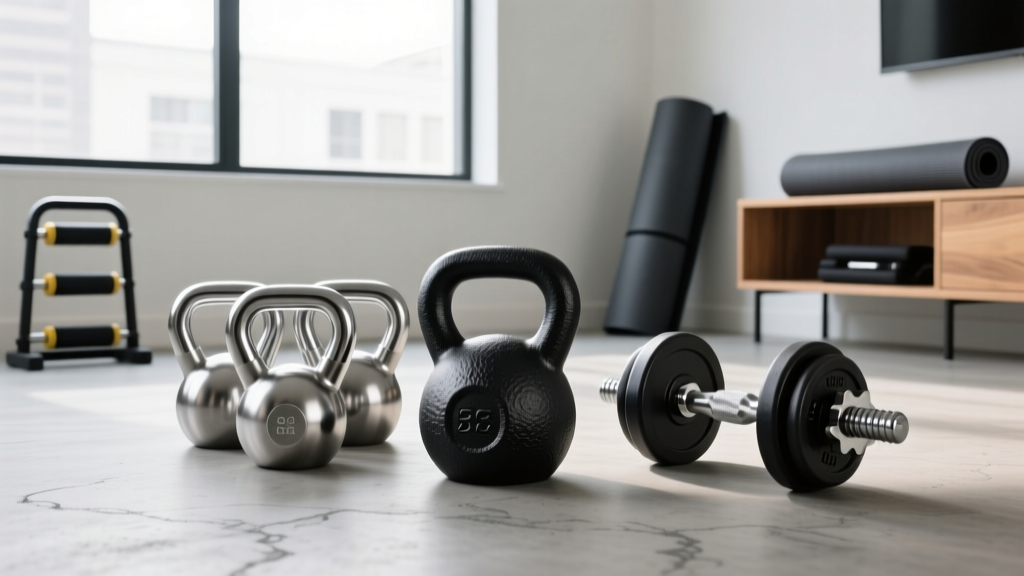
Kettlebell Value: Cast Iron vs Competition & Single Dumbbell Bicep Workout

Best Adjustable Dumbbells for the Dumbbell Bicep Hammer Curl (2026)

Dumbbell Crossover Mistakes: Troubleshooting Neoprene Home Weights

Hex vs Urethane: Gear for a 4 Week Dumbbell Workout Plan PDF

Beyond a Beginner Workout with Dumbbells: Olympic Barbell Guide
