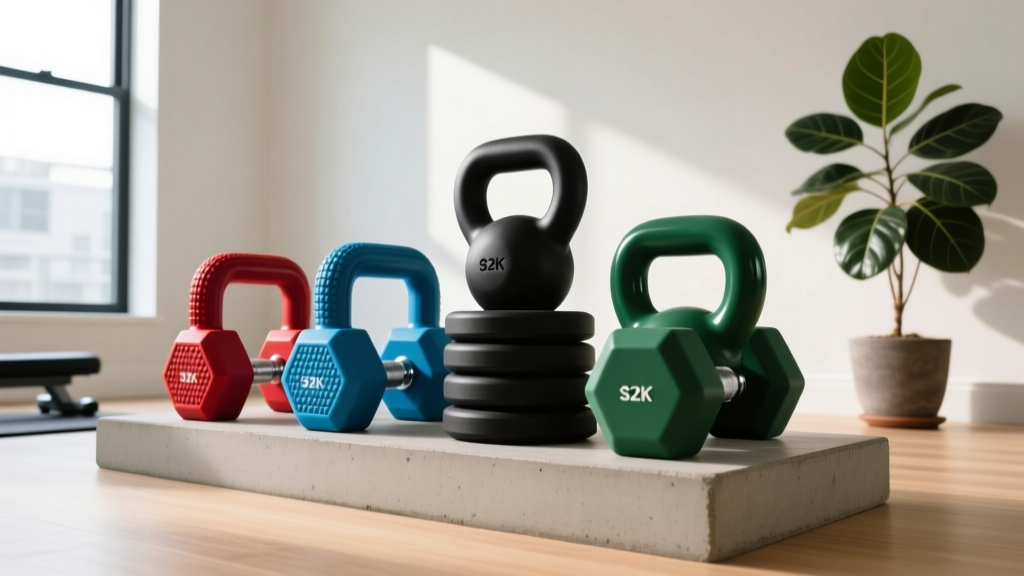
Rubber Hex vs Urethane: Good Dumbbell Workouts at Home Gear Trends
Analyze the 2026 market shift from rubber hex to urethane dumbbells. Discover which material best supports good dumbbell workouts at home.

The home fitness equipment market has undergone a massive maturation cycle as we move through 2026. According to recent Grand View Research fitness equipment reports, the initial pandemic-era rush for budget-friendly gear has been replaced by a distinct consumer pivot toward premium, lifetime-durability equipment. Nowhere is this shift more evident than in the free weights sector, specifically the ongoing debate between traditional rubber hex dumbbells and premium urethane alternatives. For athletes and coaches designing good dumbbell workouts at home, understanding the material science, degradation curves, and true cost-per-pound of these options is no longer optional—it is essential for long-term training consistency.
The 2026 Home Gym Upgrade Cycle
Five years ago, the rubber hex dumbbell was the undisputed king of the garage gym. Brands like CAP Barbell and Yes4All dominated the market by offering accessible weight ranges at roughly $1.50 to $2.20 per pound. However, as home gym owners have progressed to heavier loads and more complex programming, the limitations of vulcanized rubber have become glaringly apparent. In 2026, the market is seeing a massive trade-in wave, with lifters upgrading to urethane-coated options from manufacturers like REP Fitness, Rogue, and Eleiko. This transition is driven by a demand for odorless environments, superior floor protection, and equipment that can withstand high-impact drop sets without structural failure.
Material Science: Vulcanized Rubber vs. Urethane Elastomers
To make an informed purchasing decision, one must look past the aesthetics and examine the chemical composition of the dumbbell heads.
The Reality of Rubber Hex
Standard rubber hex dumbbells are typically manufactured using recycled or synthetic rubber that is vulcanized and bonded to a cast iron or steel core. While the hexagonal shape effectively prevents rolling—a crucial safety feature when performing renegade rows or heavy floor presses—the material itself is highly susceptible to environmental degradation. Rubber is porous and prone to UV and ozone breakdown. Over a 3-to-5-year period in a garage environment with fluctuating temperatures, the rubber will oxidize, leading to surface crumbling, a permanent greasy residue, and a continuous off-gassing of volatile organic compounds (VOCs) that can severely impact indoor air quality.
The Urethane Advantage
Urethane (specifically thermoplastic polyurethane or TPU) is a high-density elastomer that bridges the gap between hard plastic and soft rubber. It is entirely non-porous, UV-stable, and completely odorless. Unlike rubber, which relies on chemical adhesives that can melt or shear under stress, premium urethane dumbbells are often over-molded directly onto the steel core under extreme pressure, creating a mechanical and chemical bond that is virtually indestructible under normal training conditions.
Expert Insight: The Shore A Durometer ScaleWhen evaluating free weights, industry experts rely on the Shore A hardness scale.
- Standard Rubber Hex: Typically measures between 60A and 75A. This softer composition absorbs shock but is highly prone to tearing and gouging when dropped on rough surfaces.
- Premium Urethane: Measures between 85A and 92A. This high-durometer rating provides a dense, rigid exterior that disperses impact energy laterally rather than deforming, protecting both the internal steel core and your flooring.
Head-to-Head Market Comparison Matrix
| Feature | Rubber Hex (Budget Tier) | Urethane (Premium Tier) |
|---|---|---|
| Average Cost (2026) | $1.50 - $2.20 / lb | $3.80 - $5.50 / lb |
| VOC Off-Gassing | High (requires weeks of airing out) | None (odorless) |
| UV & Ozone Resistance | Low (cracks in sunlight) | Extremely High |
| Impact Tolerance | Moderate (tears on rough concrete) | High (resists abrasion and gouging) |
| Core Bonding Method | Adhesive glue (prone to rattling) | Over-molded / Mechanical lock |
| Leading Brands | CAP Barbell, Yes4All, Titan | Rogue, REP Fitness, Eleiko |
Ergonomics and Good Dumbbell Workouts at Home
When programming good dumbbell workouts at home, athletes often overlook how equipment degradation impacts biomechanics and safety. The physical geometry of the dumbbell head dictates how you interact with the weight during complex movements.
For exercises like dumbbell snatches, push presses, or heavy step-ups, the weight must be stable. Rubber hex dumbbells offer flat edges that prevent rolling, which is excellent for safety. However, the thick, soft rubber casing often results in a bulky head profile. When performing movements that require the dumbbells to rest against your thighs or shoulders (such as goblet squats or front rack lunges), the wide profile of a 100lb rubber hex can dig into the joints or limit your range of motion.
Conversely, modern urethane dumbbells—particularly 12-sided or precision-machined hex designs—offer a much higher density-to-volume ratio. A 50lb urethane dumbbell is physically smaller and more compact than a 50lb rubber hex. This compact profile allows for cleaner racking positions, better clearance during close-grip presses, and a more natural center of gravity. The National Strength and Conditioning Association (NSCA) frequently highlights the importance of equipment ergonomics in maintaining proper joint alignment during unilateral movements, making the sleek profile of urethane a distinct biomechanical advantage.
Failure Modes and Edge Cases
As a domain expert analyzing warranty claims and long-term user reports, I have categorized the primary failure modes for both materials. Understanding these edge cases is critical for protecting your investment.
- Rubber Hex Shear Failure: During high-velocity movements like dumbbell swings or snatches, the centrifugal force and subsequent impact upon dropping create massive shear stress at the neck (where the handle meets the head). In budget rubber hex models, the adhesive bond fails, causing the rubber casing to slide outward and exposing the raw steel core. This creates a dangerous imbalance in the weight distribution.
- Urethane Core Fractures: Urethane itself will not tear or degrade. However, the internal cast iron core is still bound by the laws of physics. If you drop 120lb urethane dumbbells directly onto bare concrete or thin foam tiles, the urethane will bounce, but the kinetic energy will transfer directly into the iron core, causing micro-fractures. Over time, this leads to the dreaded 'rattle' and eventual structural snapping of the handle weld.
- The Matting Caveat: To mitigate core fractures with premium urethane, home gym owners must invest in proper flooring. A minimum of 3/4-inch vulcanized rubber horse stall mats or specialized high-density drop pads are mandatory to absorb the kinetic shock and protect the internal architecture of the dumbbell.
Warning on Temperature Extremes: If your home gym is in an uninsulated garage or shed, avoid rubber hex dumbbells entirely. Sub-freezing temperatures cause vulcanized rubber to become brittle, meaning a simple drop from waist height in January can shatter the casing like glass. Urethane maintains its elastomeric properties and flexibility across a temperature range of -40°F to 200°F.
The 2026 ROI and Buying Verdict
From a purely financial perspective, outfitting a full 5-to-100lb set of rubber hex dumbbells in 5lb increments will cost approximately $1,800 to $2,200 in today's market. The equivalent set in premium urethane from a brand like REP Fitness or Rogue will push the investment to $4,500 or more.
However, the return on investment (ROI) must be calculated over a 10-year horizon. Rubber hex dumbbells used in a rigorous home gym environment typically require replacement every 4 to 6 years due to aesthetic degradation, tearing, and handle loosening. Urethane is effectively a 'buy it for life' (BIFL) purchase. When amortized over a decade of daily training, the cost-per-use of urethane drops below that of rubber, while simultaneously eliminating the frustration of toxic odors and messy equipment.
The Final Recommendation: If you are strictly on a budget, outfitting a temporary apartment gym, or only performing low-impact isolation movements, rubber hex remains a viable entry point. But for serious lifters committed to progressive overload, dynamic movements, and building a permanent, odor-free training sanctuary, urethane is the undisputed market leader in 2026. Upgrading your gear removes friction from your routine, ensuring that your equipment supports, rather than distracts from, your training goals.
More gear to consider
All reviews
Cast Iron vs Competition Kettlebells: Supinating Dumbbell Curl Grip

Rubber vs Urethane: 2026 Gear for Arm Workouts Using Dumbbells

V Shape Back Workout with Dumbbells vs Kettlebells: 2026 Value Guide
Rubber Hex vs Urethane Dumbbells for the Dumbbell Dead Lift: Value
Olympic Barbell Guide: Knurling & Tricep Dips Dumbbell
