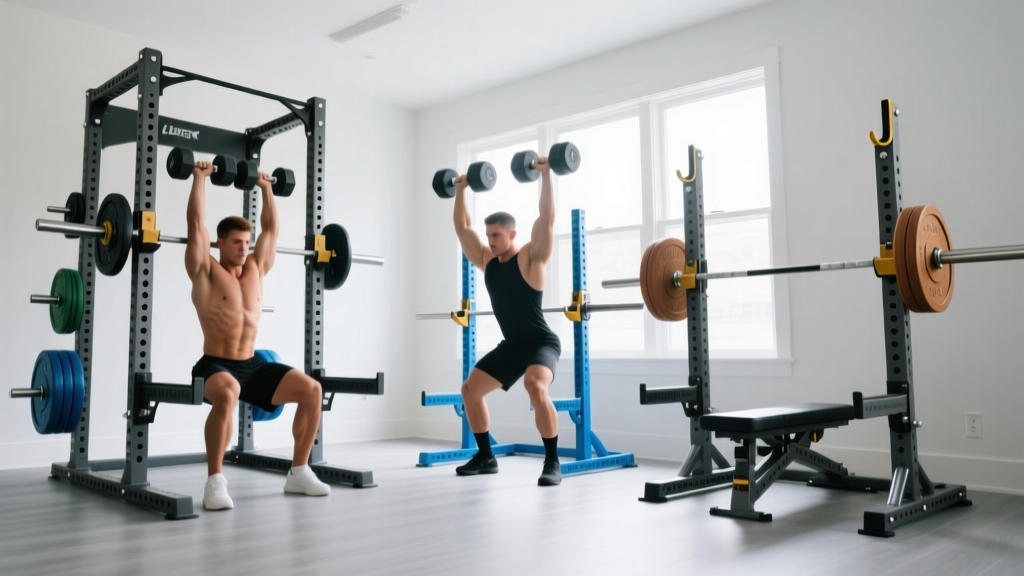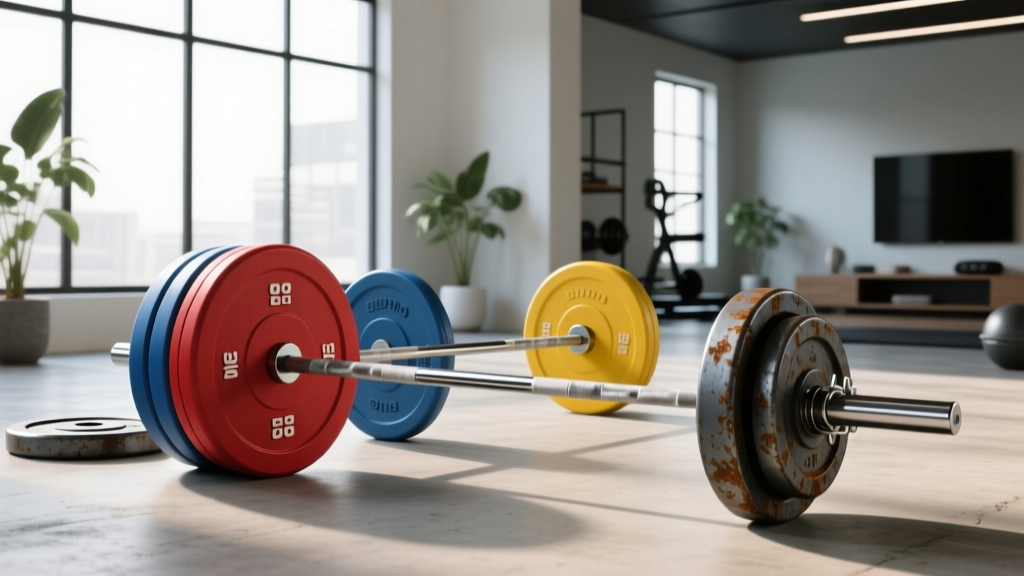
Bumper vs Iron Plates: Budgeting for Swing Dumbbell & Barbell Lifts
Compare bumper plate vs iron plate costs, durability, and value. Discover which is best for Olympic lifts, swing dumbbell routines, and home gym budgets.

The Core Dilemma: Rubber Bounce vs. Cast Iron Density
Outfitting a home gym in 2026 requires navigating a labyrinth of equipment choices, but no decision impacts your wallet and your floor quite like the bumper plate vs iron plate debate. Whether you are building a dedicated Olympic weightlifting platform, setting up a CrossFit-style garage gym, or simply looking to load a barbell for heavy deadlifts, the material of your weight plates dictates the acoustic footprint, structural safety, and financial bottom line of your training space.
For athletes who blend traditional barbell work with dynamic posterior chain movements—such as transitioning from power cleans into a heavy swing dumbbell finisher—the requirement for shock-absorbing equipment becomes even more critical. Dropping iron on concrete doesn't just create a deafening crash; it risks micro-fractures in the plates, bends barbell sleeves, and destroys subflooring. Conversely, bumpers offer safety and uniformity but demand a significant premium per pound. In this comprehensive budget breakdown, we dissect the real-world costs, failure modes, and value propositions of both plate types to help you allocate your fitness budget with absolute precision.
Cost Per Pound: 2026 Market Pricing Breakdown
The most immediate differentiator between cast iron and rubber bumpers is the upfront capital required. While the used market fluctuates, retail pricing for new plates has stabilized in 2026 following the global supply chain corrections of the early 2020s. Below is a comparative matrix of current market averages based on a standard 45lb (20kg) plate purchase.
| Plate Material | Average Cost (Per Pound) | Total Cost (Pair of 45s) | Best Use Case |
|---|---|---|---|
| Standard Cast Iron (Enamel) | $1.20 - $1.60 | $108 - $144 | Slow lifts, bodybuilding, budget gyms |
| Machined / Calibrated Iron | $2.50 - $3.50 | $225 - $315 | Powerlifting, precise progressive overload |
| Crumb Rubber Bumpers | $2.20 - $2.80 | $198 - $252 | High-volume drops, garage gyms, outdoor use |
| Virgin Rubber Bumpers | $4.50 - $6.50 | $405 - $585 | Olympic lifting, commercial facilities |
| Urethane Competition | $8.00 - $12.00+ | $720 - $1,080+ | Sanctioned meets, elite performance centers |
Note: Shipping costs heavily skew these numbers. Cast iron is incredibly dense, meaning a 500lb freight shipment of iron plates will often incur $150–$250 in freight fees, whereas the same weight in bumpers takes up significantly more volumetric space, sometimes triggering dimensional weight pricing from carriers.
Impact, Noise, and the "Swing Dumbbell" Factor
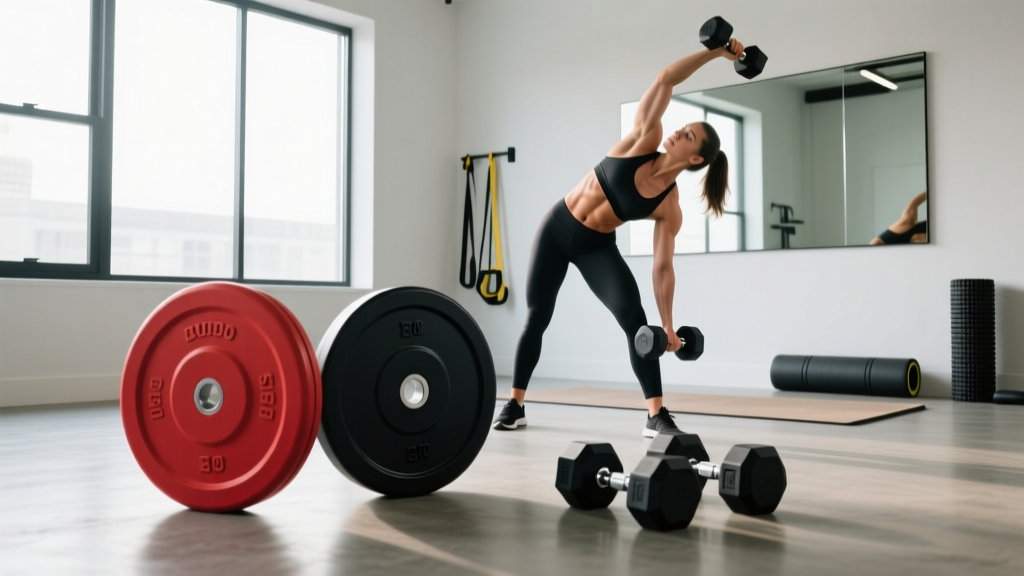
When evaluating value, you must look beyond the sticker price and consider the environmental cost of your training. If your programming includes high-rep Olympic variations, or if you frequently transition from barbell complexes to a heavy swing dumbbell protocol, your floor's structural integrity is constantly on the line.
⚠️ The Dynamic Movement Warning: Executing a heavy swing dumbbell exercise or dropping a fatigued barbell from the hip generates immense kinetic energy. A 45lb cast iron plate dropped from waist height on a standard residential concrete slab (typically 3,000 to 4,000 PSI compressive strength) can cause spalling, pitting, and eventual cracking. Bumper plates, engineered with a International Weightlifting Federation (IWF) standardized 450mm diameter, disperse this kinetic energy across a wider, softer surface area.Furthermore, acoustic dampening is a massive hidden value of bumpers. Virgin rubber and crumb rubber absorb high-frequency sound waves. If you share a wall with neighbors or have a bedroom above your garage gym, the decibel reduction provided by bumpers during eccentric drops is not just a luxury—it is a necessity for lease preservation and household harmony.
Durability and Failure Modes: When Plates Die
Neither iron nor rubber is immortal. Understanding the specific failure modes of each material is crucial for long-term budget forecasting. A cheaper plate that breaks in 18 months is ultimately more expensive than a premium plate that lasts a decade.
Bumper Plate Edge Cases: The "Taco" Effect and Hub Separation
Bumper plates are rated by their Shore A Durometer (hardness). A lower durometer (e.g., 75A-85A) provides a "dead bounce," which is ideal for safety, but makes the plate more susceptible to warping. If you drop a barbell loaded exclusively with 10lb or 15lb bumper plates, the thinner rubber matrix cannot support the bending force of the barbell sleeve. The plates will fold inward like a taco and may remain permanently warped.
Additionally, the steel center hub is the most common point of catastrophic failure in budget bumpers. Over hundreds of drops, the bond between the rubber and the steel insert degrades. In low-tier imported bumpers, the hub will eventually separate from the rubber body, rendering the plate useless and potentially dangerous if it catches on a barbell sleeve during a lift.
Iron Plate Edge Cases: Rust, Chipping, and Calibration Drift
Cast iron plates are virtually indestructible regarding impact—you could drive a truck over them and they would survive. However, their enemy is moisture and cosmetic degradation. Standard enamel-coated iron plates will chip when banged together, exposing the raw iron underneath. In a humid garage gym, this leads to surface rust within weeks.
Moreover, standard cast iron suffers from "calibration drift." A budget 45lb iron plate might actually weigh anywhere from 42lbs to 47lbs. For casual bodybuilding, this is irrelevant. But if you are tracking precise 1-rep max percentages or following a strict periodization program, this 5-10% variance can derail your progressive overload metrics. This is why serious powerlifters opt for machined or calibrated steel plates, which carry a strict +/- 1% weight tolerance but cost nearly as much as virgin rubber bumpers.
"The true cost of gym equipment isn't just what you pay at checkout; it's the cost of replacement, floor repair, and the friction it adds to your daily training environment." — Garage Gym Engineering Principles, 2025
The Hybrid Gym Strategy: Maximizing Value
You do not need to choose exclusively between iron and bumpers. The most financially savvy home gym owners in 2026 utilize a Hybrid Allocation Framework to maximize their budget without sacrificing functionality. Here is a step-by-step blueprint for outfitting a versatile, budget-conscious weight room:
- The Bumper Baseline (160 lbs): Purchase one pair of 45lb (20kg) and one pair of 10lb (5kg) virgin or high-density crumb rubber bumpers. This gives you 130lbs of droppable weight, ensures the barbell is always elevated to the correct 450mm starting height for deadlifts and cleans, and protects your floor during dynamic movements.
- The Iron Multiplier (200+ lbs): Fill the rest of your capacity with 45lb and 25lb cast iron plates. Since you will never drop the barbell when it is loaded with 300+ lbs (the risk to your wrists and elbows is too high), the outer iron plates will never strike the floor. You get the benefit of high weight capacity at $1.30/lb instead of paying $5.00/lb for rubber you don't need.
- The Accessory Buffer: Keep a set of fractional iron plates (1.25lb, 2.5lb) for micro-loading. Fractional bumpers are notoriously fragile and prone to hub separation, making machined steel the undisputed king of micro-plates.
By applying this hybrid model, a lifter can build a 300lb plate set for roughly $450, compared to the $1,200+ it would cost to buy the equivalent weight entirely in virgin rubber bumpers.
Final Verdict: Where Should Your Budget Go?
The bumper plate vs iron plate decision ultimately hinges on your training modality and your floor's composition. If your routine is heavily anchored in Olympic weightlifting, CrossFit metcons, or high-impact circuit training that incorporates drops and heavy swing dumbbell variations, virgin or crumb rubber bumpers are a non-negotiable investment. The premium you pay per pound is essentially an insurance policy for your equipment, your flooring, and your hearing.
Conversely, if your training revolves around controlled powerlifting, bodybuilding, and slow eccentrics where the barbell is always lowered to the pins or the floor with control, cast iron remains the undisputed champion of value. It offers unparalleled density, lifelong durability, and a price-per-pound ratio that leaves more room in your budget for a high-quality barbell, a sturdy power rack, and premium flooring. Assess your actual training habits, calculate your true drop-risk, and allocate your capital where it impacts your performance the most.
For more detailed specifications on plate dimensions and drop-test standards, refer to the International Weightlifting Federation (IWF) technical rulebook, or check the exact durometer ratings on Rogue Fitness Echo Bumper Plates.
More gear to consider
All reviews
Best Neoprene Dumbbells for the Dumbbell French Press (2026)
Reverse Grip Dumbbell Curl: Rubber Hex vs Urethane Review

Biceps and Triceps Workouts with Dumbbells: 2026 Urethane vs Rubber Hex Trends

Space-Saving Dumbbell Racks: Layouts for the Dumbbell Chop
Bumper vs Iron Plate Longevity & Dumbbell Side Bends Muscles Worked