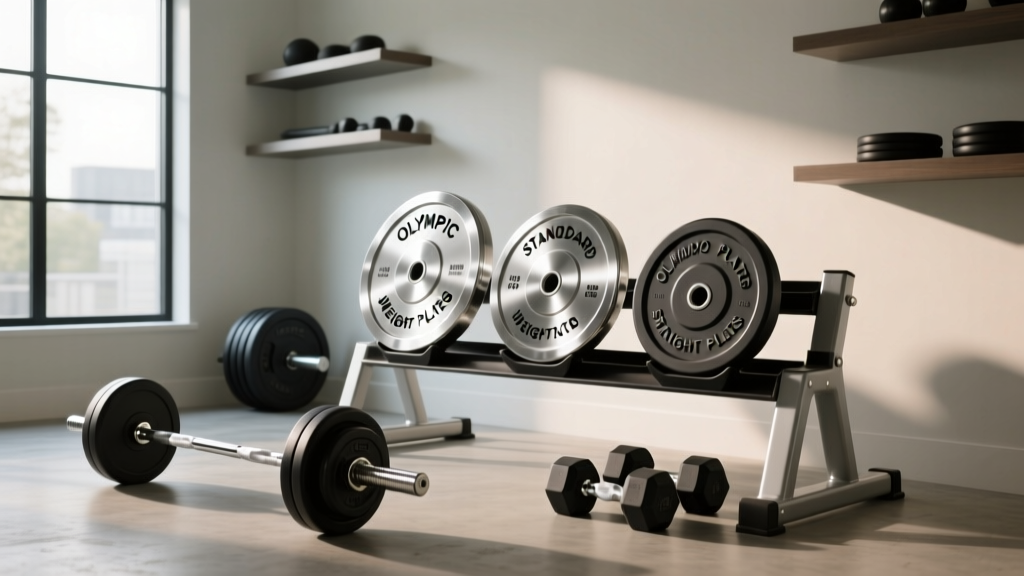
Olympic vs Standard Weight Plates: Upgrading Past Plastic Dumbbells
Troubleshoot common home gym mistakes when upgrading from plastic dumbbells. Compare Olympic vs standard weight plates, sizing, and compatibility.

Every serious home gym owner eventually hits a critical crossroads: the moment your beginner gear can no longer support your progressive overload. For many, this journey starts with department-store fitness kits featuring cement-filled plastic dumbbells and 1-inch standard weight plates. While these accessible tools are fine for day-one workouts, transitioning to a dedicated barbell setup requires navigating the notoriously confusing world of weight plate types—specifically, the differences between Olympic and standard plates.
Mixing incompatible gear, misjudging barbell sleeve diameters, or holding onto degrading plastic dumbbells can lead to ruined equipment, inaccurate tracking, and severe safety hazards. In this 2026 troubleshooting guide, we break down the exact mechanical differences between Olympic and standard weight plates, diagnose the most common upgrading mistakes, and provide a framework for building a commercial-grade iron arsenal.
The Great Home Gym Trap: Outgrowing Plastic Dumbbells and Vinyl Plates
Before diving into plate compatibility, we must address the elephant in the home gym: plastic and vinyl-coated gear. Many beginners purchase plastic dumbbells and standard plastic weight plates because they are cheap, quiet, and rust-proof. However, from a biomechanical and structural standpoint, they are a troubleshooting nightmare.
⚠️ TROUBLESHOOTING ALERT: The Internal Shift FailureMost cheap plastic dumbbells and standard weight plates are not solid iron; they are hollow polyethylene shells filled with sand or cement. Over time, temperature fluctuations and repeated dropping cause the internal filler to settle or crack. A 20lb plastic dumbbell can easily become unbalanced, shifting the center of gravity and placing uneven shear stress on your wrists during pressing movements.
Furthermore, the physical bulk of plastic gear is a major limiting factor. Because cement and sand are significantly less dense than cast iron, a 40lb plastic dumbbell is often twice the size of its iron counterpart. This bulkiness restricts your range of motion on exercises like dumbbell bench presses or lunges, forcing you to upgrade to dense iron plates and dumbbells to maintain proper form.
Olympic vs. Standard Weight Plates: The Core Mechanical Differences
The most frequent mistake home gym owners make is assuming 'Standard' means 'industry standard.' In the fitness equipment world, Olympic is the true commercial standard, while Standard is a legacy term for lightweight, 1-inch home gym gear.
According to equipment safety guidelines published by the National Strength and Conditioning Association (NSCA), understanding load tolerances and sleeve diameters is mandatory for preventing catastrophic equipment failure under heavy loads.
| Feature | Standard Weight Plates | Olympic Weight Plates |
|---|---|---|
| Center Hole Diameter | ~1.06 inches (27mm) | 2.00 inches (50.8mm) |
| Barbell Sleeve Size | 1.00 inch (25.4mm) | 1.96 inches (50mm) |
| Typical Material | Cast Iron, Cement-filled Plastic | Machined Cast Iron, Steel, Rubber Bumper |
| Max Barbell Load | 200 - 300 lbs (before bar bends) | 500 - 1,500+ lbs (whip and tensile strength) |
| 2026 Avg. Price | $1.20 - $1.80 / lb | $2.50 - $4.50 / lb |
The International Weightlifting Federation (IWF) mandates strict 50mm sleeve tolerances for Olympic lifting, ensuring that calibrated Olympic plates slide smoothly onto the barbell without excessive wobble, which is crucial for high-velocity movements like cleans and snatches.
5 Costly Mistakes When Upgrading Your Iron
Mistake 1: The Sleeve Mismatch Disaster
The most common troubleshooting ticket we see involves lifters buying a set of beautiful Olympic rubber bumper plates, only to realize their existing barbell has 1-inch standard sleeves. Conversely, some attempt to slide 1-inch standard plates onto a 2-inch Olympic bar. Neither will work. Standard plates will not physically fit over an Olympic sleeve, and Olympic plates will slide loosely around a standard sleeve, destroying the barbell's knurling and creating a massive safety hazard during squats or bench presses.
Mistake 2: Trusting 'Universal' Adapters for Heavy Loads
You can find plastic or metal 'Olympic to Standard' adapters online that allow you to put 2-inch Olympic plates on a 1-inch bar. Do not use these for heavy lifting. These adapters introduce a secondary point of failure. The shear stress of a 250lb deadlift can easily snap a plastic adapter or warp a cheap metal one, causing the plates to slide off the sleeve mid-lift.
Mistake 3: Overloading Standard 1-Inch Bars
Standard barbells are typically made from lower-grade steel or hollow aluminum. While an Olympic barbell is rated for 500+ lbs and features 'whip' (elastic deformation that returns to shape), a standard 5-foot bar will permanently bend (plastic deformation) if loaded past 200-250 lbs. If you are squatting or deadlifting heavy, standard plates on a standard bar is a structural liability.
Mistake 4: Ignoring Calibrated Tolerances
When transitioning away from plastic dumbbells, lifters often buy the cheapest cast iron standard plates they can find. Cheap standard plates are notorious for weight inaccuracy; a 45lb plate might actually weigh 41lbs. Olympic calibrated plates, however, are machined to a tolerance of +/- 10 grams. If you are tracking progressive overload accurately, standard plates will sabotage your data.
Mistake 5: Miscalculating Rackability and Thickness
Standard plates are generally thicker than Olympic plates. If you are using a shorter 5-foot or 6-foot standard barbell, you will physically run out of sleeve space before you can load enough 1-inch plates to reach heavy weights. A 7-foot Olympic barbell provides 16.3 inches of loadable sleeve space, allowing you to stack over 800 lbs of standard-thickness Olympic iron.
Step-by-Step Transition Framework (2026 Edition)
Ready to retire the plastic dumbbells and build a reliable iron setup? Follow this phased approach recommended by strength coaches and the American Council on Exercise (ACE) for safe home gym progression.
- Audit and Liquidate: Weigh your current plastic dumbbells and standard plates on a digital scale. Note the inaccuracies. Sell or donate the plastic gear to local community centers or beginners who need low-impact, quiet weights for floor work.
- Invest in the Foundation: Purchase a 7-foot, 20kg (44lb) Olympic barbell with a minimum tensile strength of 190,000 PSI and bronze or needle bearings in the sleeves.
- Buy Matched Olympic Iron: Source a matched set of machined cast iron Olympic plates (pairs of 45s, 25s, 10s, and 5s). As of 2026, global supply chains have stabilized, and you can expect to pay around $2.50 per pound for high-quality, virgin cast iron Olympic plates.
- Upgrade Storage: Standard weight trees cannot hold Olympic plates due to the 2-inch horn requirement. Invest in a heavy-duty Olympic plate tree or a power rack with integrated 2-inch plate storage pegs to keep your gym floor safe and organized.
Frequently Asked Questions
Can I use standard plates on an Olympic bar?
No. Standard plates have a 1-inch hole and will not fit over the 2-inch sleeve of an Olympic barbell. While you can buy 'Standard to Olympic' adapter sleeves that slide onto the 1-inch bar to make it 2 inches, you cannot shrink an Olympic plate to fit a standard bar.
Why do my plastic dumbbells smell and degrade?
Many budget plastic dumbbells and vinyl-coated standard plates are manufactured using recycled plastics and low-grade cement fillers. When exposed to UV light from sunlight or high humidity in a garage gym, the polyethylene shells become brittle and off-gas volatile organic compounds (VOCs), leading to a persistent chemical odor and eventual cracking.
Are rubber-coated Olympic plates better than bare cast iron?
For home gyms, urethane or virgin rubber Olympic plates are highly recommended over bare cast iron or cheap recycled rubber. They protect your flooring from impact damage, reduce noise, and prevent rust. However, avoid cheap 'rubber' plates made from recycled tires, as they carry a strong, lingering odor that is difficult to ventilate in a closed garage gym.
What is the best way to clean second-hand cast iron plates?
If you are upgrading from plastic dumbbells and buying used Olympic iron, clean the plates with a wire brush to remove surface rust. Wipe them down with a 50/50 mix of white vinegar and water, dry them completely, and apply a light coat of 3-in-One oil or mineral oil to seal the iron and prevent future oxidation.
More gear to consider
All reviews
Loadable Dumbbell Care for Your Heavy Push Day Dumbbell Workout

Types of Bicep Curls with Dumbbells: Loadable Setup Value Guide

Overhead Shoulder Press Dumbbell vs Kettlebell: Cast vs Competition
EZ Curl Bar vs Straight Bar Longevity: Care Tips & Single Dumbbell Good Morning Alternatives

EZ Bar vs Straight Bar: Upgrading Your Whole Body Dumbbell Workout
