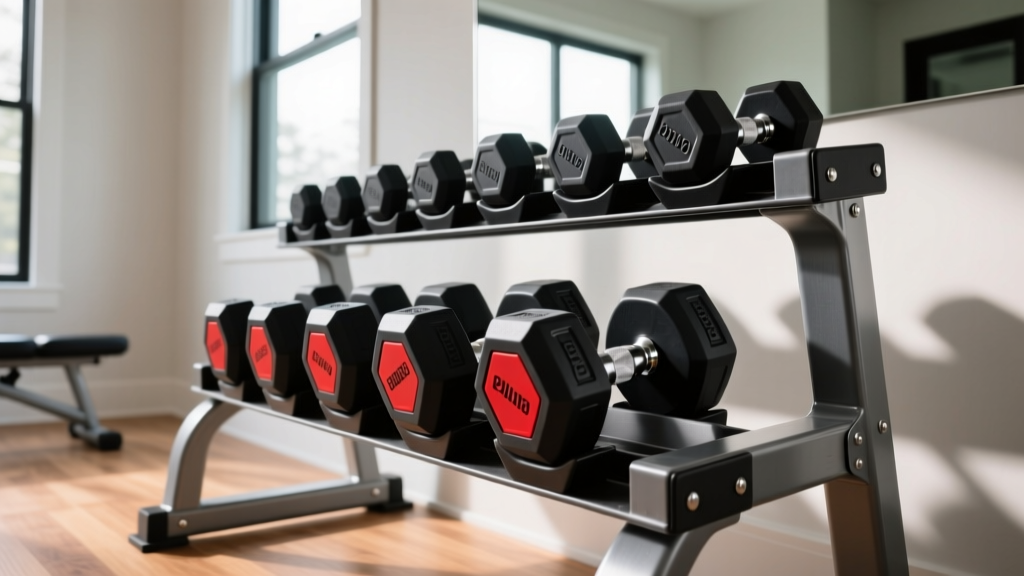
Protecting Your Rack: Tricep Extension Dumbbell Storage & Care
Learn how to maintain your dumbbell rack and prevent structural damage from storing heavy, awkward weights like a tricep extension dumbbell.

Home gyms and commercial facilities alike invest heavily in premium free weights and storage solutions. Yet, the intersection of extreme muscular fatigue and awkward equipment handling creates unseen stress on these storage systems. Consider the heavy single tricep extension dumbbell—often ranging from 60 to 120 pounds—used for overhead French presses, skull crushers, or goblet-style tricep extensions. When a lifter finishes a grueling set, the natural instinct is to guide the weight down quickly, resulting in a high-impact drop onto the rack's tier. Over time, this specific micro-trauma compromises welds, degrades protective saddles, and misaligns frames.
As of 2026, modern storage solutions are engineered for immense static loads, but they remain vulnerable to dynamic, off-center impact forces. Proper maintenance and specialized racking techniques are critical for extending the lifespan of your equipment. Below is a comprehensive guide to inspecting, maintaining, and optimizing your dumbbell rack for heavy, awkwardly handled weights.
⚠️ Data Highlight: The Physics of the "Tricep Drop"
An 80 lb (36 kg) urethane-coated dumbbell dropped from just 2 inches (5 cm) above a rack lip generates a peak impact force exceeding 250 lbs of localized pressure upon contact. When this force is applied repeatedly to a single point on an 11-gauge steel lip, it accelerates metal fatigue and causes micro-fractures in the surrounding powder coat, eventually leading to structural warping.
The Biomechanics of Rack Damage: Why Heavy Singles Matter
Standard dumbbell racks are designed to hold weight evenly across their horizontal tiers. However, exercises like the overhead tricep extension require a single, massive dumbbell. The biomechanics of finishing this lift dictate that the user's arms are fully extended overhead, and the descent path is often slightly arced rather than perfectly vertical.
When the lifter racks the weight, they rarely set it down flush. Instead, the edge of the dumbbell head strikes the rack's lip first. This point-load impact is the primary culprit behind bent rack lips and torn rubber saddles. According to the ACSM's Health/Fitness Facility Standards, equipment subjected to high eccentric loading and repetitive impact requires inspection intervals twice as frequent as standard static storage units. Ignoring this leads to chipped urethane on your expensive dumbbells and a progressively unstable rack frame.
Inspecting Your Rack's Structural Integrity
To ensure your storage solution can handle the repeated abuse of heavy tricep extension dumbbells, you must conduct a targeted structural inspection. Premium racks, such as the Rogue 3-Tier Dumbbell Rack, utilize 7-gauge or 11-gauge steel welded frames. While incredibly strong, the welds are the most vulnerable points under dynamic stress.
The Saddle and Lip Degradation Matrix
The material lining your rack's tiers dictates how well it absorbs the shock of heavy, awkwardly dropped weights. Below is a comparison of common saddle materials and their longevity under high-impact conditions.
| Saddle Material | Impact Absorption | Failure Mode | Estimated Lifespan (Heavy Use) |
|---|---|---|---|
| UHMW Polyethylene | Excellent (Low Friction) | Surface scratching; rarely cracks | 10+ Years |
| Vulcanized Rubber | Good (High Friction) | Tearing, dry rot, chunking | 3–5 Years |
| Bare Steel / Powder Coat | Poor (Zero Give) | Chips dumbbell urethane; rack lip bends | N/A (Causes secondary damage) |
Step-by-Step: Safely Racking Heavy Overhead Weights
Preventing rack damage starts with user behavior. When finishing a set with a heavy tricep extension dumbbell, follow this controlled racking sequence to eliminate point-load impacts:
- The Eccentric Lower: Do not drop the weight from overhead. Lower the dumbbell to your shoulder or chest level first, regaining full control of the center of mass.
- The Thigh-Catch: For dumbbells exceeding 70 lbs, use a seated or staggered stance. Drop the dumbbell head safely onto your thigh, then use your leg to guide it toward the rack tier.
- The Slide-In Method: Never lower the dumbbell from above the rack lip. Bring the dumbbell flush against the front of the tier, then slide it horizontally backward into the saddle. This completely eliminates vertical impact force on the rack's edge.
Routine Maintenance Schedule for High-Load Storage
Even with perfect racking technique, the vibration from surrounding gym activities and the sheer static load of heavy dumbbells will loosen hardware over time. Implement this 6-month maintenance protocol to ensure your rack remains rigid and safe.
- Hardware Torque Check: Use a calibrated torque wrench to check all frame bolts. M8 bolts should be tightened to 25 Nm, and M10 structural bolts should be torqued to 40 Nm. Over-tightening can strip the threads on adjustable tier brackets.
- Weld Inspection: Wipe down the weld seams with a damp microfiber cloth. Look for hairline cracks in the powder coat, which indicate steel flexing. If the powder coat is cracking, the weld beneath is experiencing stress fatigue.
- Saddle Cleaning: Clean UHMW or rubber saddles with a 10:1 dilution of Simple Green and water. Never use bleach or harsh degreasers, as these strip the plasticizers from rubber, causing it to dry out, harden, and shatter upon impact.
- Leveling Feet Adjustment: Heavy weights can cause a rack to "walk" or settle unevenly into rubber gym flooring. Check the leveling feet at the base to ensure all four corners are firmly planted, preventing torsional twist on the main uprights.
When to Upgrade Your Storage Solution
If you routinely train with tricep extension dumbbells in the 100+ lb range, a standard A-frame or tiered rack may no longer suffice. The continuous impact will eventually warp standard 11-gauge steel lips.
Expert Insight: "When upgrading for heavy, single-dumbbell movements, look for racks that utilize a 'cradle' or 'scoop' design rather than a flat lip. Cradle systems distribute the kinetic energy of a dropped dumbbell across a wider surface area, reducing peak point-load pressure by up to 60% and virtually eliminating lip bending."
For commercial spaces or advanced home gyms, investing in a specialized dumbbell storage shelf that integrates directly into a power rack's uprights (using pin-and-pipe attachments) offers superior stability. These systems tie the dumbbell storage directly into the massive 3x3-inch, 11-gauge steel uprights of your main rig, bypassing the weaker independent legs of freestanding dumbbell racks.
Final Thoughts on Equipment Longevity
Your dumbbell rack is the unsung hero of your gym's organization and safety. By understanding the unique stresses imposed by awkward, heavy lifts like the tricep extension, you can adjust your racking habits and maintenance routines accordingly. Protecting your investment requires a blend of mindful handling, routine hardware checks, and an understanding of material science. Treat your storage solutions with the same respect you give your lifting technique, and they will safely support your training for decades to come.
More gear to consider
All reviews
Beyond Mini Dumbbells: Olympic Barbell Knurling & Weight Guide
Fixing Dumbbell Nan Kilo Errors: Adjustable Weight Troubleshooting

Wing Exercises Dumbbells Guide: Top Adjustable Picks Reviewed (2026)
Power Rack vs Squat Rack vs Stand: Incline Dumbbell Overhead Extensions
Beyond Arm Workouts with Dumbbells at Home: Barbell Guide
