
Incline Dumbbell Row Muscles Worked: Home Setup & Neoprene Guide
Master the incline dumbbell row muscles worked with our complete home gym setup guide. Learn bench angles, neoprene dumbbell selection, and installation.

Incline Dumbbell Row Muscles Worked: Home Setup & Neoprene Guide
Setting up a dedicated home gym requires more than just purchasing equipment; it demands a strategic understanding of biomechanics, spatial planning, and material science. When targeting the posterior chain, understanding the exact incline dumbbell row muscles worked is critical for selecting the right bench angles and weight increments. For home environments, neoprene-coated dumbbells have emerged as a top-tier choice due to their floor-friendly nature and ergonomic grip. This comprehensive walkthrough will guide you through the anatomical setup, equipment selection, and physical installation of an incline row station optimized for neoprene dumbbells in 2026.
The Biomechanics: Incline Dumbbell Row Muscles Worked
Before installing your bench and racking your weights, you must understand the physiological demands of the movement. The chest-supported incline dumbbell row is a staple for back hypertrophy because it removes the lower back from the equation, isolating the upper posterior chain. According to kinesiology databases like ExRx.net, the chest-supported variation drastically reduces erector spinae activation while maximizing scapular retraction.
Primary Movers
- Latissimus Dorsi: The primary driver of shoulder extension. A 30-degree bench angle places the lats in an optimal stretch position.
- Rhomboids (Major and Minor):strong> Responsible for scapular retraction. These are heavily engaged at the peak contraction phase of the row.
- Trapezius (Middle and Lower Fibers): Works synergistically with the rhomboids to retract and depress the scapulae, crucial for maintaining healthy shoulder mechanics.
Secondary and Stabilizer Muscles
- Posterior Deltoids: Assists in transverse extension, especially if the elbows are flared slightly outward (a 30-to-45-degree angle from the torso).
- Biceps Brachii & Brachialis: Act as dynamic stabilizers and secondary movers during elbow flexion.
- Forearm Flexors: Heavily taxed during the grip phase. This is where neoprene coatings provide a distinct advantage, reducing grip fatigue compared to raw knurled steel.
Why Neoprene Coated Dumbbells for Home Use?
Neoprene (polychloroprene) is a synthetic rubber that offers a unique set of benefits for home gym owners, particularly those performing high-repetition hypertrophy work like incline rows. While commercial gyms often favor urethane for its indestructible nature, neoprene is the undisputed king of the residential garage gym for several reasons.
The Advantages
- Floor Protection: Neoprene provides a soft, forgiving exterior that will not crack ceramic tiles, dent hardwood, or scuff luxury vinyl plank (LVP) flooring if a weight is accidentally dropped during a failed rep.
- Ergonomic Grip: The matte, slightly porous texture of neoprene offers excellent traction when hands are dry, reducing the need for chalk in indoor environments.
- Acoustic Dampening: The coating absorbs sound, making it ideal for apartment dwellers or those training in shared living spaces.
The Limitations (What to Watch For)
Neoprene is not without its flaws. It is highly susceptible to UV degradation if left in direct sunlight, and heavy, acidic sweat can break down the coating over a 2-to-3-year period if not cleaned properly. Furthermore, neoprene dumbbells typically max out at 50 lbs per hand, making them ideal for strict isolation movements like the incline row, but less suitable for heavy powerbuilding.
Complete Station Setup and Installation Walkthrough
Creating a dedicated incline row station requires precise spatial planning. Follow this step-by-step installation guide to build a safe, efficient footprint.
Step 1: Flooring and Spatial Allocation
Allocate a minimum footprint of 4 feet by 6 feet. While neoprene protects floors from scratches, it does not dampen heavy impact vibrations. Install 3/4-inch thick vulcanized rubber horse stall mats over your subfloor. This provides a stable, non-slip base for your bench and protects the subfloor from structural fatigue. Cost estimate: $50 - $70 per mat.
Step 2: Bench Selection and Calibration
For incline dumbbell rows, you need a commercial-grade Adjustable FID (Flat/Incline/Decline) bench. Look for a bench with a 12-gauge steel frame and a minimum 1000 lb weight capacity. The back pad must be at least 12 inches wide to provide adequate support for your ribcage during heavy rows.
Crucial Setup Detail: Ensure the bench ladder has a strict 30-degree and 45-degree notch. Many cheap benches only offer 15, 45, and 60-degree increments. A 15-degree angle is too flat for proper chest support, forcing you to use momentum.
Step 3: Weight Storage Rack Installation
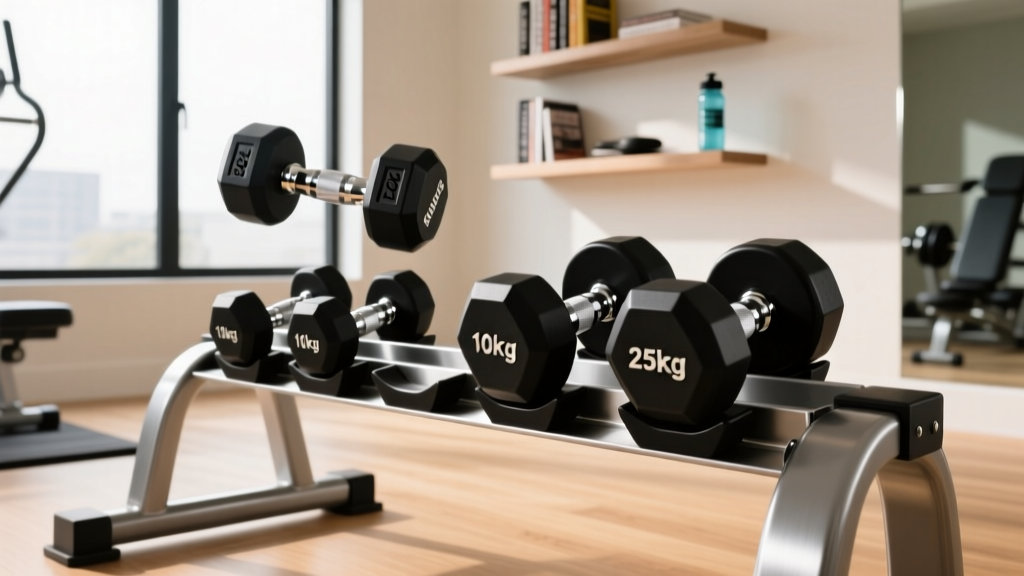
Because neoprene dumbbells have thicker heads than urethane or rubber, they require wider spacing on storage racks. Install a 5-tier A-frame rack positioned exactly 2 feet from the head of the bench. This allows you to grab and drop the weights without excessive twisting. Ensure the rack is bolted to the wall or floor using masonry anchors if placed in a garage environment to prevent tipping hazards.
Equipment Matrix: Neoprene vs. Rubber vs. Urethane
When outfitting your home gym in 2026, understanding the cost and utility differences between coatings is vital. Below is a comparison matrix tailored for home use.
| Feature | Neoprene | Virgin Rubber | Urethane |
|---|---|---|---|
| Avg. Price per lb (2026) | $1.60 - $2.20 | $2.00 - $2.80 | $3.50 - $5.00+ |
| Floor Safety | Excellent (Soft) | Good (Dense) | Fair (Hard) |
| Odor Profile | None | Strong (Off-gassing) | None |
| Durability | Moderate (Tears if dropped) | High | Extreme |
| Best For | Home Isolation / Light Drops | Garage Gyms / Heavy Use | Commercial / Premium Home |
Execution Setup and Form Optimization
Having the right gear is only half the battle. The physical 'setup' of your body on the bench dictates the efficacy of the exercise. The National Strength and Conditioning Association (NSCA) emphasizes that scapular positioning is the most common point of failure in supported rowing movements.
The Step-by-Step Execution
- The Mount: Set the bench to 30 degrees. Grab your neoprene dumbbells and sit on the edge, then hinge forward to lay your chest flat against the pad. Your chin should rest just over the top edge of the bench to keep your cervical spine neutral.
- The Shoulder Set: Before initiating the pull, actively depress your scapulae (pull your shoulders down away from your ears). This disengages the upper traps and forces the lats to take the initial load.
- The Pull: Drive your elbows toward your hips, keeping them tucked at a 15-degree angle from your torso. Do not pull the weights straight up to the ceiling; pull them back and slightly up.
- The Eccentric: Lower the dumbbells under a strict 3-second count until you feel a deep stretch in the lats. The neoprene coating allows you to maintain a secure grip even as your forearms fatigue during this lengthening phase.
Maintenance Protocols for Neoprene Gear
To ensure your investment lasts, implement a strict maintenance routine. Neoprene is porous and will absorb sweat, oils, and bacteria, which can lead to a foul odor and eventual delamination of the coating from the cast-iron core.
- Post-Workout Wipe Down: Use a microfiber cloth dampened with a mild solution of water and white vinegar (80/20 ratio). Never use bleach or harsh ammonia-based cleaners, as these will dry out the synthetic rubber and cause micro-cracking.
- UV Protection: If your home gym is in a garage with windows, ensure the dumbbell rack is not in the direct path of sunlight. UV rays will bleach the neoprene dye and make the material brittle within 12 to 18 months.
- Handling Protocol: While neoprene is drop-resistant on rubber mats, it is not drop-proof. Dropping a 40 lb neoprene dumbbell from shoulder height onto concrete will split the coating instantly. Always place the weights back on the rack or lower them to the floor with control.
Final Thoughts on Your Home Gym Setup
Building a home gym tailored to specific movements like the incline dumbbell row requires a blend of anatomical knowledge and practical equipment selection. By understanding the incline dumbbell row muscles worked, you can manipulate bench angles to target specific back regions. Furthermore, choosing neoprene-coated dumbbells provides a safe, quiet, and highly effective solution for residential spaces, provided you respect the material's limitations and maintain it properly. With your station correctly installed and your form dialed in, you are primed for years of uninterrupted posterior chain development.
More gear to consider
All reviews
Power Rack vs Squat Stand Setup for Dumbbell Thrusters Exercise

Beyond the 30 Min Dumbbell Workout: Barbell Collar Guide
Dumbbell Nan Kilo Moteru? 2026 Adjustable Dumbbell Guide

Olympic vs Standard Plates Setup & Dumbbell Leg Workout at Home

Chest Supported Row with Dumbbells: Neoprene Grip Mistakes & Fixes
