Space-Saving Trap Dumbbell Workouts Using Loadable Plates
Maximize your small home gym layout with loadable dumbbell handles. Discover space-saving trap dumbbell workouts and plate storage strategies.

The Spatial Economics of Loadable Dumbbells
Designing a high-performance home gym in a compact footprint—such as a single-car garage, basement corner, or spare bedroom—requires ruthless spatial efficiency. When targeting the trapezius muscles, traditional fixed dumbbell racks are a massive liability. A standard 5-to-50-pound rubber hex dumbbell rack demands a footprint of roughly 44 inches wide by 28 inches deep (over 8.5 square feet) and costs upwards of $700. Furthermore, the fixed weight increments limit your ability to progressively overload heavy shrugs without purchasing an entirely new, heavier rack.
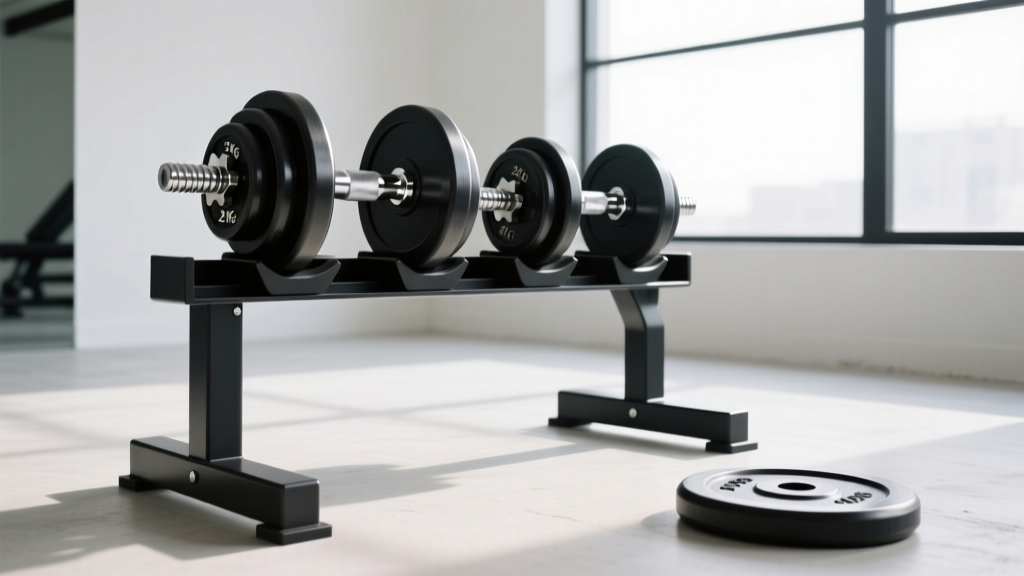
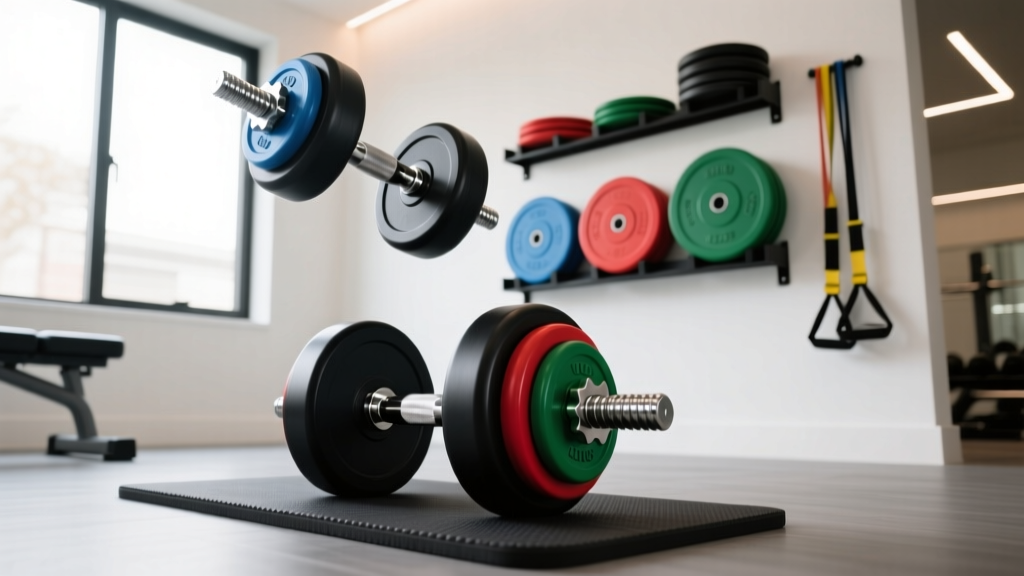
Enter the loadable dumbbell with interchangeable plates. By utilizing plate-loaded dumbbell handles, you consolidate your entire weight room into a fraction of the space. A high-quality pair of loadable handles, combined with a vertical plate tree, reduces your equipment footprint to under 4 square feet while offering a weight ceiling limited only by the plates you own. This paradigm shift is essential for executing heavy, high-yield trap dumbbell workouts in tight spaces without sacrificing progressive overload.
Anatomy of a Compact Trap-Training Zone
Before diving into the programming, we must address the physical layout of your training zone. The trapezius is a large, diamond-shaped muscle spanning the neck, shoulders, and mid-back. According to kinesiology data from ExRx, the traps are divided into three distinct fibers: upper (elevation), middle (retraction), and lower (depression). To hit all three effectively in a small room, your layout must accommodate vertical pulling, horizontal rowing, and overhead pressing.
Layout Clearance Matrix
| Exercise Category | Required Floor Space | Vertical Clearance | Equipment Setup & Storage |
|---|---|---|---|
| Heavy Shrugs (Upper) | 3' x 3' static | Standard ceiling | Loadable handles + Bumper plates on floor |
| Prone Y-Raises (Lower) | 4' x 6' dynamic | Low (Bench height) | Folding adjustable bench + light plates |
| Farmer's Walks (Stabilizers) | 15' linear path | Standard ceiling | Heavy steel plates + Locking jaw collars |
High-Yield Trap Dumbbell Workouts for Tight Spaces
When designing trap dumbbell workouts for a compact footprint, the goal is to maximize time under tension and range of motion (ROM) without requiring sprawling floor space. Here are three highly effective, space-conscious movements utilizing loadable handles.
1. Deficit Loadable Dumbbell Shrugs
Standard shrugs often suffer from limited ROM. In a small gym where you don't have space for a dedicated shrug rack or blocks, you can create a deficit by standing on a pair of 45-pound bumper plates laid flat on the floor. This elevates you roughly 3 inches, allowing the loadable dumbbells to hang lower and forcing the upper traps to stretch further at the bottom of the movement.
- Setup: Load handles with 1.5-inch thick steel plates to maximize weight capacity on the 5.75-inch sleeves.
- Execution: 4 sets of 10-12 reps. Pause for a full 2-second isometric squeeze at the peak elevation.
- Space Hack: Keep the deficit plates stacked in the corner of your workout mat; simply step onto them when it's time for shrugs.
2. Chest-Supported Prone Trap Raises
To target the crucial lower and middle traps without needing a sprawling cable machine, use a folding adjustable bench set to a 30-degree incline. Lie face down, holding lightly loaded dumbbells (10-25 lbs per hand). Raise the weights out to the sides in a 'Y' shape, focusing on scapular depression and retraction. When finished, fold the bench and slide it under a wall-mounted shelf or bed.
3. Overhead Lockout Shrugs
This movement targets the upper traps from a completely different angle and requires zero extra floor space. Press the loadable dumbbells overhead, lock out your elbows, and perform shrugs while the weight is stabilized above your head. This demands intense core stability and traps the scapula in upward rotation, isolating the upper fibers aggressively.
Edge Cases and Failure Modes with Loadable Handles
While loadable dumbbells like the Rogue Loadable Dumbbell Handles (16.5" total length, 1.9" grip diameter) are phenomenal space-savers, they introduce specific mechanical failure modes that you must manage during heavy trap training.
- Sleeve Capacity vs. Plate Thickness: A standard loadable handle leaves about 5.75 inches of usable sleeve space per side. If you use thick rubber hex plates or standard bumper plates, you will 'max out' the physical space on the handle before you reach your true strength limit. Solution: Invest in calibrated steel plates or thin urethane grip plates for your heavy shrug days to fit up to 135+ lbs per hand.
- Collar Slippage During Eccentrics: Trap workouts involve heavy, repetitive vertical oscillation. Standard spring collars will fail under heavy shrugs, causing plates to slide outward and shift the center of gravity. Solution: You must use locking jaw collars (like the Rogue HG 2.0 or Titan Fitness Locking Collars) to clamp the plates flush against the sleeve shoulder.
- Knurling Interference: Some budget loadable handles feature center knurling that can tear up your thighs during heavy deadlift-to-shrug complexes. Ensure your handles have smooth center shafts or wrap the center with athletic tape if you plan on doing touch-and-go floor cleans into shrugs.
'The limiting factor in most home gym trap development isn't effort; it's the lack of heavy, ergonomic implements. Plate-loaded handles solve the ceiling effect of fixed dumbbells, provided you manage the sleeve geometry correctly.' — Home Gym Engineering Principles, 2026
Strategic Storage for Interchangeable Plates
To maintain the spatial advantage of this setup, your plate storage must be meticulously planned. Avoid leaving plates scattered on the floor, which creates trip hazards in tight 8x8 foot workout zones.
- Vertical Plate Trees: A 300 lb capacity vertical tree with a 20-inch base is ideal. Place it in a dead corner where the swing radius of a dumbbell cannot strike it.
- Wall-Mounted Saddle Pegs: If floor space is at an absolute premium, install heavy-duty steel saddle pegs into wall studs. Mount them at waist height (36 inches) to save your lower back from repetitive bending while loading and unloading your dumbbell handles between sets.
Final Verdict on Compact Trap Training
Transitioning to a loadable dumbbell system is the single most effective layout optimization for athletes targeting the trapezius in constrained environments. By eliminating the 8-square-foot monolith of a fixed dumbbell rack, you reclaim vital floor space for dynamic movements, folding benches, and safe plate storage. Pair your loadable handles with thin steel plates, secure them with locking jaw collars, and utilize vertical deficits to execute trap dumbbell workouts that rival any commercial facility, all within the comfort of your micro-gym.
More gear to consider
All reviews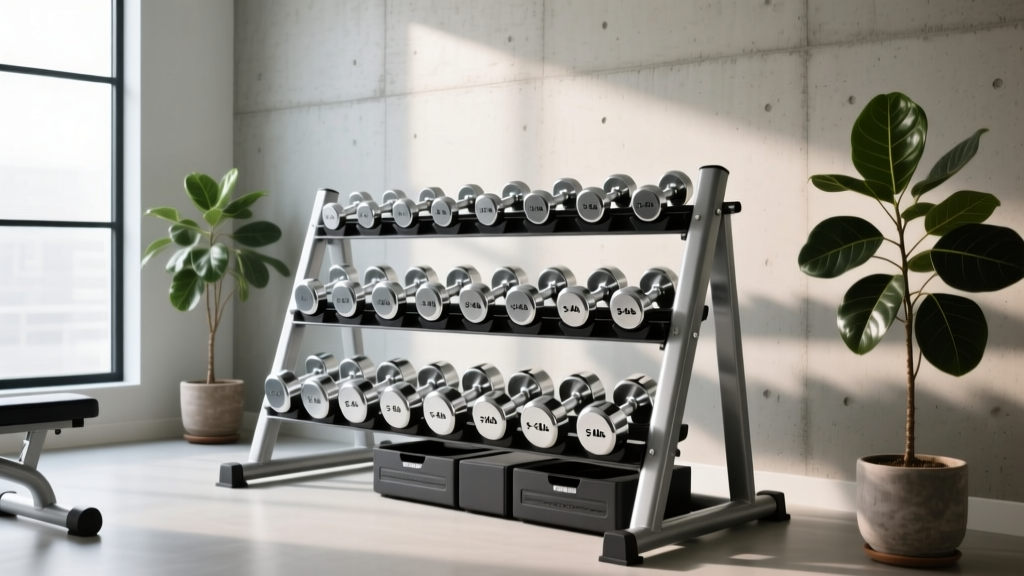
2026 Dumbbell Rack Trends: Optimizing Storage for Heavy Dumbbell Moves for Chest

How Much Do Dumbbells Cost vs. Barbells? Home Gym Setup Guide

Dumbbell Pullovers for Lats: EZ Curl Bar vs Straight Bar
Cast Iron vs Competition Kettlebell Care & Pushups with Dumbbells

Bumper vs Iron Plates: 2026 Trends & Single Leg Dumbbell Glute Bridge