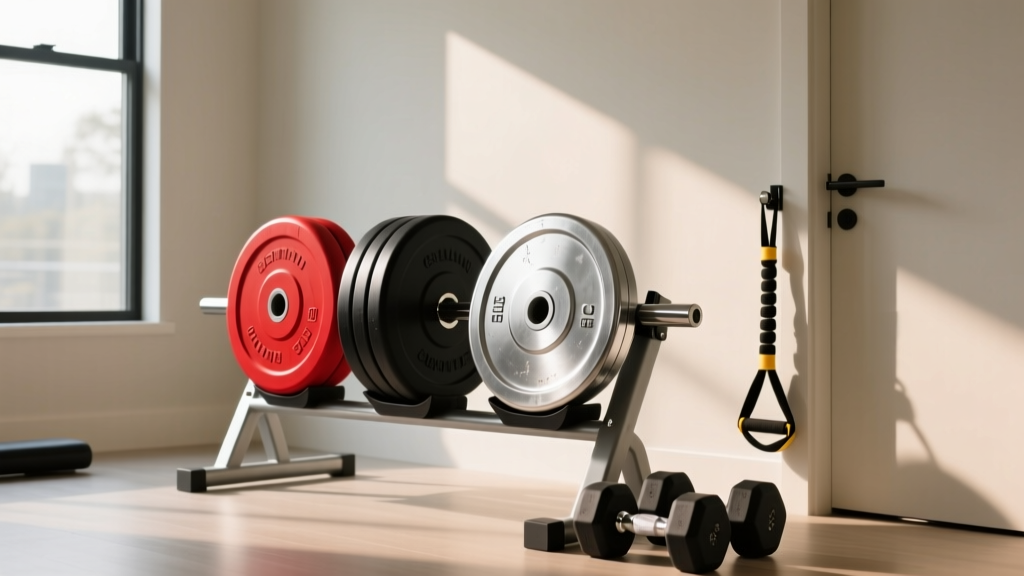
Bumper vs Iron Plates: Budgeting for Squats & Dumbbell Front Raises
Compare bumper vs iron plates for your 2026 home gym budget. We break down costs, durability, and how to fund accessories for dumbbell front raises.

The 2026 Home Gym Capital Allocation Problem
Building a comprehensive home gym in 2026 requires ruthless financial prioritization. With inflation impacting fitness equipment manufacturing and shipping costs, the days of buying an entire garage gym setup on a whim are over. For the budget-conscious lifter, no decision illustrates this financial bottleneck better than the bumper plate vs iron plate debate.
At first glance, weight is weight. A 45-pound plate provides the same gravitational resistance whether it is cast from grey iron or molded from virgin rubber. However, from a value analysis perspective, these two equipment categories represent entirely different asset classes. Choosing between them is not just about aesthetics or noise reduction; it is a strategic capital allocation decision that directly impacts your ability to fund the rest of your gym—specifically, the accessories required for isolation movements like dumbbell front raises, lateral raises, and unilateral correctives.
In this budget breakdown, we will dissect the true cost-per-pound, analyze material failure modes, and provide a financial framework to help you maximize your home gym's ROI.
Raw Cost Breakdown: Price-Per-Pound Analysis
To understand the value proposition, we must look at the current 2026 market rates for weight plates. Prices fluctuate based on raw material costs (iron ore vs. synthetic rubber/polyurethane), but the tiers remain distinct.
| Plate Category | Material Composition | Avg Cost Per Pound | Drop Rating & Bounce | Best Use Case |
|---|---|---|---|---|
| Standard Cast Iron | Grey Iron (Enamel/Painted) | $1.50 - $2.20 | N/A (Damages floors) | Powerlifting, Budget Builds |
| Economy Bumper | Recycled Rubber / Crumb | $2.40 - $3.10 | Low (High Bounce Risk) | General Fitness, Light Drops |
| Virgin Rubber Bumper | High-Density Virgin Rubber | $3.50 - $5.00 | Medium (Dead Bounce) | Olympic Weightlifting |
| Competition Urethane | Polyurethane Matrix | $6.50 - $11.00+ | High (Zero Bounce) | Commercial Gyms, Heavy Drops |
As highlighted in BarBend's comprehensive equipment analysis, a standard 230-pound set of economy bumpers will cost roughly $600 to $700. Conversely, a 200-pound set of basic cast iron plates can be sourced for $300 to $350, especially when bought used or during seasonal freight sales. This creates an immediate $300+ delta in your equipment budget.
Material Science: Durometer Ratings and Failure Modes
Value is not just about the initial purchase price; it is about the lifespan of the asset. To evaluate long-term value, we must examine how these plates fail.
Cast Iron: The Indestructible but High-Maintenance Asset
Cast iron plates are virtually indestructible regarding structural integrity. You could drop a 45-pound iron plate from a three-story building, and it would likely survive. However, iron plates fail in two specific ways:
- Environmental Degradation: If your gym is in an uninsulated garage with humidity levels regularly exceeding 60%, uncoated or poorly enameled iron plates will oxidize. Rust compromises the aesthetics and can stain your flooring and barbell sleeves.
- Acoustic and Impact Failure: Iron transfers kinetic energy directly into your subfloor. Without specialized shock-absorbing flooring (like 3/4-inch vulcanized rubber mats), dropping iron plates will eventually crack concrete slabs or splinter wooden joists.
Bumper Plates: The Hub Pull-Out Phenomenon
Bumper plates are measured on the Shore A durometer scale, which dictates the hardness and bounce of the rubber. Economy bumpers sit around 75 Shore A (highly bouncy and dangerous for deadlifts), while high-quality virgin rubber sits at 85-90 Shore A (dead bounce). According to Rogue Fitness Echo Bumper specifications, premium bumpers are engineered to withstand thousands of drops.
However, bumpers suffer from a unique failure mode: insert pull-out. When a barbell is dropped with only light bumper plates (e.g., a single 10lb or 15lb plate on each side), the bending moment placed on the steel center hub is immense. Over time, the steel hub tears away from the rubber matrix, rendering the plate useless. This means budget lifters who buy thin, light bumper plates for technique work often find them warping or tearing within 18 months.
Spatial Real Estate: The Barbell Sleeve Bottleneck
An often-overlooked factor in value analysis is physical dimensions. Cast iron is significantly denser than rubber. A 45-pound cast iron plate is typically 1.2 to 1.5 inches thick. A 45-pound economy bumper plate is often 3.5 to 4.5 inches thick.
💡 The Sleeve Capacity Reality Check:A standard Olympic barbell has 16.4 inches of loadable sleeve space. If you use thick economy bumpers, you may max out the sleeve space before you reach 400 pounds. If you are a strong powerlifter planning to squat or deadlift 500+ pounds, thick bumpers represent a poor long-term value because you will eventually be forced to buy thinner, more expensive urethane plates or switch back to iron.
The Opportunity Cost: Funding Your Accessory Arsenal
This brings us to the most critical aspect of the budget breakdown: opportunity cost. Every dollar spent on barbell plates is a dollar not spent on isolation and accessory equipment.
Consider the biomechanical requirements of a complete hypertrophy and strength program. While barbells are superior for axial loading (squats, deadlifts, presses), they are suboptimal for targeted unilateral isolation. Take the dumbbell front raise, for example. This movement is essential for anterior deltoid development and shoulder stabilization. You cannot effectively perform strict dumbbell front raises with barbell plates. You need a dedicated set of dumbbells.
Let's run a financial scenario based on a strict $900 weight budget:
- Scenario A (The Bumper Purist): You spend $750 on a premium 230lb set of virgin rubber bumpers. You have $150 left. This is not enough to buy a quality pair of adjustable dumbbells, leaving your accessory work (like dumbbell front raises, skull crushers, and lunges) severely limited.
- Scenario B (The Value Optimizer): You spend $350 on a Titan Fitness cast iron plate lineup (200lbs). You allocate $50 for a heavy-duty rubber horse-stall mat to protect your floor from the iron. You now have $500 remaining. This allows you to purchase a premium pair of adjustable dumbbells (ranging from $350-$450), instantly unlocking hundreds of isolation exercises, including precise, incremental dumbbell front raises.
From a pure hypertrophy and athletic development standpoint, Scenario B yields a vastly superior return on investment for the general fitness enthusiast.
The Hybrid Solution: A Buyer’s Decision Matrix
You do not have to choose strictly one or the other. The smartest home gym builders in 2026 utilize a hybrid approach to minimize cost while maximizing utility. Use this matrix to build your cart:
Step 1: Buy Iron for the Heavy Basics
Purchase your 45lb and 25lb plates in cast iron. These plates will spend 90% of their time on the bar for squats, bench presses, and controlled deadlifts. They are cheap, dense, and take up minimal sleeve space.
Step 2: Buy Bumpers ONLY for Drops and Technique
If you practice Olympic weightlifting (cleans, snatches) or high-rep touch-and-go deadlifts, buy a pair of 15lb or 10lb virgin rubber bumpers. This protects your floor and barbell during drops without forcing you to buy an entire set of expensive rubber plates.
Step 3: Reallocate Savings to Dumbbells
Take the $300+ you saved by avoiding a full bumper set and invest it into adjustable dumbbells and a solid bench. This ensures your programming is well-rounded, allowing you to execute everything from heavy barbell rows to meticulous dumbbell front raises with perfect form.
Final Verdict: Where Should Your Money Go?
If you are a competitive CrossFit athlete or an Olympic weightlifter who drops the barbell from overhead daily, bumper plates are a non-negotiable operational expense. The floor protection and equipment longevity justify the $3.50+ per pound premium.
However, for the powerlifter, bodybuilder, or general fitness enthusiast building a garage gym on a finite budget, cast iron remains the undisputed king of value. By leveraging the lower cost-per-pound of iron plates, you preserve vital capital to invest in the versatile accessories required for a complete physique—ensuring you never have to skip your dumbbell front raises just because you blew your entire budget on rubber.
More gear to consider
All reviews
Flabby Arm Exercises with Dumbbells: Rubber Hex vs Urethane Value
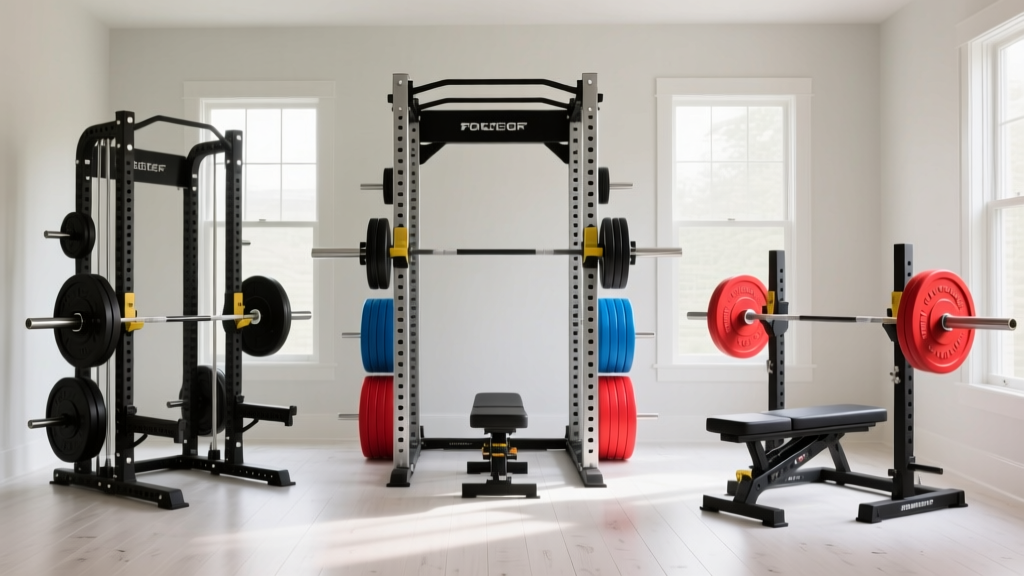
Power Rack vs Squat Rack vs Squat Stand: Best for Power Dumbbells
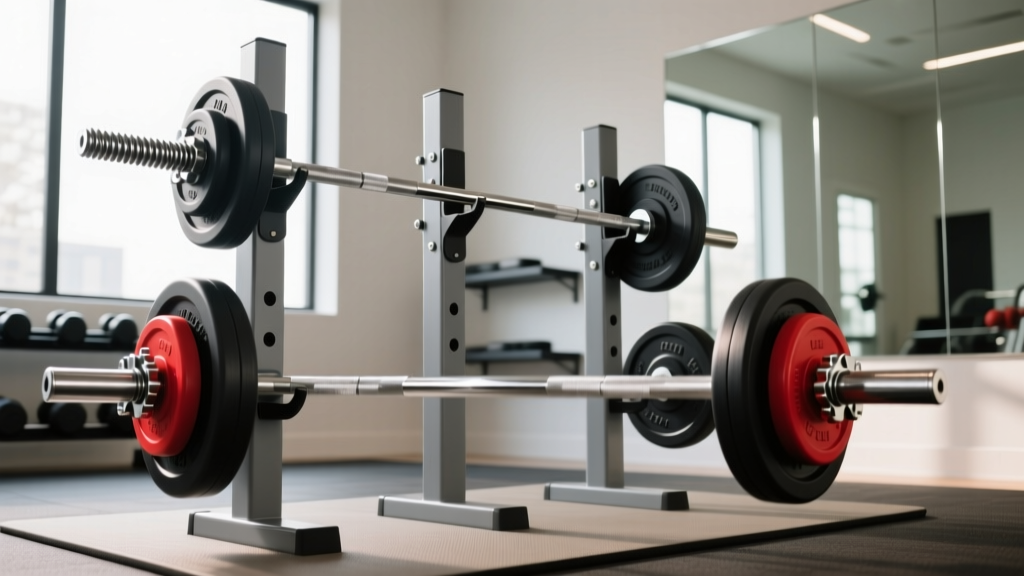
Barbell Clamps Compared: Gear for Dumbbell Rows for Rear Delts
Top Dumbbell Racks for Lat Muscle Dumbbell Exercises (2026)

Barbell Knurling & Front Lateral Raises with Dumbbells Fixes
