Dumbbell Tenement Racks: 2026 Budget & Storage Guide
Analyze the 'dumbbell tenement' trend for high-density storage. Compare 2026 pricing, tier configurations, and value for small home gyms.

The 'Dumbbell Tenement' Phenomenon: High-Density Storage
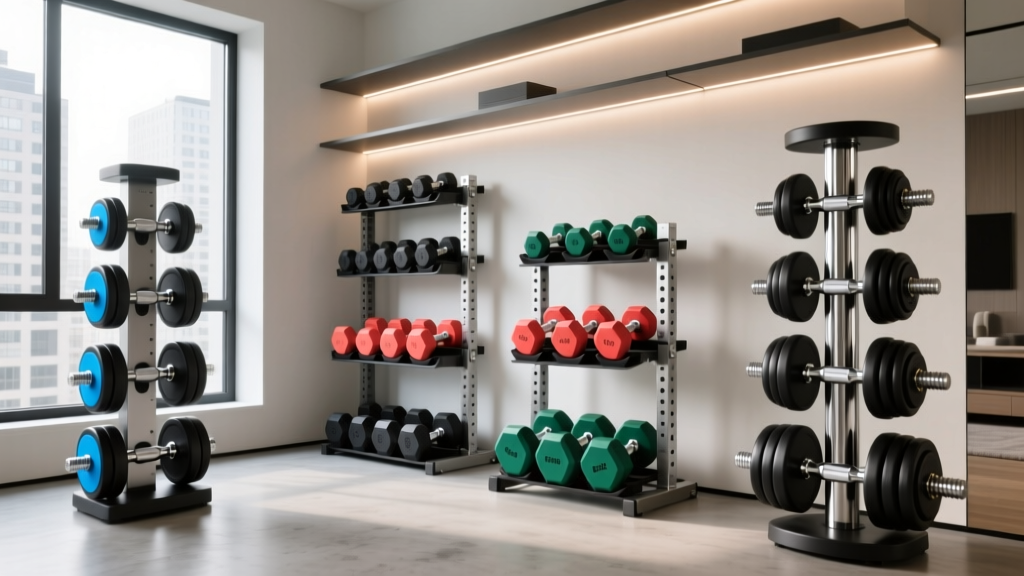
In the modern home gym community, the term 'dumbbell tenement' has emerged as a tongue-in-cheek but highly accurate descriptor for high-density, multi-tier vertical storage racks. Just as a tenement building maximizes residents per square foot, a 3-tier dumbbell rack maximizes weight storage in micro-apartments, spare bedrooms, and space-constrained garage gyms. As urban living spaces shrink and home fitness equipment collections grow, the 2026 market has seen a massive surge in demand for vertical, high-capacity storage solutions that minimize the physical footprint.
However, stacking hundreds of pounds of cast iron and urethane into a narrow vertical column introduces severe structural and safety challenges. A budget-friendly rack that works for a single-tier horizontal layout can become a dangerous tipping hazard when converted into a 3-tier 'tenement' configuration. This guide breaks down the true costs, material requirements, and value propositions of high-density dumbbell storage.
Budget Breakdown: 1-Tier vs. 3-Tier Storage Solutions
When evaluating the ROI of a dumbbell rack, you must look beyond the initial purchase price and calculate the cost per square foot of floor space saved. In 2026, with commercial real estate and home square footage at a premium, vertical storage is an investment in spatial efficiency.
| Rack Configuration | Avg. Price (2026) | Floor Footprint | Max Capacity | Best Use Case |
|---|---|---|---|---|
| 1-Tier Horizontal | $150 - $220 | 8.5 sq ft | 500 - 800 lbs | Spacious garages, 5-10 pair sets |
| 2-Tier A-Frame | $250 - $350 | 4.2 sq ft | 800 - 1,200 lbs | Standard home gyms, 10-15 pair sets |
| 3-Tier 'Tenement' | $350 - $650 | 3.1 sq ft | 1,500+ lbs | Micro-gyms, full 5-50lb+ sets |
Value Analysis: Material and Build Quality Metrics
Not all multi-tier racks are created equal. The physics of a fully loaded 3-tier rack demand rigorous engineering. When you load 1,500 lbs of rubber-coated dumbbells onto a narrow vertical frame, the center of gravity shifts dangerously high. According to safety guidelines outlined by the National Strength and Conditioning Association (NSCA) regarding facility equipment spacing and structural integrity, high-density storage must resist lateral sway and forward tipping.
The 11-Gauge Steel Mandate
If you are building a dumbbell tenement, 11-gauge steel is non-negotiable. Many budget racks on the market utilize 14-gauge or 12-gauge steel to keep costs under $300. While 14-gauge steel is perfectly adequate for a low-profile 1-tier rack, the cumulative torque exerted on the uprights of a 3-tier rack will cause 14-gauge tubing to bow over time. This bowing compromises the welds at the base and can lead to catastrophic structural failure.
- 14-Gauge Steel (Budget): ~$250-$300. Acceptable only for 2-tier racks or 3-tier racks holding exclusively light neoprene/vinyl dumbbells (under 25 lbs).
- 12-Gauge Steel (Mid-Range): ~$350-$450. Adequate for most home users, provided the base features a wide flange and cross-bracing.
- 11-Gauge Steel (Premium): ~$500-$650. The commercial standard. Utilizes 3x3-inch uprights with 5/8-inch hardware. Essential for heavy hex or urethane dumbbell sets extending up to 100+ lbs.
2026 Market Recommendations by Budget
Based on current market pricing and structural teardowns, here is how the top contenders in the high-density storage space stack up:
1. The Budget Pick: Titan Fitness 3-Tier Dumbbell Rack
Price: ~$299.99
Specs: 14-gauge steel, 2x2 uprights.
Verdict: Titan offers incredible value, but you are paying with steel thickness. If you buy this rack, you must bolt it to the floor. It is best suited for sets that max out at 50 lbs. The trays are slightly narrow, meaning larger rubber-coated dumbbells might overhang.
2. The Mid-Range Sweet Spot: Rep Fitness 3-Tier Rack
Price: ~$399.00
Specs: 11-gauge steel, robust base flanges.
Verdict: Rep Fitness bridges the gap between budget and commercial. The 11-gauge uprights provide the necessary rigidity for heavy loads, and the angled tray design prevents the 'roll-off' effect that plagues cheaper flat-shelf racks.
3. The Commercial Standard: Rogue 3-Tier Dumbbell Rack
Price: ~$595.00+
Specs: 11-gauge 3x3 steel, compatible with the Rogue infinite hole pattern.
Verdict: As detailed in the Rogue Fitness Dumbbell Storage Catalog, this rack is built for abuse. The laser-cut steel and precision welds mean zero sway, even when multiple athletes are racking and un-racking heavy pairs simultaneously. It is a lifetime purchase.
Step-by-Step: Safely Anchoring Your High-Density Rack
A vertical 'tenement' rack acts like a sail or a lever. If a user aggressively drops a 60 lb dumbbell onto the top tier, the kinetic energy transfers down the uprights, creating a forward tipping moment. The ASTM International Committee F08 on Sports Equipment and Facilities strictly outlines tip-over testing parameters for stationary storage. To meet real-world safety standards, anchoring is mandatory.
WARNING: Never place a fully loaded 3-tier dumbbell rack on a floating laminate floor or thick rubber matting without anchoring. The compression of the matting can create a fulcrum effect, drastically increasing tip-over risk.- Locate the Joists or Concrete: If on a wood subfloor, use a stud finder to locate the floor joists. If on a concrete slab, ensure you are not drilling into post-tension cables or radiant heating lines.
- Select the Right Hardware: For concrete, use 3/8-inch x 3-inch zinc-plated wedge anchors. For wood joists, use 3/8-inch structural lag screws (e.g., Simpson Strong-Tie) that penetrate at least 2 inches into the solid wood.
- Drill and Clean: Use a hammer drill with a carbide-tipped masonry bit matching the anchor diameter. Vacuum out the concrete dust from the hole—leaving dust inside reduces the holding power of wedge anchors by up to 40%.
- Torque to Spec: Tighten the nuts until the wedge expands fully against the concrete walls, usually requiring 3 to 5 full turns past finger-tight.
The Hidden Costs of Cheap Storage
When performing a value analysis, factor in the 'hidden costs' of poor storage. Cheap racks with flat, un-angled shelves force users to drag heavy dumbbells across metal edges to seat them. Over time, this shaves off the rubber or urethane coating, destroys the knurling on the dumbbell handles, and ruins the aesthetic and functional integrity of your expensive free weights. Premium 'tenement' racks feature angled saddles or UHMW plastic-lined trays that allow the dumbbell head to drop smoothly into place, protecting your $1,500+ dumbbell investment.
Frequently Asked Questions
Can I use a 3-tier rack for kettlebells?
Generally, no. Kettlebells have a different center of gravity and a rounded base. Placing them on standard dumbbell trays designed for hexagonal or round dumbbell heads can lead to rolling and falling. If you need a 'tenement' for kettlebells, look for racks specifically featuring flat, reinforced shelving with raised lip edges.
How much clearance do I need in front of the rack?
According to ergonomic best practices, you need a minimum of 36 inches of clearance in front of the rack to safely bend, lift, and rack heavy dumbbells without straining your lower back against the wall or adjacent equipment.
Is an A-Frame better than a vertical 3-tier rack?
An A-Frame is better for user ergonomics, as it presents the weights at an angle, reducing lower back strain when picking up heavy pairs from the bottom tier. However, an A-Frame takes up significantly more floor space. The vertical 3-tier 'tenement' is strictly a solution for those prioritizing floor space maximization over perfect lifting ergonomics.
More gear to consider
All reviews
Barbell Collar Comparison & Upper Back Workouts with Dumbbells
Cast Iron vs Competition Kettlebells: Dumbbell Lateral Squats Guide

Clamp Comparison: Securing Your Glute Workout with Dumbbells

Rubber Hex vs Urethane: 2026 Gear for Back and Bis with Dumbbells
Triceps Extensions With Dumbbells: 2026 Adjustable Gear Guide
