Storing Thomas Inch Dumbbells: Rack & Storage Value Analysis
Discover the true cost and value of storing Thomas Inch dumbbells. We break down rack geometry, heavy-duty storage solutions, and 2026 pricing.

The Unique Storage Challenge of Thomas Inch Dumbbells
When grip sport enthusiasts and strongman athletes talk about legendary feats of strength, the Thomas Inch dumbbell inevitably enters the conversation. The original '172'—weighing 172 pounds with a massive 2.38-inch thick handle—remains one of the most iconic grip challenges in history. Today, modern athletes train with replicas ranging from the 65-pound 'Inch 65' to the 120-pound 'Inch 120', produced by specialized brands like Grip Genie and Sorinex. However, acquiring these specialized implements is only half the battle; storing them safely and efficiently presents a unique engineering and financial challenge.
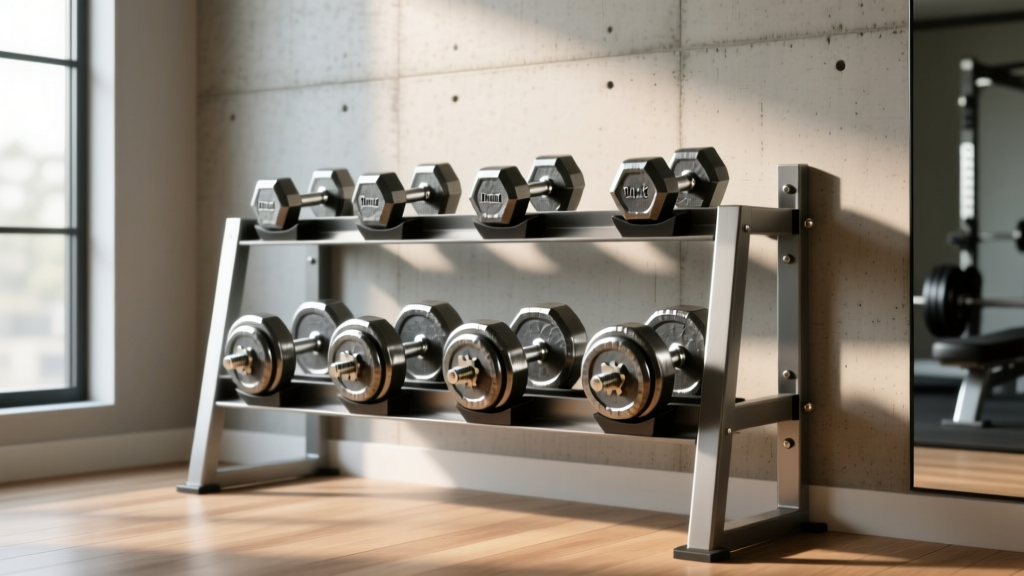
Standard commercial dumbbell racks are fundamentally incompatible with Thomas Inch dumbbells. Most 3-tier or 5-tier racks on the market are designed for standard 1.1-inch to 1.3-inch handles and hex-shaped urethane heads. Attempting to store a thick-handled, cylindrical-headed Inch replica on a standard Rogue or commercial-grade U-channel rack results in severe safety hazards, equipment damage, and wasted space. In this 2026 value analysis, we break down the exact budget requirements, structural limitations, and best storage solutions for heavy, thick-handled grip dumbbells.
The Geometry Problem: Why Standard Racks Fail
To understand the budget breakdown, you must first understand the physics of the failure. A standard dumbbell tray relies on the dumbbell handle resting deep inside a narrow U-channel, with the hex heads preventing lateral roll. A Thomas Inch replica features a 2.0 to 2.38-inch cylindrical handle and massive, often spherical or blocky, solid steel heads.
- Point-Load Stress: Because the 2.38-inch handle cannot seat inside a standard 1.5-inch U-channel, it rests on the extreme outer edges. Dropping a 100lb Inch dumbbell onto these edges creates a massive point-load that will bend 11-gauge steel over time.
- The Roll Hazard: Cylindrical heads lack the flat edges of hex dumbbells. On a flat commercial shelf, a slight bump can send a 100lb steel sphere rolling off the rack, posing a catastrophic crush hazard to feet and flooring.
- Spacing Inefficiency: The massive heads of Inch dumbbells require 12 to 16 inches of lateral clearance per dumbbell, meaning a standard 5-pair tray can only safely hold two Inch replicas.
Budget Breakdown: 4 Storage Solutions Analyzed
If you are investing $300 to $800+ in a single Thomas Inch replica, protecting your investment and your gym floor requires a dedicated storage strategy. Below is a 2026 market analysis of the four most viable storage solutions, ranked by structural integrity and long-term value.
1. Heavy-Duty Flat Shelves (The Strongman Approach)
The gold standard for storing awkward, heavy strongman implements is the flat steel shelf, popularized by companies like Sorinex Strongman Shelves. These are not U-channels; they are flat, 3/16-inch thick steel platforms bolted to heavy-duty uprights.
- Average Cost (2026): $450 - $650 per tier (excluding uprights).
- Pros: Indestructible under normal use; accommodates any head shape; allows for easy chalk application and grip setting before the lift.
- Cons: High initial cost; requires significant vertical and horizontal footprint; dumbbells can still roll if not fitted with aftermarket lip guards.
- Value Verdict: High. Essential for commercial strongman facilities or serious home grip-sport athletes with a dedicated rack footprint.
2. Custom Vertical Peg Racks
Vertical peg racks store the dumbbell by sliding the thick handle over a steel or heavy-duty PVC peg. This is highly space-efficient but requires precise measurement. If the peg diameter is 2.0 inches and your Inch replica handle is 2.38 inches, it will slide on easily. However, if you use adjustable thick grips (like Fat Gripz) on standard dumbbells to simulate the Inch, the peg must accommodate the outer grip diameter.
- Average Cost: $250 - $400 for a custom-fabricated 4-peg wall mount.
- Pros: Minimal floor footprint; keeps heavy heads off standard shelving; visually striking display for home gyms.
- Cons: Lifting a 120lb dumbbell vertically off a peg at chest height requires immense grip and wrist stability, increasing the risk of a drop during the 'un-racking' phase.
- Value Verdict: Medium. Great for space-saving, but the biomechanics of un-racking heavy thick-handled DBs vertically can be dangerous for solo lifters.
3. UHMW Floor Cradles and Block Stands
Instead of elevating the dumbbells, many grip athletes opt for floor storage using Ultra-High-Molecular-Weight (UHMW) polyethylene blocks or custom steel floor cradles. These sit directly on the rubber gym flooring, cradling the massive heads of the dumbbell and keeping the thick handle perfectly horizontal for deadlift-style grip setting.
- Average Cost: $120 - $200 for a pair of heavy-duty UHMW cradles.
- Pros: Zero tipping hazard; cheapest heavy-duty option; perfectly mimics the floor-clearance required for the actual Thomas Inch lift.
- Cons: Consumes valuable floor space; requires bending down to clean and maintain the equipment; can trap moisture against the steel heads if the gym lacks climate control.
- Value Verdict: Very High. The most practical and budget-friendly solution for home garage gyms.
4. The 'Frankenstein' Weight Tree Modification
For those on a strict budget, modifying an existing Olympic weight tree is a common workaround. By sliding thick-walled PVC sleeves over the standard 2-inch plate horns, you can create a makeshift resting place for the massive heads of the Inch dumbbell, allowing the handle to hang freely.
- Average Cost: $40 - $80 (for heavy-duty PVC and hardware).
- Pros: Extremely cheap; utilizes existing equipment.
- Cons: High risk of the dumbbell slipping off the smooth PVC; looks unprofessional; voids the warranty on most commercial weight trees due to uneven leverage.
- Value Verdict: Low. Only recommended as a temporary fix for lighter replicas (under 65 lbs).
Cost vs. Longevity Matrix
When evaluating the return on investment for your gym's storage infrastructure, it is vital to look beyond the initial purchase price. The table below maps the 2026 estimated costs against lifespan and safety metrics.
| Storage Solution | Est. Cost (2026) | Space Footprint | Safety Rating | Estimated Lifespan |
|---|---|---|---|---|
| Strongman Flat Shelves | $450 - $650 | Large (Rack Integrated) | 9/10 | 20+ Years |
| Vertical Peg Racks | $250 - $400 | Small (Wall Mounted) | 6/10 | 10-15 Years |
| UHMW Floor Cradles | $120 - $200 | Medium (Floor Level) | 10/10 | Lifetime |
| Weight Tree Mod | $40 - $80 | Small (Existing Tree) | 3/10 | 1-3 Years |
Real-World Failure Modes to Avoid
⚠️ Warning: The Urethane Shearing Effect
If you are using modern urethane-coated Inch replicas, never store them on standard metal wire racks or narrow U-channels. The immense weight concentrated on the thin metal edge will eventually slice through the urethane coating, exposing the inner steel core to moisture and ruining the aesthetic and structural integrity of a $400+ dumbbell. Always use flat steel shelves with a rubber mat overlay, or UHMW plastic cradles.
'The Thomas Inch dumbbell isn't just a test of grip; it's a test of your gym's infrastructure. I've seen 11-gauge commercial racks warp permanently after just a few months of athletes dropping 100lb thick-handled replicas onto the edges of standard trays. Flat shelves or floor blocks are non-negotiable for serious grip facilities.' — Head Coach, Mid-West Strongman & Grip Collective
Final Verdict: Where Should You Invest?
Storing Thomas Inch dumbbells requires abandoning traditional commercial gym logic and embracing strongman utility. If you are outfitting a commercial facility or a high-traffic garage gym in 2026, the Heavy-Duty Flat Shelves integrated into a power rack offer the best blend of safety, longevity, and athlete ergonomics. The initial $500+ investment is quickly offset by the prevention of equipment damage and floor repairs.
However, for the solo grip athlete or home-gym owner looking for maximum value, UHMW Floor Cradles are the undisputed champion. For under $200, you eliminate tipping hazards, protect your expensive thick-handled steel, and perfectly simulate the ground-clearance mechanics required to eventually conquer the legendary 172-pound lift. Do not compromise on storage; the physics of thick-handled steel demand respect, and your rack should reflect that.
More gear to consider
All reviews
Olympic Barbell Guide: Weight, Knurling & Single Arm Dumbbell Raise
Building a Dumbbell Lawn Mower Sled: Olympic vs Standard Plates Setup

Bumper vs Iron Plates & the Seated Dumbbell Arnold Press Rack Guide

Bumper vs Iron Plates: Space Layouts and Dumbbell RDLs Form

EZ Bar vs Straight Bar Budget Guide: One Arm Dumbbell Row No Bench