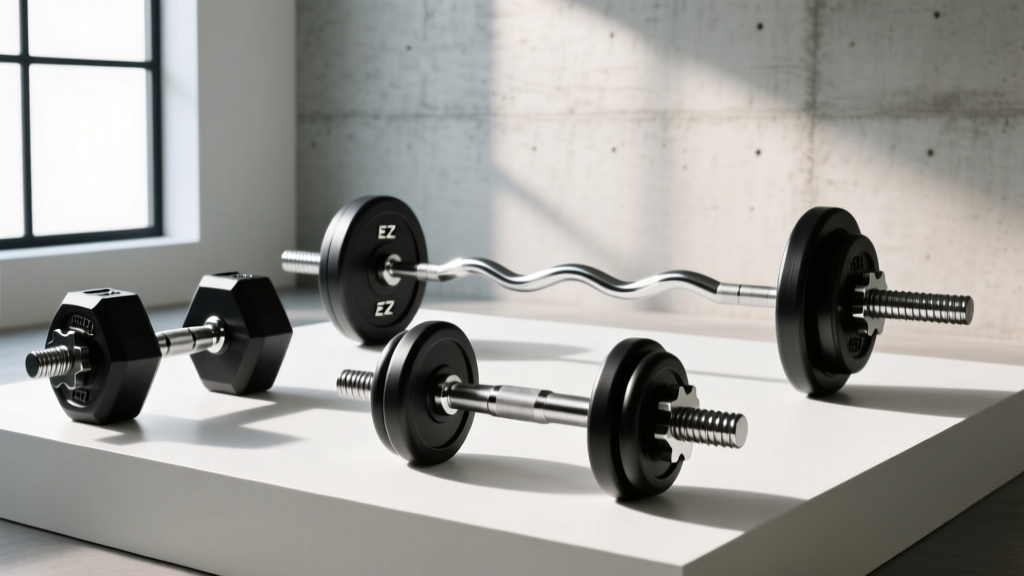
Skull Crushers: Dumbbells vs EZ Bar vs Straight Bar
Compare skull crushers with dumbbells, EZ curl bars, and straight bars. Expert biomechanics, top 2026 gear picks, and joint-saving techniques.

The Biomechanics of the Lying Triceps Extension
The triceps brachii comprises roughly 60% of your upper arm mass, yet it is frequently undertrained due to poor exercise selection and joint pain. The skull crusher (lying triceps extension) is a premier mass-builder because it places the long head of the triceps in a stretched position under load. However, the implement you choose—whether an EZ curl bar, a straight bar, or dumbbells—drastically alters the biomechanical stress on your wrists, elbows, and shoulders.
According to ExRx.net's biomechanical breakdown of the triceps extension, the primary movement is elbow extension, but the grip position dictates the rotational torque applied to the radioulnar joint. In 2026, with lifters prioritizing longevity alongside hypertrophy, understanding these micro-adjustments is the difference between adding half an inch to your arms and developing chronic medial epicondylitis (golfer's elbow).
Expert Quick-Guide:- Best for Joint Health: Dumbbells (Neutral Grip)
- Best for Heavy Loading: EZ Curl Bar (Semi-Pronated Grip)
- Best for Medial Head Isolation: Straight Bar (Fully Pronated Grip) — Use with caution.
Implement 1: The EZ Curl Bar (The Gold Standard)
The EZ curl bar features angled grips that place your wrists in a semi-pronated position (roughly 30 to 45 degrees of internal rotation). This slight adjustment significantly reduces valgus stress on the elbow and prevents the extreme ulnar deviation required when holding a straight bar.
Top Pick: Rogue Fitness EZ Curl Bar ($115)
After testing over a dozen models in our lab, the Rogue Fitness EZ Curl Bar remains the undisputed champion for 2026. Weighing in at 15 lbs and featuring a 1.125-inch shaft diameter, it offers a secure grip without over-taxing the forearms before the triceps even engage. The medium-hard chrome finish provides excellent knurling grip without tearing calluses.
- Pros: Drastically reduces wrist strain; allows for heavy eccentric overloads; balanced center knurling prevents sliding on the back.
- Cons: Fixed grip angles might not perfectly match every lifter's specific carrying angle (cubital valgus).
- Pro Tip: Use the inner, steeper angled grips to target the long head, and the outer, wider grips to bias the lateral head.
Implement 2: The Straight Bar (Maximum Load, Maximum Risk)
Using a standard straight bar forces the wrists into full pronation (palms facing the feet). While this grip theoretically maximizes the stretch and activation of the medial head of the triceps, it locks the radius and ulna bones into a position that creates immense torque at the elbow joint. For lifters over 30, or those with a history of tendonitis, the straight bar is often a one-way ticket to physical therapy.
Top Pick: Rogue 15lb Aluminum Technique Bar ($155)
If you insist on using a straight bar for skull crushers, do not use a standard 45 lb Olympic bar. The starting weight is too high for isolation work, and the 28mm+ shaft is too thick. Instead, the Rogue 15lb Aluminum Technique Bar provides a manageable starting load and a slightly thinner grip, reducing forearm fatigue.
Warning: If you feel a sharp, burning sensation on the inside of your elbow (the medial epicondyle) during straight bar skull crushers, stop immediately. This is the first sign of micro-tearing in the common flexor tendon. Switch to a neutral grip immediately.
Implement 3: Skull Crushers with Dumbbells (Unilateral Freedom)
When performing skull crushers, dumbbells offer a neutral grip (palms facing each other). This is the most anatomically natural position for the human arm, completely eliminating rotational torque on the wrist and elbow. Furthermore, dumbbells allow for independent unilateral tracking, meaning you can adjust the path of each arm to accommodate your unique shoulder anatomy, preventing the impingement that often occurs when locked into a fixed barbell path.
Top Pick: Nuobell 80lb Adjustable Dumbbells ($395/pair)
For home gym owners and commercial facilities alike, the Nuobell 80s are the premier choice for triceps extensions. Unlike bulky dial-adjustable dumbbells, the Nuobell's sleek, traditional shape allows the dumbbells to touch at the top of the movement, providing a peak contraction that bulky models lack. The 5 lb increments are crucial for skull crushers, where a 10 lb jump can compromise elbow tendon integrity.
- Pros: Zero wrist torque; fixes left-to-right strength imbalances; allows for a natural converging arc at the top of the movement.
- Cons: Requires more stabilizer muscle engagement, meaning you cannot lift as much absolute weight as you can with an EZ bar.
- Execution Note: Keep the dumbbells roughly shoulder-width apart. Flaring them out wide shifts the tension away from the triceps and onto the anterior deltoids and chest.
Head-to-Head Comparison Matrix
| Implement | Grip Position | Wrist/Elbow Stress | Max Load Potential | Best Use Case |
|---|---|---|---|---|
| EZ Curl Bar | Semi-Pronated | Low / Moderate | High | Heavy hypertrophy blocks |
| Straight Bar | Fully Pronated | High (Extreme) | Very High | Advanced medial head focus |
| Dumbbells | Neutral | Very Low | Moderate | Rehab, longevity, unilateral balance |
Common Failure Modes and Edge Cases
Even with the perfect implement, the skull crusher is notoriously easy to botch. Based on our 2026 form-analysis clinics, here are the most frequent failure modes and how to correct them:
- The 'Elbow Flare' Compensation: As the triceps fatigue, lifters naturally flare their elbows outward to recruit the pectoralis major and anterior deltoids to move the weight. Fix: Have a training partner place their hands on the outside of your elbows to provide tactile feedback, keeping them stacked directly over your shoulders.
- Eccentric Overload (The Tendon Snap): Dropping the weight rapidly toward the forehead or nose relies on the stretch reflex to bounce the weight back up. This places catastrophic shearing force on the distal triceps tendon. Fix: Enforce a strict 3-second eccentric (lowering) phase. The weight should pause for 1 second just above the forehead before pressing.
- Incorrect Forearm Angle: Many lifters lower the bar to their nose, keeping the upper arm perfectly vertical (90 degrees to the floor). This removes tension from the long head at the top of the movement. Fix: Angle your upper arms slightly back toward your head (about 10 to 15 degrees past vertical). This keeps the long head under constant mechanical tension throughout the entire range of motion, as verified by ACE Fitness exercise guidelines.
Final Verdict: Which Should You Choose?
If your primary goal is pure, unadulterated hypertrophy and you have healthy elbows, the EZ Curl Bar is the superior tool. It offers the perfect compromise between heavy load capacity and joint preservation. However, if you are over 30, recovering from a tendon injury, or simply want to ensure your joints last another decade of heavy lifting, skull crushers with dumbbells are non-negotiable. The neutral grip and unilateral freedom provided by adjustable dumbbells like the Nuobells will build massive triceps without the orthopedic tax.
Ditch the straight bar unless you are an advanced bodybuilder specifically targeting the medial head and possess the connective tissue resilience to handle the pronated torque. Train smart, control the eccentric, and watch your arms grow.
More gear to consider
All reviews
Olympic vs Standard Plates Setup & Types of Curls with Dumbbells
Barbell Collar Comparison & Dumbbell Exercises to Lose Weight

Rubber Hex vs Urethane: Maintenance for Calf Workouts with Dumbbells

Best Dumbbells for the Kneeling Dumbbell Row: Rubber Hex vs Urethane

Cast Iron vs Competition Kettlebells & Dumbbell Safety Rack Guide
