Cast Iron vs Competition Kettlebells vs Back Workouts with Dumbbells
Compare cast iron vs competition kettlebells for your home gym. Discover pricing, value analysis, and why they outperform back workouts with dumbbells.

The Shift: Moving Beyond Back Workouts with Dumbbells
When building a posterior chain-focused home gym, most lifters naturally default to back workouts with dumbbells. The logic is straightforward: dumbbells are accessible, versatile, and allow for strict unilateral isolation. However, as training maturity increases, the limitations of a perfectly centered mass become apparent. Dumbbells excel at linear movements, but they lack the offset center of gravity required to maximally challenge the stabilizers, lats, and erector spinae during dynamic, multi-planar pulling movements.
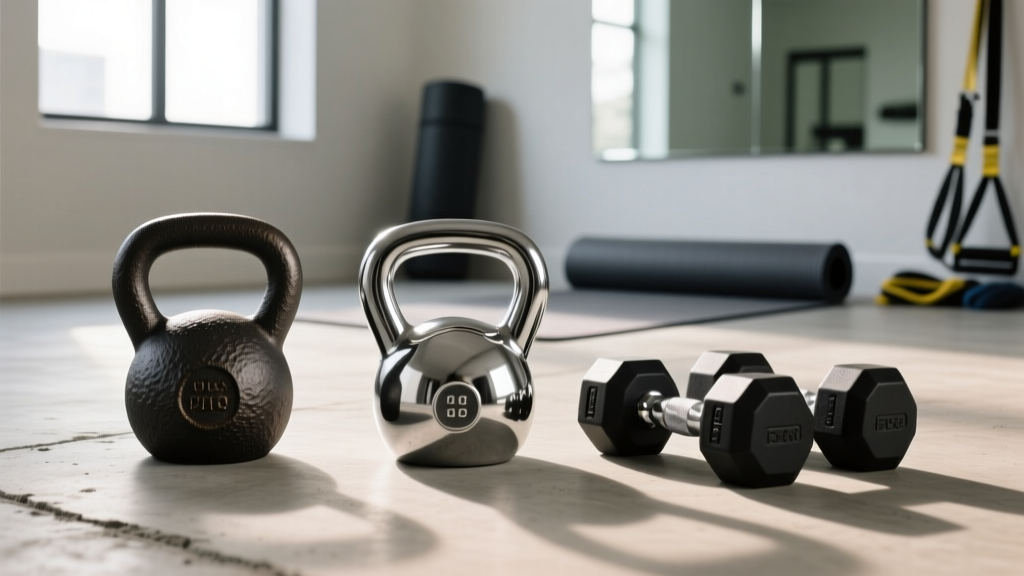
This is where the kettlebell enters the equation. But navigating the 2026 kettlebell market requires a strategic budget breakdown. The two dominant categories—traditional cast iron and standardized competition kettlebells—serve vastly different biomechanical needs and financial thresholds. In this comprehensive value analysis, we break down the metallurgy, pricing structures, and long-term return on investment (ROI) to help you decide which style deserves a spot on your rack.
Biomechanical Edge: Why Kettlebells Outperform Dumbbells for Back Development
Before analyzing the budget, we must establish the functional ROI of the equipment. According to biomechanics principles outlined by the National Strength and Conditioning Association (NSCA), the offset center of mass in a kettlebell forces the lifter to exert greater rotational control during pulling motions.
- Gorilla Rows & Renegade Rows: Unlike dumbbells, which sit flat and stable, a kettlebell’s rounded base and offset horn require intense anti-rotational core engagement, turning a standard back exercise into a full-body stabilization challenge.
- Ballistic Hinge Movements: Kettlebell swings and high pulls load the latissimus dorsi and rhomboids eccentrically at the bottom of the arc—a tension profile that is nearly impossible to replicate with dumbbells without awkward wrist contortions.
- Grip and Forearm Integration: The thicker, unyielding horns of a kettlebell demand superior crush grip strength, directly translating to better deadlift and barbell row performance.
Cast Iron Kettlebells: The Budget-Friendly Workhorse
Cast iron kettlebells are manufactured using gravity casting, where molten iron-carbon alloy (typically containing 2-4% carbon) is poured into sand molds. This process is cost-effective, making cast iron the undisputed king of budget-friendly home gym equipment. In 2026, the average market price for raw cast iron fitness equipment hovers between $1.20 and $2.00 per pound, depending on the coating and brand prestige.
Surface Treatments and Durability
The value of a cast iron bell is heavily dictated by its finish. Bare iron is porous and will rust within 48 hours in high-humidity environments. To combat this, premium brands like Rogue Fitness utilize an E-coat (electrophoretic deposition) or high-grade powder coat. E-coating provides a thin, incredibly durable layer that preserves the tactile feel of the iron while preventing oxidation. Cheaper imports often use thick, glossy enamel paints that chip upon impact, exposing the vulnerable iron beneath.
The Scaling Problem: Handle Inconsistency
The primary functional drawback of cast iron is dimensional scaling. Because they are cast from solid iron, a 16kg (35 lb) bell is physically smaller than a 32kg (70 lb) bell. Consequently, handle diameters scale upward—ranging from 33mm on lighter bells to over 40mm on heavy beasts. For back workouts involving high-rep ballistic movements, this shifting grip diameter can accelerate forearm fatigue and disrupt muscle memory.
Competition Kettlebells: The Premium Standard
Competition kettlebells were born from the strict regulations of the International Union of Kettlebell Lifting (IUKL). Regardless of weight—from a featherweight 8kg to a monstrous 48kg—every competition bell shares the exact same physical dimensions: a 280mm height, 210mm width, and a strict 35mm handle diameter (with 33mm options for specific women's categories). To achieve this, they are constructed from steel, which is stronger and less brittle than cast iron, allowing for thinner outer shells.
Manufacturing and Material Costs
Steel is inherently more expensive than cast iron, and the machining tolerances required to hollow out a steel shell and fill it with precision-calibrated weights (or solid steel blocks) drive up manufacturing costs. Furthermore, premium competition bells from brands like Kettlebell Kings or Onnit use high-grade steel that resists denting, whereas budget competition bells use thin steel shells filled with concrete or plastic pellets. If a cheap, filler-loaded competition bell is dropped on concrete, the shell can crack, permanently altering the center of mass and rendering the bell useless for precision back workouts.
The Value of Uniformity
According to master instructors at StrongFirst, the uniform dimensions of competition bells are non-negotiable for high-volume ballistic training. When performing sets of 50+ kettlebell snatches or high pulls, the lifter’s hands map the exact same 35mm handle and identically spaced horns, drastically reducing skin tearing and grip blowouts. For back-focused endurance circuits, this uniformity is a massive functional advantage.
2026 Price and Value Matrix
To visualize the budget breakdown, we have compiled current 2026 market averages for premium-tier cast iron versus premium-tier competition kettlebells. Note that prices reflect direct-to-consumer retail before shipping.
| Weight (kg / lbs) | Cast Iron Avg Price | Competition Avg Price | Price Per Pound (Cast Iron) | Price Per Pound (Comp) |
|---|---|---|---|---|
| 16kg (35 lbs) | $65 - $85 | $130 - $160 | ~$1.85 - $2.42 | ~$3.71 - $4.57 |
| 24kg (53 lbs) | $95 - $120 | $190 - $230 | ~$1.79 - $2.26 | ~$3.58 - $4.33 |
| 32kg (70 lbs) | $130 - $160 | $260 - $310 | ~$1.85 - $2.28 | ~$3.71 - $4.42 |
💡 Budget Insight: The Shipping Trap
When calculating your budget, never ignore freight costs. Kettlebells are dense, low-volume items. Shipping a pair of 32kg cast iron kettlebells can easily add $40 to $80 to your total cost. Many premium brands offer free shipping thresholds (often around $250), meaning buying a single 24kg competition bell might incur higher relative shipping fees than buying a matched pair of cast iron bells.
Hidden Costs and Real-World Failure Modes
A true value analysis must account for equipment lifespan and maintenance. Here are the edge cases and failure modes you must consider before swiping your card:
Cast Iron Failure Modes
- Handle Polishing: Over years of heavy use, the knurling or textured finish on a cast iron handle will naturally polish smooth from skin oils and friction. While some lifters prefer this, it can reduce grip security during heavy unilateral back rows.
- Base Flattening: Cheaper cast iron bells often have slightly rounded or uneven bases due to poor mold quality, making them frustrating to use for renegade rows where a flat, stable base is mandatory.
Competition Kettlebell Failure Modes
- Paint Chipping on Horns: Competition bells are color-coded via painted steel shells. The paint on the inner horns will inevitably chip away from the friction of racking cleans and snatches. This is cosmetic, but it requires occasional touch-ups if you care about aesthetics.
- Core Shifting: If you buy a budget competition bell with a sand or concrete filler, dropping it from overhead during a missed snatch can cause the internal filler to fracture. This creates a 'dead spot' or shifted center of gravity, completely ruining the bell's biomechanical profile.
Final Verdict: Where Should Your Budget Go?
The decision between cast iron and competition kettlebells ultimately hinges on your specific training modalities and budget elasticity.
Buy Cast Iron If: Your primary focus is heavy, low-rep strength work (e.g., heavy single-arm rows, kettlebell deadlifts, and slow-tempo pulls). The lower price-per-pound allows you to purchase a wider variety of weights, enabling progressive overload without breaking the bank. The scaling handle thickness actually acts as a natural grip-strength progression tool.
Buy Competition If: Your back workouts consist of high-rep ballistic circuits, snatches, and endurance-focused high pulls. The 2026 premium you pay for steel construction and uniform 35mm handles buys you joint longevity, consistent muscle mapping, and a drastically reduced risk of grip failure during high-volume sets.
Ultimately, while back workouts with dumbbells will always have a place in traditional hypertrophy programming, integrating the correct kettlebell style into your routine unlocks superior core integration, rotational stability, and posterior chain power. Assess your training volume, calculate the shipping-inclusive cost per pound, and invest in the metallurgy that matches your mechanical needs.
More gear to consider
All reviews
Standing Dumbbell Chest Press: Best Adjustable Dumbbells 2026

Rubber Hex vs Urethane: Space & Dumbbell Overhead Press GIF Guide
Olympic vs Standard Plates & B Stance RDL with Dumbbells
Bumper vs Iron Plates: Care for an Upper Pec Dumbbell Workout
EZ Curl Bar vs Straight Bar: Upgrading From a Blogilates Dumbbell