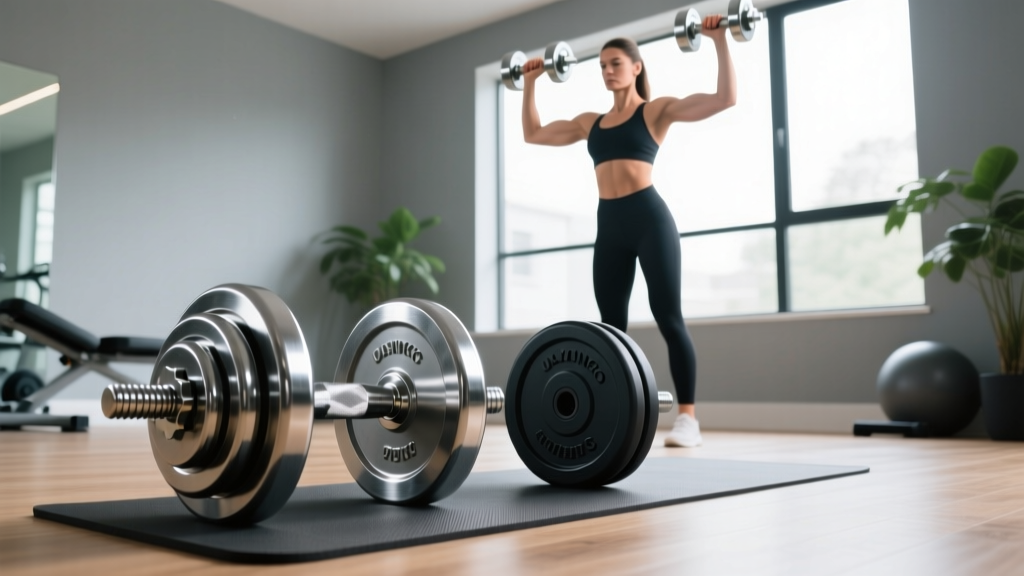
Olympic vs Standard Plates: Shoulder Workouts with Dumbbells Women
Discover the key differences between Olympic and standard weight plates to build the ultimate home gym for shoulder workouts with dumbbells for women.

Many women begin their strength training journey focusing on shoulder workouts with dumbbells. Dumbbells are fantastic for unilateral isolation, joint-friendly angles, and correcting muscular imbalances during movements like the Arnold press, lateral raises, and front raises. However, as your strength progresses and you transition from isolation movements to heavy compound lifts—like the barbell overhead press or push press—you will inevitably need to expand your home gym. This brings you to the most critical equipment decision you will make: choosing between Olympic and standard weight plates.
While your dumbbells might serve you well for high-rep shoulder hypertrophy, building a robust barbell setup requires understanding the engineering, safety, and long-term viability of your weight plates. In this step-by-step beginner guide, we break down the exact differences between standard and Olympic plates, helping you build a safe, efficient, and progressive home gym.
The Core Differences: Standard vs. Olympic Plates
The distinction between standard and Olympic weight plates is not just a marketing term; it is a fundamental difference in engineering, dimensions, and load capacity. The primary difference lies in the center hole diameter and the corresponding barbell sleeve size.
- Standard Plates: Feature a 1-inch (25mm) center hole. They are designed to slide onto lightweight, often solid-steel or hollow-tube barbells and adjustable dumbbell handles.
- Olympic Plates: Feature a 2-inch (50mm) center hole, adhering to the strict tolerances set by the International Weightlifting Federation (IWF). They are engineered for high-tensile steel barbells with rotating sleeves.
Quick Comparison Matrix
| Feature | Standard Weight Plates | Olympic Weight Plates |
|---|---|---|
| Center Hole Diameter | 1 inch (25mm) | 2 inches (50mm) |
| Barbell Compatibility | 1-inch solid or hollow bars | 2-inch Olympic rotating sleeves |
| Maximum Load Capacity | 200 - 300 lbs (bar dependent) | 700 - 1,500+ lbs |
| 45lb Plate Diameter | ~14.5 inches (varies) | 17.7 inches (450mm standard) |
| Average Cost (2026) | $1.20 - $1.80 per lb | $2.00 - $4.50 per lb |
| Durability & Tolerance | Low (holes often warp) | High (machined to +/- 0.2mm) |
Step-by-Step Guide to Choosing Your Plates
Transitioning from a dumbbell-only routine to a fully equipped home gym requires a strategic approach. Follow these steps to ensure you buy the right plates for your space, budget, and training goals.
Step 1: Audit Your Current Equipment
Before purchasing plates, inspect your existing gear. If you own a cheap 5-foot solid steel barbell from a big-box sporting goods store, it likely has 1-inch sleeves. However, if you are investing in a power rack or squat stand to complement your shoulder workouts with dumbbells, you will need an Olympic barbell. According to the American Council on Exercise (ACE), investing in commercial-grade or pro-sumer equipment from the start prevents the need to completely replace your gear within the first two years of training.
Pro Tip: Never buy 'Olympic adapter sleeves' (plastic or metal inserts that convert 2-inch plates to 1-inch bars). They introduce dangerous instability and wobble during overhead presses, increasing the risk of wrist and shoulder injuries.Step 2: Calculate Your Progressive Overload Needs
Shoulder workouts with dumbbells for women often max out around 30 to 50 lbs per hand for intermediate lifters. When you switch to a barbell overhead press, you will quickly surpass the 100 lb mark. Standard 1-inch barbells typically begin to bend and 'whip' dangerously when loaded past 150 lbs. Olympic barbells, forged from high-tensile steel (often 190,000 to 215,000 PSI), remain perfectly rigid under heavy loads. If your goal is long-term strength progression, Olympic plates are the only viable choice.
Step 3: Factor in Space and Storage
Olympic plates require specialized storage. A standard weight tree or rack peg must be at least 10 inches long and 2 inches in diameter to accommodate the wide center hubs of Olympic plates. Standard plates can be stacked on shorter, thinner pegs. If you are building a compact home gym in a spare bedroom or garage, ensure your power rack includes integrated 2-inch storage pegs to save floor space.
Material Matters: Cast Iron vs. Urethane vs. Bumpers
Once you have decided on the hole size (Olympic is highly recommended for serious lifters), you must choose the plate material. This decision impacts noise, floor protection, and longevity.
- Cast Iron / Machined Steel: The most affordable option ($2.00/lb). Ideal for lifters with dedicated rubber flooring. They are thin, allowing you to load more weight on the barbell sleeve. However, they will chip your concrete floor if dropped.
- Virgin Rubber Coated: Features a cast iron core encased in thick rubber. These are excellent for reducing noise in shared living spaces, but cheaper rubber compounds can emit a strong odor and degrade under UV sunlight.
- Urethane (PU): The premium standard for commercial gyms and high-end home setups ($3.50 - $4.50/lb). Urethane is odorless, highly resistant to scratching, and virtually indestructible. Brands like Rogue Fitness and Eleiko use high-grade urethane for their top-tier plates.
- Crumble Rubber Bumper Plates: Designed specifically for Olympic weightlifting and CrossFit. They all share the same 17.7-inch diameter regardless of weight (from 10 lbs to 55 lbs), allowing you to safely drop the barbell from overhead without damaging the plates or your platform.
'If your training involves dropping the barbell from the top of a push press or power clean, you must use bumper plates. Dropping cast iron or standard plates will not only destroy your flooring but can cause the plates to shatter, creating a severe hazard.' — Certified Strength and Conditioning Specialists (CSCS) Guidelines.
Common Beginner Mistakes and Failure Modes
When outfitting a home gym, beginners often make costly mistakes that compromise safety and performance. Avoid these common failure modes:
Warning: The 'Sleeve Rattle' Effect
Many budget standard plates are cast with poor quality control. A 1-inch hole might actually measure 1.15 inches, causing the plate to rattle violently on the barbell sleeve during dynamic movements. This shifts the center of gravity and places uneven torque on your shoulder joints during overhead pressing. Always opt for machined steel hub Olympic plates to ensure a flush, silent fit.
Ignoring Plate Thickness and Sleeve Length
If you are using a specialized Olympic barbell for shoulder isolation work (like a Swiss bar or a short curl bar), the sleeve length is limited. Standard cast iron plates are thin, allowing you to load heavy weight. Thick rubber bumpers take up more sleeve space. If you buy a short-bar and thick bumper plates, you may physically run out of sleeve space before reaching your target weight.
Mixing and Matching Brands
While all Olympic plates share a 50mm hole, the outer diameter of lighter plates (10lb and 15lb) varies wildly between brands. Some 10lb bumpers are only 9 inches in diameter, while others are 17.7 inches. If you mix brands, your barbell will sit unevenly on the floor, making it impossible to perform deadlifts or bent-over rows safely.
Final Verdict: Building Your Ultimate Setup
If your fitness journey started with shoulder workouts with dumbbells, you have already built a fantastic foundation of joint stability and muscular endurance. To take your physique and strength to the next level, incorporating barbell overhead presses and heavy compound movements is essential.
For 95% of home gym owners, Olympic weight plates are the undisputed winner. The 2-inch standard ensures compatibility with high-quality, safe barbells and power racks. While standard 1-inch plates might save you $50 upfront, the severe limitations in weight capacity, barbell whip, and poor machining tolerances make them a false economy. Invest in a set of machined steel hub Olympic plates or high-quality bumpers, pair them with a proper 2-inch weight tree, and enjoy a lifetime of safe, progressive lifting.
More gear to consider
All reviews
Best Adjustable Dumbbells for Dumbbell Training for Weight Loss 2026

Rubber Hex Vs Urethane Care For Any Exercise Routine With Dumbbells

RDL Exercise with Dumbbells vs. Barbell: 2026 Knurling Guide

Single-Arm Dumbbell Row: Urethane vs Rubber Hex 2026 Trends

EZ Bar vs Straight Bar Budget: Dumbbell Row for Upper Back Value
