
Rubber Hex vs Urethane: Best Dumbbells for Dumbbell Exercise Names
Compare rubber hex vs urethane dumbbells for your home gym. We test top picks across popular dumbbell exercise names to find the best durability and value.

The Great Dumbbell Debate: Material Science Meets the Home Gym
When building a comprehensive home gym, you aren't just buying metal and rubber; you are investing in the tools that will execute hundreds of dumbbell exercise names over the next decade. From the humble bicep curl to complex unilateral movements like the dumbbell snatch, the material of your weights dictates the safety, comfort, and longevity of your training. In 2026, the market remains fiercely divided between two primary contenders: the budget-friendly rubber hex dumbbell and the premium urethane dumbbell.
At FitGearPulse, we've spent the last six months stress-testing both materials across a gauntlet of movements, drop tests, and environmental exposures. Whether you are outfitting a commercial facility or a garage gym, understanding the mechanical and chemical differences between rubber and polyurethane is critical. Below, we break down the exact failure modes, cost-per-pound metrics, and ergonomic realities of both options.
Material Breakdown: What Actually Happens When You Drop Them?
Before analyzing how these dumbbells perform during specific exercises, we must look at their molecular resilience. Rubber (specifically virgin or recycled crumb rubber bound with adhesives) and Urethane (a high-density elastomer) react entirely differently to kinetic impact and environmental stressors.
| Feature | Rubber Hex Dumbbells | Urethane Dumbbells (Round/12-Sided) |
|---|---|---|
| Average Cost (Per Lb) | $1.20 - $1.80 | $3.50 - $5.50+ |
| Odor / Off-Gassing | High (VOCs, takes 2-6 months) | None to Negligible |
| Impact Resistance | Moderate (Edges prone to chunking) | Exceptional (Absorbs and disperses) |
| UV & Sweat Degradation | High (Chalky residue, dry rot) | Very Low (UV stable, sweat-proof) |
| Shape Profile | Strictly Hexagonal (90° corners) | Round or Dodecagon (12-sided) |
Expert Insight: The 'tire smell' associated with rubber hex dumbbells is caused by Volatile Organic Compounds (VOCs) off-gassing from the manufacturing binders. If you are placing these in an enclosed basement or spare bedroom, the odor can cause mild respiratory irritation during high-exertion sets. Urethane is chemically inert once cured, making it the only viable choice for indoor, poorly-ventilated spaces.
Performance Testing Across Popular Dumbbell Exercise Names
A dumbbell's shape and material heavily influence biomechanics. We tested both variations across three distinct categories of popular dumbbell exercise names to evaluate grip fatigue, physical interference, and drop-safety.
1. Heavy Compound Movements (Goblet Squats, Front Lunges)
During a Goblet Squat, the dumbbell is held vertically against the chest. Here, the rubber hex dumbbell reveals its biggest ergonomic flaw: the sharp 90-degree corners. When holding a 70lb+ hex dumbbell, the top edge frequently digs into the clavicle and anterior deltoid, causing bruising and limiting your ability to focus on leg drive. Conversely, premium Rogue Urethane Dumbbells feature a round or smooth 12-sided profile that rests flush against the sternum, eliminating point-load pressure entirely.
2. High-Velocity & Ballistic Moves (Snatches, Cleans)
For ballistic movements like the Dumbbell Snatch, the weight must rotate smoothly in the hand during the pull phase. Hexagonal rubber dumbbells force an unnatural, fixed wrist angle, increasing the risk of medial epicondylitis (golfer's elbow) during high-rep cycling. Urethane dumbbells, particularly those with contoured, knurled steel handles and round heads, allow for the micro-rotations required to safely catch the weight overhead. Furthermore, if you fail a snatch and must drop the weight from six feet in the air, rubber hex corners will routinely 'chunk' or tear away from the steel core upon hitting concrete flooring. Urethane simply bounces and settles.
3. Floor & Bench Pressing (Floor Press, DB Bench)
When performing the Dumbbell Floor Press or lying on a flat bench, the hex shape actually provides a minor advantage: it won't roll away when you set it on the floor beside you. However, this anti-roll benefit is easily matched by 12-sided (dodecagon) urethane dumbbells, which offer the best of both worlds—flat edges for floor stability, but smoothed vertices that won't scrape your shins during walking lunges.
Cost Per Pound & Long-Term Value Analysis
When outfitting a full rack (e.g., 5lb to 50lb in 5lb increments), the upfront cost difference is staggering. A full rubber hex set from a brand like REP Fitness or Titan Fitness will cost approximately $1,200 to $1,500. The exact same weight range in commercial-grade urethane will cost between $3,800 and $4,500.
The 5-Year Depreciation Reality
While rubber hex dumbbells win on day-one pricing, their lifespan in a high-use environment is typically 2 to 4 years before aesthetic and structural degradation occurs. The rubber dries out, edges chip, and the steel handles can rust if the rubber seal at the collar fails. Urethane dumbbells are effectively a 'buy it for life' (BIFL) purchase. They do not degrade from sweat, UV light, or repeated drops. If you plan to stay in your current home and train for the next decade, the annualized cost of urethane drops below that of replacing cheap rubber sets twice.
The FitGearPulse Verdict: Which Should You Buy?
Your decision should not be based solely on budget, but on your specific training environment and the dumbbell exercise names that dominate your programming.
- Buy Rubber Hex If: You are on a strict budget under $1,500, your gym is in a well-ventilated garage or shed, and your programming consists mostly of standard hypertrophy work (presses, rows, curls) where the dumbbell is rarely dropped from above waist height.
- Buy Urethane If: You are building a premium home gym in an enclosed space (basement, spare room), you perform CrossFit-style ballistic movements, you prioritize ergonomic comfort during front-racked movements, and you want a lifetime asset that requires zero maintenance.
Frequently Asked Questions
Can I mix rubber and urethane dumbbells in the same rack?
Yes, but it is not recommended aesthetically or ergonomically. The handle diameters and knurling patterns differ vastly between budget rubber brands and premium urethane brands. Switching between them mid-workout can disrupt your grip mechanics and central nervous system adaptation, particularly during isolation exercises.
Are neoprene or vinyl-coated dumbbells a good alternative?
Neoprene and vinyl are generally reserved for ultra-light weights (1lb to 15lb) aimed at high-repetition endurance or physical therapy. For any serious strength training involving the major compound dumbbell exercise names discussed above, the structural integrity and handle knurling of raw steel paired with rubber or urethane heads is mandatory.
How do I clean urethane dumbbells without damaging them?
Urethane is highly resistant to chemicals, but you should avoid harsh solvents like bleach or acetone. A simple mixture of warm water and mild dish soap applied with a microfiber cloth will easily remove chalk, sweat, and skin oils, keeping the material looking brand new for years.
More gear to consider
All reviews
Barbell Buying Mistakes After Weight Training Exercises With Dumbbells
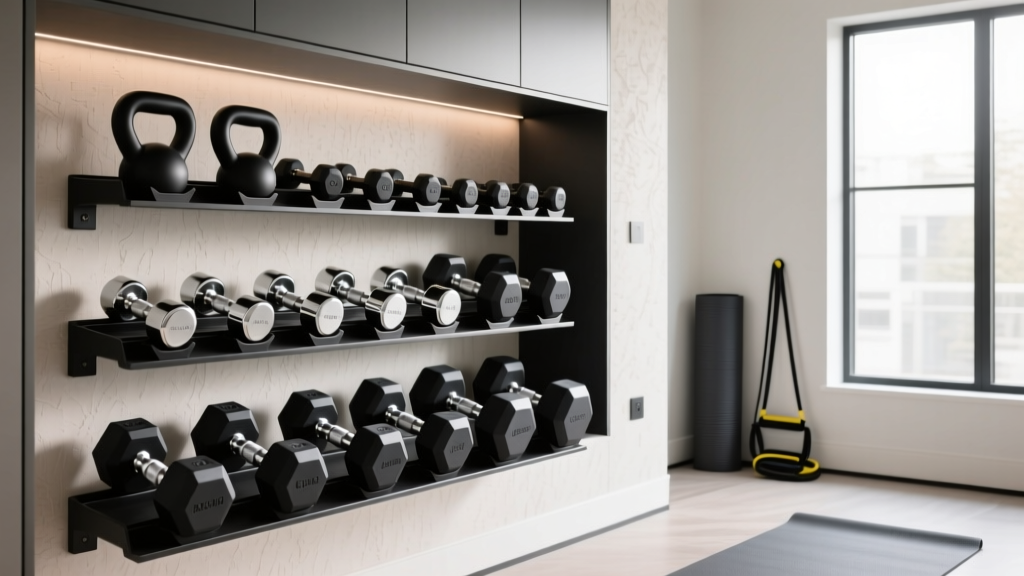
Optimize Home Workouts with Dumbbells: Rack & Storage Guide

Urethane vs Rubber Hex: Gym Layouts & Proper Dumbbell Deadlift Form

Power Rack, Squat Rack, or Stand for the Dumbbell Hang Power Clean?
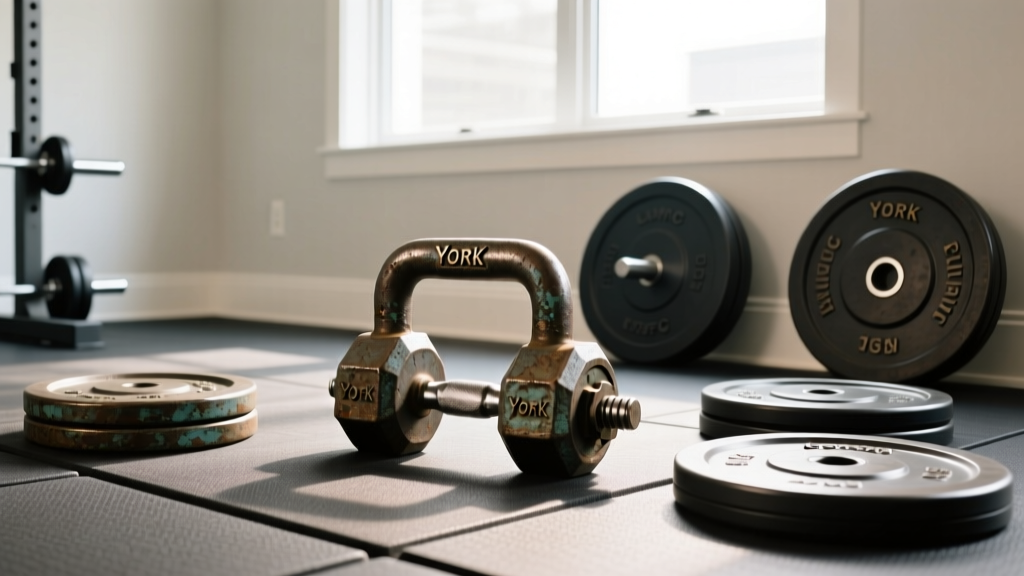
Antique York Dumbbells & Standard vs Olympic Plate Mistakes
