Rubber Hex vs Urethane Dumbbells for a Space-Saving Dumbbell Circuit
Optimize your home gym layout for a dumbbell circuit. Compare rubber hex vs urethane dumbbells for rack footprint, acoustics, and cost.

The Spatial Geometry: Hex Tabs vs. Urethane Cylinders
When designing a high-intensity dumbbell circuit in a constrained environment—such as a single-car garage, a spare bedroom, or a compact basement gym—every square inch of your layout matters. The choice between rubber hex dumbbells and urethane dumbbells is rarely just about aesthetics or budget; it fundamentally dictates your rack footprint, traffic flow, and acoustic management. In 2026, as home gym footprints continue to shrink and multi-use spaces become the norm, understanding the physical geometry of your free weights is critical for space optimization.
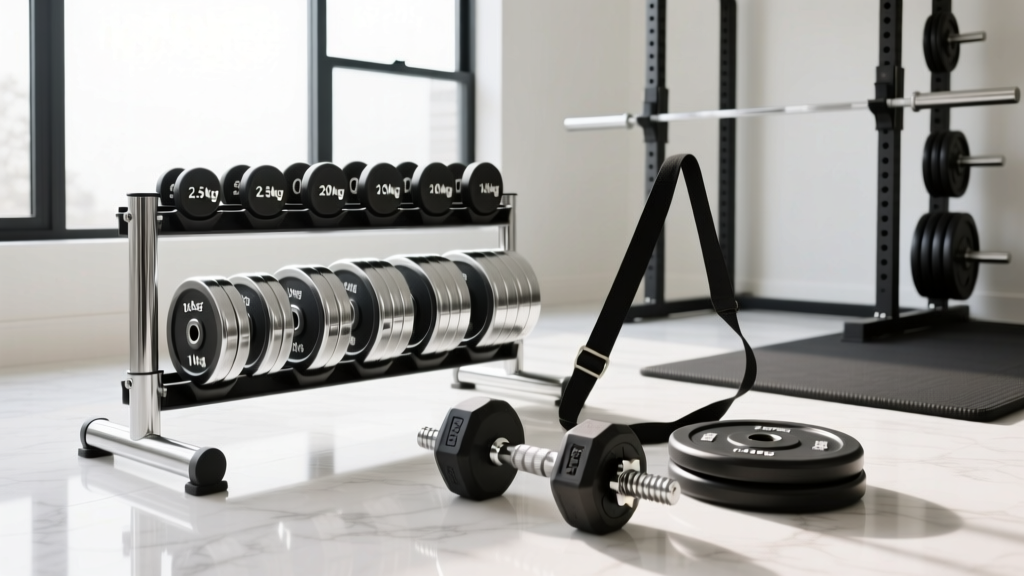
Rubber hex dumbbells, the long-standing staple of commercial and home gyms, feature protruding anti-roll tabs. While these tabs prevent the weights from rolling away during a set, they create a significant spatial penalty on the rack. A standard 50 lb rubber hex dumbbell features a head width of roughly 6.5 to 7 inches per side. When resting on a tiered shelf, the irregular shape prevents tight nesting, forcing you to allocate up to 22 inches of horizontal shelf space per pair to avoid overlapping handles.
Conversely, premium urethane dumbbells—often molded into a 12-sided polygon or a dense, rounded cylinder—utilize a high-density steel core encased in a thinner, tougher urethane shell. This manufacturing process allows for a more compact head profile. According to equipment specifications from Rogue Fitness, a 50 lb urethane dumbbell head typically spans just 5.5 inches. Over a 5-tier rack holding 10 pairs, this geometric efficiency saves between 4 to 6 inches of horizontal shelf space, allowing a full circuit set to fit into a tight 4-foot alcove rather than requiring a sprawling 5-foot wall mount.
Footprint and Rack Compatibility Matrix
| Feature | Rubber Hex (e.g., CAP Barbell) | Urethane (e.g., Rogue / Rep Fitness) |
|---|---|---|
| Head Shape | Hexagonal with protruding tabs | 12-sided polygon or rounded cylinder |
| Width per Pair (50 lbs) | ~14.5 inches (heads only) | ~11.0 inches (heads only) |
| Required Shelf Depth | 16 to 18 inches | 12 to 14 inches |
| Anti-Roll Design | Flat outer edges (high spatial cost) | Faceted edges (low spatial cost) |
| Avg. Price per Pound (2026) | $1.40 - $1.80 / lb | $3.80 - $4.50 / lb |
Acoustic Dampening and the Drop-Zone Layout
A well-designed dumbbell circuit requires a dedicated 'drop zone'—an area where athletes can safely release weights between high-heart-rate intervals like renegade rows or thrusters. Space optimization isn't solely about horizontal storage; it is also about managing the vertical and acoustic footprint of your workout.
Rubber hex dumbbells are notorious for their high-frequency acoustic feedback. The vulcanized rubber used in budget-friendly hex models is relatively stiff, meaning the kinetic energy of a dropped 40 lb dumbbell is transferred directly into the subfloor, creating a sharp, percussive crack that travels easily through residential floor joists. Furthermore, the hard rubber edges are prone to chipping when dropped on concrete or thin horse-stall mats, creating debris that ruins the cleanliness of a compact room.
Urethane, specifically when formulated to a Shore A durometer rating of 85 to 90, acts as a superior acoustic and kinetic dampener. It absorbs high-frequency vibrations, resulting in a dull, low-decibel thud rather than a sharp crack. In a multi-use space like an apartment gym or an attached garage, this acoustic reduction is a non-negotiable aspect of spatial design, as it allows you to place your drop zone closer to shared walls without violating noise ordinances or disturbing household members.
'In compact home gyms, the material of your free weights dictates your floor plan. Urethane allows for tighter drop-zones and closer proximity to shared walls due to its superior kinetic absorption and acoustic dampening properties.' — Home Gym Layout Principles, 2026
Designing the 'Triangle' Dumbbell Circuit Layout
To maximize a 10x10 foot space for a continuous dumbbell circuit, fitness facility planners often utilize the Triangle Layout. This framework minimizes lateral movement and keeps the athlete within a centralized radius, reducing the overall square footage required for the workout. The choice of dumbbell directly impacts how tight this triangle can be drawn.
The 3-Point Circuit Flow
- Station A (The Rack & Transition Zone): Positioned at the apex of the triangle. If using urethane dumbbells, a compact 3-tier wall-mounted rack can sit flush in a corner, requiring only 14 inches of depth. With rubber hex, you must use a freestanding A-frame or a deeper shelf, pushing the rack 20+ inches into the room and shrinking the central floor space.
- Station B (The Hinge/Squat Zone): Located 4 feet directly in front of the rack. This is your primary drop zone. Because urethane dampens noise and protects floors, you only need a single 4x6 foot, 3/4-inch rubber mat here. Rubber hex requires a larger 5x8 foot padded zone to account for erratic bouncing off the hexagonal tabs.
- Station C (The Floor/Press Zone): Located 3 feet to the side of Station B. Used for floor presses, goblet lunges, and core work. The compact nature of urethane allows the athlete to pivot seamlessly between stations without taking extra steps to navigate around protruding rack shelves.
By utilizing the tighter dimensions of urethane, the entire Triangle Layout can comfortably operate within an 8x8 foot clear floor space, leaving the perimeter of the room free for treadmills, bikes, or general storage. According to facility guidelines outlined by the American College of Sports Medicine (ACSM), ensuring adequate clearance around free weight zones is vital for injury prevention, making the compact profile of urethane highly advantageous for tight layouts.
Off-Gassing and Air Quality in Enclosed Spaces
Space optimization also encompasses environmental control. Many home gyms are located in poorly ventilated areas like basements, windowless spare rooms, or insulated garages. When you purchase a 500 lb set of imported rubber hex dumbbells, you are introducing a massive volume of volatile organic compounds (VOCs) into a confined airspace.
The manufacturing process of cheap recycled rubber involves sulfur and chemical binders that continuously off-gas, particularly when heated by ambient room temperatures or direct sunlight. In a small, enclosed circuit-training room, this results in a persistent, noxious 'tire shop' odor that can cause headaches and respiratory irritation during high-ventilation cardio circuits. Urethane, by contrast, is a fully reacted polymer. Once cured, high-quality urethane dumbbells emit zero VOCs and have no discernible odor, making them the only safe choice for optimizing air quality in unventilated, space-constrained indoor environments.
Cost-to-Space Value Analysis
The primary argument for rubber hex dumbbells remains their upfront cost. In the current 2026 market, a full 5-50 lb set (in 5 lb increments) of rubber hex dumbbells will cost roughly $1,200 to $1,500. The exact equivalent set in virgin urethane will cost between $3,200 and $4,000. However, when viewing this purchase through the lens of spatial real estate, the value matrix shifts.
The Real Estate Calculation
If you are paying for a dedicated home gym space (whether factoring mortgage square footage or renting a studio apartment), the cost per square foot of your layout matters. Urethane allows you to utilize shallow, wall-mounted shelving units (like the Rogue Monster Utility Shelves) instead of massive, floor-dominating A-frame racks. By reclaiming 6 to 8 square feet of floor space that a hex dumbbell rack would otherwise occupy, the premium paid for urethane effectively pays for itself in spatial efficiency and long-term durability, as urethane does not degrade, flake, or require replacement due to cosmetic wear.
Final Layout Verdict
If your dumbbell circuit is situated in a large, well-ventilated, multi-car garage where floor space is abundant and budget is the primary constraint, rubber hex dumbbells remain a functional, cost-effective tool. However, if you are optimizing a spare bedroom, a tight apartment alcove, or an attached basement gym where acoustic transfer, VOC off-gassing, and rack footprint are critical design variables, urethane dumbbells are the undisputed champion of space-efficient layout design. By investing in the denser, geometrically superior urethane profile, you buy back valuable floor space, protect your subfloors, and create a seamless, high-performance circuit environment.
More gear to consider
All reviews
2026 Trends: EZ Curl Bar vs Straight Bar & Dumbbell Fly Exercise

Troubleshooting Thrusters with Dumbbells: Neoprene Home Guide

Barbell Clamp Types Comparison & Dumbbell Rear Delt Flys Safety
How Big Are the Dumbbells You Lift? Sizing Loadable Handles

What's a Good Dumbbell Shoulder Press Weight? Hex vs Urethane Value