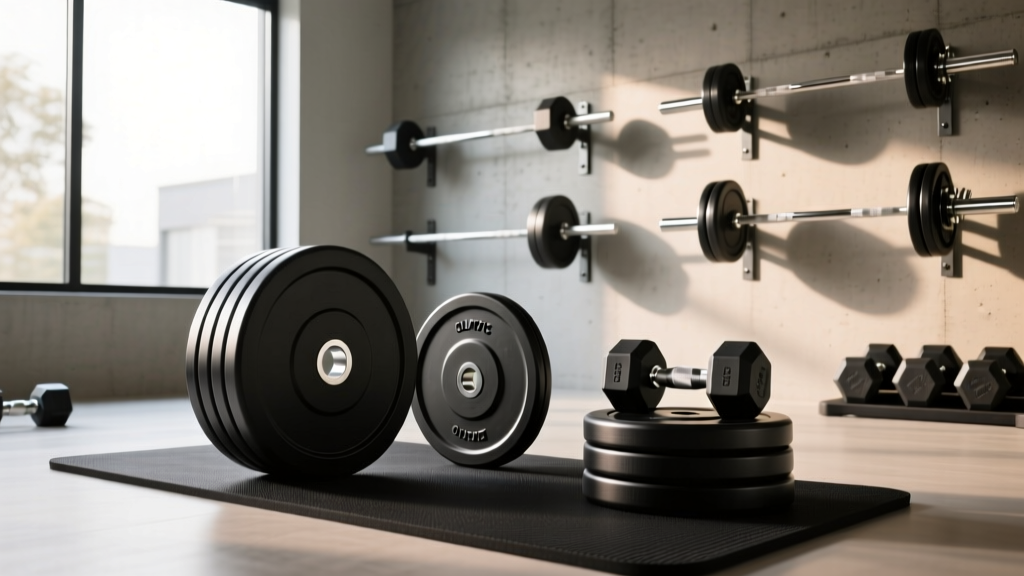
Olympic vs Standard Plates: Dumbbell Exercises for Upper Body Strength
Compare Olympic vs standard weight plates for your home gym. Discover the best setups for heavy lifting and dumbbell exercises for upper body strength.

The Core Dilemma: 1-Inch Standard vs. 2-Inch Olympic
Building a versatile home gym in 2026 requires navigating a saturated market of fitness equipment, but the fundamental choice between 1-inch standard and 2-inch Olympic weight plates remains a primary stumbling block for many lifters. While the debate often centers around barbell squats and deadlifts, your choice of plate sizing drastically impacts your ability to perform heavy, progressive dumbbell exercises for upper body strength. The wrong plate ecosystem can bottleneck your chest presses, limit your single-arm rows, and force premature equipment upgrades.
This in-depth buying guide dissects the metallurgical differences, pricing structures, and practical applications of standard versus Olympic plates, specifically analyzing how they integrate with loadable dumbbell handles to build a complete upper-body strength routine.
Quick Decision Framework- Choose Standard (1-Inch): If your budget is strictly under $300, you are only performing light isolation movements, and you have zero plans to lift more than 50 lbs per dumbbell.
- Choose Olympic (2-Inch): If you prioritize durability, require weight increments beyond 50 lbs per hand for heavy dumbbell exercises for upper body strength, and want equipment that retains resale value.
Standard Weight Plates: The Budget-Friendly 1-Inch System
Standard weight plates are defined by their 1-inch (25.4mm) center hole, designed to slide onto standard barbells and spin-lock dumbbell handles. Typically manufactured from cast iron or cement-filled PVC encased in plastic, these plates are the most common entry-level equipment found in big-box sporting goods stores.
Specifications and Pricing
As of 2026, standard cast iron plates (such as the widely available CAP Barbell Standard Cast Iron series) average between $1.20 and $1.60 per pound. Cement-filled variants can drop as low as $0.80 per pound but suffer from massive volume issues—a 25 lb cement plate is often the physical size of a 45 lb cast iron plate, making them nearly impossible to load onto short dumbbell sleeves.
The Limitation for Upper Body Training
The critical failure point of the standard system emerges when programming dumbbell exercises for upper body strength. A standard 14-inch spin-lock dumbbell handle has a maximum sleeve capacity of roughly 40 to 50 lbs. Once you progress past 50 lb dumbbell floor presses, heavy renegade rows, or weighted glute bridges, the standard system physically cannot accommodate more plates. Furthermore, standard dumbbell handles are notorious for collar weld failures under heavy, asymmetric loads, posing a significant safety risk during overhead tricep extensions or skull crushers.
Olympic Weight Plates: The 2-Inch Gold Standard
Olympic plates feature a 2-inch (50mm) center hole, originally standardized for international weightlifting competitions to accommodate the thicker, high-tensile steel sleeves of Olympic barbells. According to historical weight plate standards, this 2-inch aperture has become the universal benchmark for commercial and serious home gyms.
Material Breakdown and Failure Modes
When outfitting your rack for heavy lifting and advanced dumbbell work, the material of your Olympic plates dictates their lifespan and floor impact:
- Cast Iron (Machined): The most durable and space-efficient option. Machined iron plates (like those from Rogue Fitness) offer exact weight tolerances within 1-2% and feature a baked enamel finish. Failure mode: Prone to surface rust if kept in unclimate-controlled garages.
- Virgin Rubber: Features a steel hub encased in virgin rubber to protect flooring during drops. Failure mode: Cheap rubber compounds degrade, peel, and emit a persistent off-gassing odor in enclosed spaces.
- Urethane: The premium choice for commercial and high-end home gyms. Urethane is virtually impervious to UV degradation, scratching, and odor. Pricing typically ranges from $3.50 to $4.50 per pound.
Head-to-Head Comparison Matrix
The table below illustrates the functional differences between the two ecosystems, specifically highlighting how they impact dumbbell training.
| Feature | Standard Plates (1-Inch) | Olympic Plates (2-Inch) |
|---|---|---|
| Center Hole Diameter | 1 inch (25.4mm) | 2 inches (50mm) |
| Avg. Cost Per Pound | $1.20 - $1.60 | $2.00 (Rubber) - $4.50 (Urethane) |
| Max Dumbbell Capacity | ~45 lbs (Spin-lock handles) | 120 - 165 lbs (Loadable handles) |
| 45lb Plate Diameter | Varies (Often 14-15 inches) | Standardized 450mm (17.7 inches) |
| Barbell Sleeve Failure | High risk >200 lbs total load | Virtually zero risk up to 1,000+ lbs |
Optimizing Dumbbell Exercises for Upper Body Strength
While barbells are exceptional for bilateral, heavy compound movements like the bench press, dumbbell exercises for upper body strength are non-negotiable for addressing muscular imbalances, increasing stabilizer recruitment, and achieving a fuller range of motion. Movements like the incline dumbbell press, single-arm chest-supported rows, and seated Arnold presses require incremental weight jumps that standard equipment simply cannot support.
The Loadable Olympic Dumbbell Hack
Instead of purchasing a $400+ set of fixed-weight rubber hex dumbbells that take up an entire wall of your home gym, serious lifters in 2026 are turning to Olympic Loadable Dumbbell Handles. Devices like the Rogue Loadable Dumbbell Handle ($95.00) or the Titan Fitness Olympic Dumbbell Handle feature 2-inch sleeves identical to an Olympic barbell.
By pairing these handles with your existing Olympic weight plates, you can execute heavy dumbbell exercises for upper body strength with up to 165 lbs per hand. This setup allows you to utilize fractional Olympic plates (e.g., 2.5 lb or 5 lb change plates) to micro-load your lateral raises and tricep extensions, ensuring continuous progressive overload without the spatial footprint of a full dumbbell rack.
Pro-Tip: Sleeve Length MattersWhen buying Olympic loadable dumbbell handles for upper body work, pay close attention to the sleeve length. A sleeve that is too long (over 8 inches) will push the weight too far from your center of gravity, making exercises like dumbbell flyes or skull crushers feel awkward and placing undue torque on your wrists. Look for handles with 5 to 7-inch sleeves for optimal biomechanical leverage.
Real-World Buying Advice & Edge Cases
If you are starting from scratch, the financial gravity of the 2-inch Olympic system is undeniable. A baseline 300 lb Olympic plate set will cost between $600 and $900, whereas a standard set might only cost $350. However, the concept of 'cost-per-use' and equipment longevity heavily favors Olympic gear.
Edge Case - The Apartment Gym: If you live in an upstairs apartment with strict noise and floor-load limits, standard plates paired with light neoprene dumbbells might be your only option. In this scenario, abandon heavy barbell work and focus entirely on high-volume, low-weight dumbbell exercises for upper body strength using standard 10 lb and 15 lb plates on short spin-lock handles.
Edge Case - The Garage Powerlifter: If your primary goal is powerbuilding, buy exclusively 2-inch Olympic bumper plates for your deadlifts and machined iron plates for your bench presses. Invest in a pair of Olympic loadable dumbbell handles to bridge the gap between heavy barbell pressing and hypertrophy-focused dumbbell flyes.
Frequently Asked Questions
Can I use Olympic plates on a standard 1-inch barbell?
No. The 2-inch center hole of an Olympic plate will slide right off a 1-inch standard sleeve. While plastic adapter bushings exist on the market, they are highly discouraged for heavy lifting as they introduce lateral play and can crack under the sheer force of heavy upper-body pressing movements.
Are grip plates worth the extra cost for home gyms?
Grip plates (Olympic plates with cut-out handles) are excellent for loading and unloading heavy barbells. However, for dumbbell exercises for upper body strength utilizing loadable handles, grip plates can sometimes be cumbersome due to their wider physical profile, which may cause the plates to clank together or limit the maximum number of plates you can fit on a short dumbbell sleeve.
More gear to consider
All reviews
EZ Curl vs Straight Bar: Arm Care & PowerBlock Dumbbells Stand Setup
From Neoprene to 44 kg Dumbbells: A Beginner Home Guide

Olympic vs Standard Plates: Building the Biggest Dumbbell Setup

Neoprene Dumbbells: Mnemonic Cholinergic Benefits & Home Guide

Standard vs Olympic Weight Plates: Setup & Dumbbell Drag Curl Tips
