Rogue vs Rep Barbell Knurling & Incline Dumbbell Press Guide
Compare Rogue Ohio and Rep Excalibur Olympic barbells. Dive into knurling, weight tolerance, and pairings for your incline dumbbell press setup.

The Foundation of a Pressing Arsenal
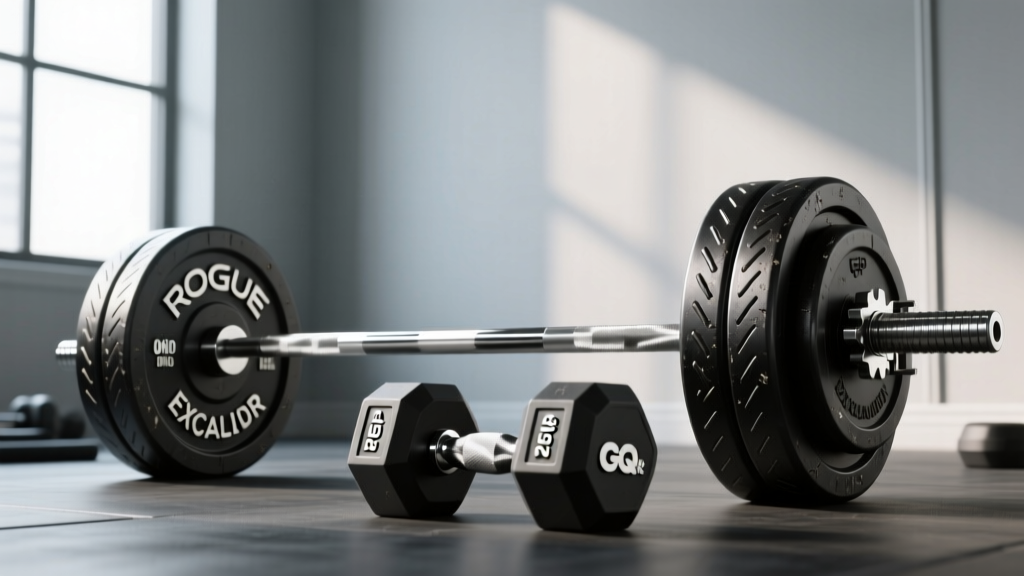
Building a complete, injury-resistant pressing arsenal requires more than just a sturdy power rack and an adjustable bench. Whether you are maxing out on the flat bench or targeting the upper clavicular pecs with a heavy incline dumbbell press, the barbell you use for your primary compound movements dictates your grip strength, central nervous system adaptation, and joint health. In this 2026 head-to-head comparison, we are putting two of the most popular powerbuilding bars on the market under the microscope: the Rogue Ohio Bar (Stainless Steel) and the Rep Fitness Excalibur Bar.
This Olympic barbell buying guide focuses heavily on two critical, often misunderstood variables: weight tolerance (tensile strength and whip) and knurling aggressiveness. Furthermore, we will explore how the grip strength developed by these specific barbell shafts directly translates to stabilizing heavy loads during the incline dumbbell press—a movement where wrist integrity and anterior deltoid control are paramount.
Head-to-Head: Rogue Ohio Bar vs. Rep Fitness Excalibur
Both the Rogue Ohio and the Rep Excalibur sit in the highly competitive mid-tier powerbuilding category. They are designed for lifters who need a bar stiff enough for heavy benching but durable enough for high-volume hypertrophy work. However, their approach to shaft machining and knurl depth creates two vastly different lifting experiences.
2026 Quick Specs Matrix
| Feature | Rogue Ohio Bar (Stainless) | Rep Fitness Excalibur |
|---|---|---|
| Tensile Strength | 190,000 PSI | 190,000 PSI |
| Knurl Type | Volcano (Medium-Aggressive) | Mountain (Highly Aggressive) |
| Shaft Diameter | 28.5mm | 28.5mm |
| Bushing/Bearing | Composite Bushings | Needle Bearings |
| Current Price (2026) | ~$395.00 | ~$349.00 |
Decoding Knurling: Volcano vs. Mountain Peaks
Knurling is the most intimate point of contact between lifter and iron. According to BarBend's comprehensive guide to barbell knurling, the geometry of the knurl—not just its depth—determines how the bar interacts with your calluses and fascia.
Rogue’s Volcano Knurl: The Goldilocks Zone
Rogue utilizes a 'volcano' knurl pattern on the Ohio Bar. Instead of sharp, pointed peaks, the machining cuts a rim into the steel, leaving a flat top with a sharp, raised edge. This provides exceptional bite when chalked, but the flat tops prevent the bar from tearing your hands during high-rep accessory work. For lifters who transition directly from heavy barbell benching to high-volume dumbbell work, this knurl preserves the skin on your palms, ensuring your grip isn't compromised by torn calluses later in the workout.
Rep’s Aggressive Mountain Knurl: Maximum Traction
The Rep Excalibur features a traditional 'mountain' knurl, characterized by sharp, prominent peaks. When you grip the Excalibur, it feels like Velcro. It digs deep into the hand, providing unparalleled security for heavy 1RM or 3RM attempts. However, this aggressiveness comes at a cost: high-volume sets can quickly shred the skin. If your programming involves heavy gripping and you are prone to hand tears, the Excalibur requires meticulous hand care and strategic chalk usage.
Weight Tolerance, Shaft Whip, and Tensile Strength
Both bars boast a 190,000 PSI tensile strength. In the realm of Olympic barbell buying guides, 190k PSI is the undisputed sweet spot for powerbuilding. It offers enough rigidity to prevent the violent, distracting oscillation (whip) seen in 150k PSI Olympic weightlifting bars, while retaining just enough flex to absorb the shock of heavy eccentric loading, sparing your elbow and shoulder joints.
'A bar with too much whip on the bench press forces your stabilizers to work overtime to control the bounce out of the hole. 190k PSI eliminates the bounce, forcing the pecs and triceps to do the actual work.' — Garage Gym Reviews Biomechanics Analysis, 2025
The primary mechanical difference lies in the sleeve construction. The Rogue Ohio Bar uses composite bushings, which provide a smooth, controlled spin ideal for pressing movements where you don't want the sleeves rotating wildly. The Rep Excalibur utilizes needle bearings. While needle bearings are technically superior for Olympic lifts (snatches and cleans), they can sometimes feel overly 'loose' during strict pressing movements, though most powerbuilders adapt to this within a few sessions.
Accessory Synergy: The Barbell and the Incline Dumbbell Press
Why are we discussing an Olympic barbell buying guide in the context of dumbbell work? Because your primary barbell dictates the structural integrity required for your secondary movements. The incline dumbbell press is the premier accessory for upper-chest hypertrophy and shoulder stabilization. (When searching for upper-chest routines, you might even see it mistyped in forums as the 'ncline dumbbell press', but the biomechanical demands remain identical: extreme wrist stabilization and anterior deltoid engagement).
How Barbell Knurling Translates to Dumbbell Stability
Wrestling with the aggressive knurl of the Rogue Ohio or Rep Excalibur builds immense isometric grip strength and forearm density. When you transition to the incline dumbbell press—especially at a 30-degree incline with 100lb+ hex dumbbells—this grip strength is what prevents your wrists from extending backward under the load. A barbell that slips in your hands during benching will result in a dumbbell that wobbles at the top of an incline press, leaking kinetic energy and increasing the risk of AC joint impingement.
- Wrist Integrity: The tactile feedback from a volcano knurl trains your CNS to grip the bar tightly without over-crushing, a skill directly transferable to gripping thick-handled dumbbells.
- CNS Priming: Heavy, stiff 190k PSI barbell work primes the nervous system, allowing for higher motor unit recruitment during the subsequent incline dumbbell press sets.
- Joint Sparing: Lifters recovering from sternum pain (often caused by heavy barbell benching) frequently pivot to the incline dumbbell press to maintain pressing volume. Having a reliable, well-knurled bar for your warm-ups ensures you don't lose your baseline pressing mechanics.
Pricing, Warranties, and the 2026 Verdict
As of early 2026, the Rogue Ohio Stainless retails around $395, while the Rep Excalibur sits at $349. Both are backed by lifetime warranties against bending and manufacturing defects, though Rogue's customer service and historical track record with warranty claims remain slightly more robust in the eyes of the lifting community.
Which Bar Should You Buy?
Choose the Rogue Ohio Bar if you want a versatile, do-it-all powerbuilding bar with a knurl that won't destroy your hands during high-rep hypertrophy blocks, and you value the smooth, predictable feel of composite bushings for benching.
Choose the Rep Fitness Excalibur if you prioritize maximum grip security for heavy, chalked singles, prefer the premium spin of needle bearings, and want to save $50 that you can put toward a new set of adjustable dumbbells for your incline work.
Frequently Asked Questions (FAQ)
Can I use these bars for Olympic weightlifting?
While both bars can handle overhead pressing and light cleans, their 190k PSI stiffness and lack of a center knurl (on some versions) make them suboptimal for competitive Olympic weightlifting compared to dedicated 150k-165k PSI bearing bars.
Does the incline dumbbell press replace the barbell bench?
No. The barbell bench allows for absolute maximal loading and systemic CNS overload. The incline dumbbell press is an accessory meant to target the clavicular head of the pectoralis major and correct left-to-right strength imbalances. Both are essential for a complete 2026 pressing program.
How do I maintain the knurling on a stainless steel bar?
Stainless steel bars like the Rogue Ohio require minimal maintenance. Simply brush the knurl with a nylon or brass brush after chalk-heavy sessions to remove dead skin and chalk buildup, preventing corrosion and maintaining the 'volcano' bite.
More gear to consider
All reviews
Olympic vs Standard Plates & Lat Exercises with Dumbbells at Home
Beyond a Full Body Dumbbell Workout Beginner Routine: Barbell Setup

Adjustable Dumbbell Setup: Dumbbell Barbell Overhead Press Guide

Neoprene Dumbbell Setup: The Best Tricep Dumbbell Exercise
Dumbbell vs Barbell vs Kettlebell Thrusters: Cast Iron Space Guide
