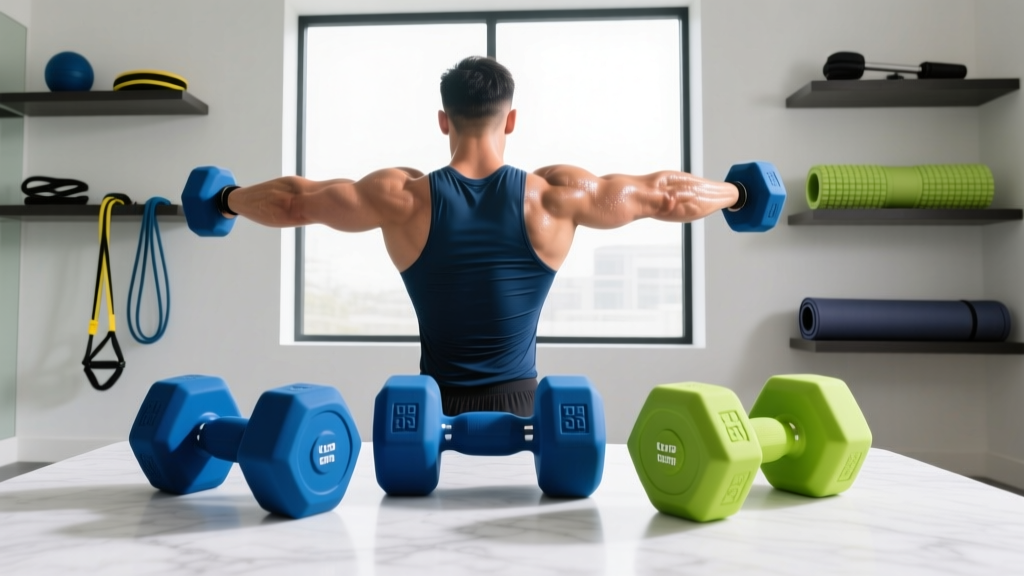
Best Rear Delt Dumbbell Exercises & Neoprene Guide
Master the best rear delt dumbbell exercises and find the perfect neoprene-coated weights for home isolation in our expert 2026 buying guide.

Building a balanced, injury-resistant physique requires meticulous attention to the posterior chain, and the rear deltoids are often the most neglected muscle group in home gym routines. When programming the best rear delt dumbbell exercises, the movement pattern is only half the battle; the equipment you hold dictates your success. Heavy, knurled steel or bulky urethane dumbbells often force grip fatigue or alter wrist biomechanics during high-repetition isolation work. This is where neoprene-coated dumbbells emerge as the undisputed champion for home isolation training.
In this comprehensive 2026 buying guide, we break down the exact biomechanics of rear deltoid hypertrophy, detail the top exercises, and provide a deep-dive comparison matrix of the best neoprene dumbbells on the market. Whether you are micro-loading for strict form or protecting your hardwood floors, understanding the material science of your weights is critical.
The Biomechanics of Rear Delt Isolation
The posterior deltoid functions primarily in horizontal abduction and external rotation of the shoulder joint. According to kinesiology data from ExRx.net, maximizing rear delt activation requires minimizing scapular retraction. If you squeeze your shoulder blades together too early in the movement, the rhomboids and middle trapezius hijack the load, leaving the rear delts under-stimulated.
Because the rear delts are a relatively small muscle group, they respond best to higher repetition ranges (15–25 reps) with strict, controlled tempos. This high-rep requirement leads to significant palmar sweating. Smooth cast iron becomes dangerously slippery, while aggressive knurling tears up calluses during the delicate wrist adjustments needed for reverse flyes. Neoprene (polychloroprene rubber) offers a high-friction, sweat-wicking tactile surface that allows you to maintain a secure, relaxed grip without over-gripping, which can inadvertently recruit the forearm flexors and biceps.
Top 3 Best Rear Delt Dumbbell Exercises for Home Gyms
To execute the best rear delt dumbbell exercises effectively, you need equipment that balances perfectly in the hand. Here are the top three movements optimized for neoprene dumbbells.
1. Chest-Supported Rear Delt Fly
Set an adjustable bench to a 30-to-45-degree incline. Lie face down with a light pair of neoprene dumbbells (typically 5 to 15 lbs for most lifters). Let your arms hang straight down with a neutral grip (palms facing each other). Initiate the movement by raising the dumbbells out to the sides in a wide arc, leading with the elbows. Stop when your upper arms are parallel to the floor. The chest support eliminates lower-back momentum, forcing the rear delts to do 100% of the work.
2. Bent-Over Hip-Hinge Reverse Fly
Stand with feet shoulder-width apart, holding your neoprene weights. Push your hips back until your torso is nearly parallel to the floor. Maintain a slight bend in the elbows. Raise the weights laterally, focusing on pushing the dumbbells away from each other rather than just up. The secure grip of the neoprene coating prevents the dumbbell from rolling in your sweaty palms during the peak contraction pause.
3. Seated Leaning Rear Delt Raise
Sit on the edge of a flat bench. Lean your torso forward until your chest is resting on your thighs. Let the dumbbells hang below your calves. Raise them outward and slightly backward. This extreme angle completely removes the traps from the equation and targets the transverse fibers of the posterior deltoid.
Expert Form Cue: To prevent shoulder impingement during these exercises, always maintain a slight external rotation (thumb slightly higher than the pinky) at the top of the movement. As noted by the Cleveland Clinic, internal rotation during horizontal abduction drastically reduces the subacromial space, increasing the risk of rotator cuff irritation.The Material Science: Why Neoprene Dominates Home Isolation
Neoprene is a synthetic rubber that excels in home gym environments for three distinct reasons:
- Acoustic & Surface Protection: Dropping a 15 lb cast-iron dumbbell on laminate flooring will crack the subfloor. Neoprene absorbs kinetic impact, making it safe for apartment living and home gyms without dedicated rubber matting.
- Thermal Neutrality: Unlike steel, which feels freezing in a garage gym during winter, neoprene remains room-temperature, providing a comfortable grip immediately upon pickup.
- Color-Coded Micro-Loading: Rear delt training requires precise weight jumps (e.g., moving from 7.5 lbs to 10 lbs). Neoprene sets are universally color-coded by weight, allowing for rapid equipment swapping during drop-sets without needing to squint at faded iron stampings.
2026 Neoprene Dumbbell Comparison Matrix
Not all neoprene dumbbells are created equal. The market is flooded with budget options that compromise the internal core. Below is our expert comparison of the top models available for home use.
| Brand & Model | Core Material | Coating Quality | Price Range (Pair) | Verdict |
|---|---|---|---|---|
| Yes4All Cast Iron Neoprene | Solid Cast Iron | 3mm Vulcanized Dip | $30 - $45 | Best Overall for Isolation |
| Amazon Basics Neoprene | Solid Cast Iron | 2.5mm Standard Dip | $25 - $40 | Best Budget Iron Core |
| CAP Barbell Neoprene | Solid Cast Iron | 3mm Heavy-Duty | $35 - $50 | Most Durable Hex Shape |
| Generic 'Color-Coded' Sets | Concrete / Sand Mix | 1mm Thin Spray | $15 - $25 | AVOID for Isolation |
The Concrete Core Trap: A Critical Warning
When shopping for neoprene dumbbells, you will encounter ultra-cheap sets (often priced under $1.50 per pound) that use a concrete or sand-filled plastic shell encased in a thin neoprene sleeve. Do not use these for rear delt exercises.
Concrete cores require significantly more volume to achieve the same weight as iron. This results in a bulky, oversized dumbbell head. More importantly, the density of concrete is inconsistent, meaning the center of mass is frequently off-axis from the handle. When performing a strict bent-over reverse fly, an off-axis dumbbell creates rotational torque on your wrist. Your body will instinctively compensate by recruiting the biceps and traps to stabilize the uneven load, completely ruining the isolation effect you are chasing. Always verify that the product description explicitly states 'Solid Cast Iron Core' before purchasing.
Progressive Overload & Buying Framework
Because the rear delts require high-rep, low-weight stimulation, buying a single pair of 20 lb neoprene dumbbells is a mistake. You need a micro-loading strategy. We recommend purchasing a 3-pair step-up set:
- 5 lbs or 7.5 lbs: For strict, tempo-based lateral raises and rear delt flyes (3-second eccentric).
- 10 lbs or 12.5 lbs: For standard bent-over reverse flyes in the 15-20 rep range.
- 15 lbs or 20 lbs: For compound pulling movements like dumbbell face pulls or wide-grip bent-over rows where the rear delts act as synergists.
Maintenance and Edge Cases: Preventing Neoprene Degradation
Neoprene is highly durable, but it is porous. Over time, it absorbs sweat, dead skin, and sebum, which can lead to bacterial growth and a sour odor. Furthermore, the acidic nature of human sweat can slowly break down the rubber compounds, causing the coating to become sticky or flake.
Pro-Tip: Never use bleach or harsh chemical degreasers on neoprene dumbbells. The chlorine will destroy the polychloroprene molecular bonds, causing the coating to split at the seams. Instead, wipe your dumbbells down weekly with a 50/50 mixture of distilled white vinegar and water, followed by a dry microfiber cloth.
Another edge case to watch for is UV degradation. If your home gym is in a sunroom or garage with direct sunlight exposure, prolonged UV rays will cause the neoprene to fade, dry out, and eventually crack. Store your dumbbells on a rack away from direct window light to ensure the coating remains supple and grippy for years.
Final Verdict
Executing the best rear delt dumbbell exercises requires a synergy of strict biomechanics and purpose-built equipment. By avoiding the trap of bulky, concrete-filled weights and investing in a high-quality, cast-iron core neoprene set from brands like Yes4All or CAP Barbell, you secure the perfect tool for high-rep isolation. The sweat-resistant grip, floor-friendly impact absorption, and precise micro-loading capabilities make neoprene the smartest investment for home shoulder development in 2026.
More gear to consider
All reviews
Rubber Hex vs Urethane: Best Value for Your Dumbbell Bench Press Rack

Olympic Barbell Guide: Weight, Knurling & 1 Pound Dumbbells
Olympic vs Standard Plates: Best for Dumbbell Chest Exercises

Rubber Hex vs Urethane: One Dumbbell Shoulder Workout Value

Best Dumbbell Racks 2026: Supersets & Upright Row with Dumbbells
