Rubber Hex vs Urethane Dumbbells: Value for Dumbbell Donkey Kicks
We break down the cost and value of rubber hex vs urethane dumbbells, analyzing durability, pricing, and performance for exercises like dumbbell donkey kicks.

The Home Gym Dilemma: Budget vs. Longevity in 2026
When outfitting a home gym, lifters are immediately confronted with a stark pricing divide in the free weights aisle. On one end, you have the ubiquitous rubber hex dumbbells, often priced attractively for beginners. On the other, premium urethane dumbbells command a significant premium. But does the higher upfront cost of urethane actually translate to better long-term value? To answer this, we must look beyond the price tag and analyze material science, depreciation rates, and real-world application—specifically evaluating how these materials perform during floor-based isolation movements like dumbbell donkey kicks.
In this comprehensive budget breakdown, we will dissect the true cost-per-year of ownership, examine the specific failure modes of both materials, and help you decide which option deserves a spot on your weight rack.
Material Science: What Are You Actually Paying For?
To understand the price gap, you first need to understand the chemical and physical differences between the two primary dumbbell coatings. According to equipment testing by Garage Gym Reviews, the coating material dictates not just durability, but the sensory experience of your workout.
Rubber Hex Dumbbells (The Budget Standard)
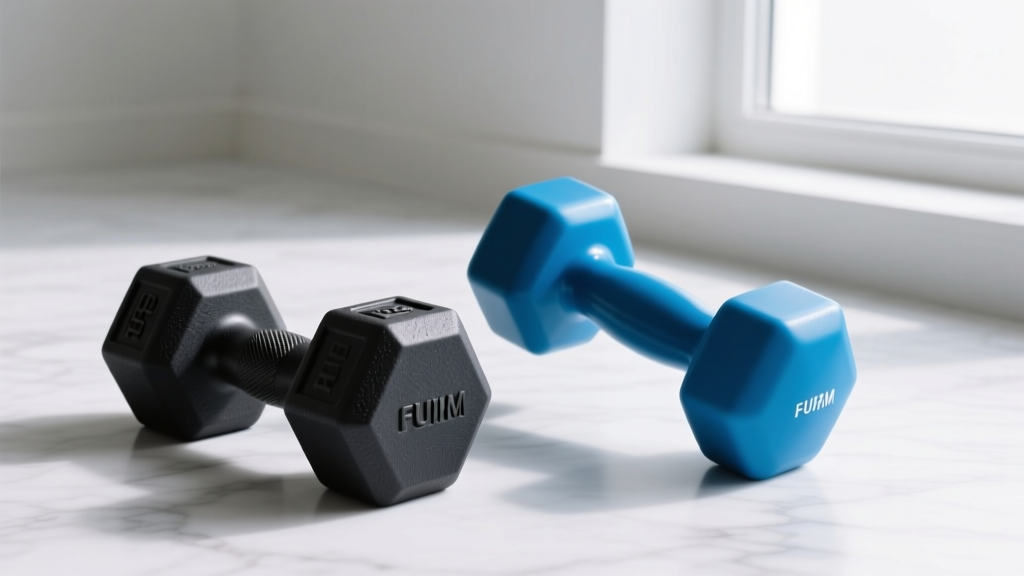
Most budget-friendly hex dumbbells (such as the CAP Barbell Cast Iron Hex series) are coated in recycled or virgin rubber. The hexagonal head design prevents rolling, which is a massive safety and convenience factor for home gyms. However, rubber is a porous, organic-based material that is susceptible to UV degradation, oxidation, and temperature fluctuations. Over time, the plasticizers in the rubber leach out, causing the coating to harden, crack, and eventually flake off onto your flooring.
Urethane Dumbbells (The Premium Upgrade)
Urethane (specifically thermoplastic polyurethane, or TPU) is a synthetic elastomer. It is engineered to be highly resistant to abrasion, UV light, sweat, and chemical cleaners. Brands like Rogue Fitness and REP Fitness utilize high-grade urethane that remains slightly yielding to the touch but completely impervious to moisture. It does not off-gas, meaning it lacks the notorious "tire smell" associated with cheap rubber weights.
Budget Analysis: Price Per Pound and the 5-Year Forecast
Let us look at the raw numbers. As of early 2026, the average market pricing for a standard 50-pound pair of dumbbells breaks down as follows:
| Dumbbell Type | Example Model | Avg. Price Per Pound | Total Cost (50lb Pair) | Expected Lifespan |
|---|---|---|---|---|
| Rubber Hex | CAP Barbell A-Frame Hex | $1.40 - $1.80 | $70 - $90 | 3 - 7 Years |
| Premium Rubber | Titan Fitness Virgin Rubber | $2.00 - $2.40 | $100 - $120 | 7 - 10 Years |
| Urethane (Round) | REP Fitness Round Urethane | $3.20 - $3.80 | $160 - $190 | 15+ Years |
| Urethane (Hex) | Rogue Urethane Hex | $4.00 - $4.50 | $200 - $225 | 20+ Years |
If you buy a $80 pair of rubber hex dumbbells that begin to flake and smell after 4 years, your cost is $20.00 per year. If you invest $180 in a pair of urethane dumbbells that easily lasts 15 years, your cost drops to $12.00 per year. Urethane actually wins the long-term value equation for lifters who plan to train consistently for over a decade.
The "Dumbbell Donkey Kicks" Test: Real-World Application
Why bring up dumbbell donkey kicks in a material comparison? Because this specific glute isolation exercise perfectly highlights the hidden drawbacks of budget rubber equipment.
To perform a dumbbell donkey kick, you start on all fours, place a dumbbell behind your knee, and extend your leg upward. This movement places the dumbbell head directly onto your yoga mat or rubber flooring. Furthermore, because your face is inches from the floor, any off-gassing or odor from the equipment is immediately amplified.
- The Rubber Hex Experience: When you set a rubber hex dumbbell on the floor, the hard edges can scuff or dent softer EVA foam mats. More importantly, as you sweat and handle the weight, the porous rubber absorbs moisture and bacteria. Over time, the "tire smell" transfers to your skin and your mat, making close-to-the-floor exercises highly unpleasant.
- The Urethane Experience: Urethane is non-porous and completely odorless. When placed on the mat for donkey kicks, it leaves no scuff marks and absorbs zero sweat. A quick wipe with a standard gym cleaner leaves it pristine. As noted by the experts at BarBend, the hygiene and sensory benefits of urethane make it vastly superior for high-repetition, floor-adjacent accessory work.
"For exercises where the equipment rests on the floor near your face, or where grip security is compromised by sweat transfer from degrading coatings, urethane is not a luxury—it is a functional necessity."
Durability and Failure Modes: What Goes Wrong?
To truly assess value, we must look at how these dumbbells fail. Here are the most common edge cases and failure modes for both materials:
Rubber Hex Failure Modes
- Head Loosening: In cheaper models, the rubber head is molded around a steel insert. Repeated dropping (even from waist height) can break the bond, causing the head to rattle or spin independently of the handle.
- UV Degradation: If your home gym is in a garage with a window, direct sunlight will cause the rubber to oxidize, turning it gray and brittle within 24 to 36 months.
- Handle Rust: Budget rubber dumbbells often feature standard chrome or bare steel handles that lack deep knurling. Without strict humidity control, these handles will pit and rust, tearing up your calluses during heavy pulls.
Urethane Failure Modes
- Cosmetic Scratching: While urethane will not crack or flake, lighter-colored urethane (like gray or white) can pick up cosmetic scuffs from metal racks or chalk.
- Extreme Cold Brittleness: If you train in an unheated garage in sub-zero temperatures, lower-grade urethane can temporarily stiffen, making it slightly more prone to chipping if dropped on concrete. However, premium TPU formulations mitigate this almost entirely.
Final Verdict: Which Should You Buy?
The decision ultimately comes down to your training environment, your budget, and your tolerance for equipment maintenance.
Buy Rubber Hex Dumbbells If:
- You are on a strict sub-$150 budget for a starter pair.
- You primarily use them for heavy, standing exercises (shrugs, lunges, goblet squats) where floor contact and odor are non-issues.
- You train in a climate-controlled, indoor spare bedroom.
Buy Urethane Dumbbells If:
- You frequently perform floor-based accessory work like dumbbell donkey kicks, floor presses, or renegade rows.
- Your gym is in a garage or basement with fluctuating temperatures and humidity.
- You want a "buy it for life" investment that eliminates the need for replacement in 5 years.
- You are sensitive to strong chemical or rubber odors.
Frequently Asked Questions
Can I just wash the smell off my rubber hex dumbbells?
You can mitigate the initial off-gassing by scrubbing the dumbbells with a mixture of white vinegar and water, then leaving them outside in the shade for 48 hours. However, because rubber is porous, the smell will often return in high humidity or when the weights heat up during a strenuous workout.
Are urethane dumbbells safe to drop?
Urethane is highly shock-absorbent and can withstand drops from waist height onto rubber horse-stall mats. However, no dumbbell should be dropped from overhead or shoulder height, as the internal steel handle can bend or snap the weld connecting the head to the shaft, regardless of the exterior coating.
Do I need hex-shaped urethane dumbbells for donkey kicks?
Not necessarily. While hex shapes prevent rolling, many premium urethane dumbbells feature a flat-bottomed round design (like those from REP Fitness). These flat edges provide enough stability to rest securely on a mat during the setup phase of dumbbell donkey kicks without rolling away, while offering a more ergonomic rack-stacking profile.
More gear to consider
All reviews
Rubber Hex vs Urethane: Dumbbell Side Bends for Obliques Value Guide

Maintaining Dumbbell Racks Against Heavy Standing Dumbbell Shrugs

Treadmill or Exercise Bike for Weight Loss: Stationary Bike Care

Best Loadable Dumbbells for Dumbbell Boxing (2026 Review)
Beyond a Picture of Dumbbells: Cast Iron vs Competition Kettlebells