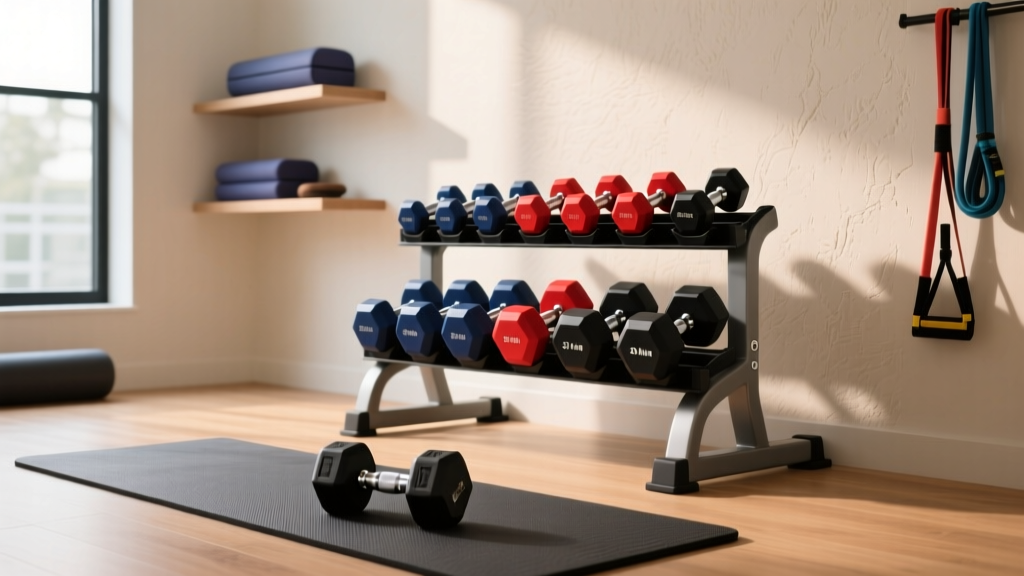
Best Racks for a 30 Minute Workout with Dumbbells: 2026 Budget Guide
Maximize your 30 minute workout with dumbbells by eliminating clutter. Our 2026 budget breakdown analyzes the ROI, safety, and value of top dumbbell racks.

The Hidden 'Transition Tax' in High-Intensity Dumbbell Training
When you are deep into a high-density, 30 minute workout with dumbbells—whether it is an Every Minute on the Minute (EMOM) protocol, a German Volume Training variation, or a metabolic conditioning complex—every single second matters. Yet, most home gym owners unknowingly pay a 'transition tax' due to poor equipment storage. Scrambling across a rubber-matted floor to locate a specific pair of 35-pound hex dumbbells amidst a scattered pile of 20s and 50s adds an average of 12 to 18 seconds per transition. Over a 30-minute AMRAP (As Many Rounds As Possible), this clutter can rob you of up to three minutes of active working time, completely altering the intended stimulus of the workout.
The Math of Clutter: According to conditioning coaches, optimal rest-to-work ratios in metabolic resistance training require seamless weight changes. If your storage solution forces you to bend, search, and untangle weights, your heart rate drops below the target threshold, shifting the workout from a cardiovascular-strength stimulus to a fragmented, stop-and-go routine.In 2026, the home fitness market offers more storage solutions than ever, but the gap between 'budget-friendly' and 'gym-quality' is riddled with misleading marketing. This guide breaks down the exact budget tiers, real-world failure modes, and value analysis of dumbbell racks to ensure your storage investment actively supports your training goals.
2026 Budget Breakdown: Dumbbell Storage Tiers
To properly evaluate value, we must look beyond the sticker price and analyze the cost per pound of storage capacity, the linear footprint required, and the ergonomic efficiency during a fast-paced 30 minute workout with dumbbells.
Tier 1: The A-Frame Rack (Budget: $60 – $120)
The A-Frame is the undisputed king of the entry-level home gym. Models like the CAP Barbell A-Frame or Marcy Deluxe Dumbbell Rack typically cost between $60 and $120. They feature a small 24x24-inch footprint, making them ideal for cramped apartments or garage corners.
- Value Proposition: Extremely low barrier to entry; stores up to 6 pairs of light-to-medium dumbbells (usually 5 to 25 lbs).
- The Catch: Ergonomics and safety. A-frames require you to bend over and hinge at the hips to grab lower weights, which disrupts the flow of a standing dumbbell complex. Furthermore, they suffer from a critical center-of-gravity flaw: if you load heavier 30lb dumbbells on the top tier and leave the bottom empty, the rack becomes a severe tipping hazard.
- Best For: Beginners with limited space and lighter neoprene or vinyl-coated dumbbell sets.
Tier 2: The 3-Tier Horizontal Rack (Budget: $180 – $350)
The 3-tier horizontal rack is the gold standard for serious home gyms and commercial facilities. Current 2026 pricing for heavy-duty models from brands like Titan Fitness, Rogue, and Rep Fitness ranges from $180 for imported 14-gauge steel to $350+ for domestic 11-gauge steel with UHMW plastic liners.
- Value Proposition: Unmatched transition speed. Weights are stored at shin, knee, and waist heights. During a 30 minute workout with dumbbells, you can execute a seamless 'pivot-step' to swap weights without breaking your posture or losing your mental focus.
- The Catch: Footprint. A standard 3-tier rack requires 48 to 60 inches of linear wall space and must be placed in a high-traffic zone of your gym to be effective.
- Best For: Intermediate to advanced lifters utilizing rubber hex or urethane dumbbells ranging from 10 lbs to 100+ lbs.
Tier 3: Wall-Mounted Slatwall & Cradles (Budget: $90 – $250)
For those maximizing floor space for open movements like lunges or renegade rows, wall-mounted storage is a premium spatial solution. Heavy-duty slatwall panels with specialized metal dumbbell cradles or individual wall-hooks cost between $90 and $250 depending on the hardware.
- Value Proposition: Zero floor footprint. Keeps the training area completely clear for dynamic movements.
- The Catch: Installation complexity and structural risk. You cannot mount 50-pound dumbbells to standard drywall. This requires lag-bolting into 2x4 wooden studs or reinforcing with plywood backing. Failure to do so results in catastrophic wall damage.
- Best For: Dedicated garage gyms with exposed studs or finished walls willing to undergo structural reinforcement.
Value Analysis Matrix: Cost vs. Performance
| Rack Type | Avg. Cost (2026) | Linear Footprint | Max Capacity | Transition Speed |
|---|---|---|---|---|
| A-Frame | $85 | 2 ft x 2 ft | ~300 lbs | Slow (Requires bending) |
| 3-Tier Horizontal | $240 | 4 ft to 5 ft | 1,000+ lbs | Fast (Ergonomic tiers) |
| Wall-Mounted | $160 | 0 sq ft (Wall) | Varies by studs | Moderate (Reaching) |
Real-World Failure Modes: Where Cheap Racks Cost You More
When analyzing budget equipment, the true cost is often revealed in failure modes. In 2026, the market is flooded with ultra-cheap, unbranded 3-tier racks selling for under $130 on major e-commerce platforms. While they look identical to premium models in photos, their structural engineering tells a different story.
The 14-Gauge vs. 11-Gauge Steel Dilemma
Premium racks utilize 11-gauge or 7-gauge steel (approx. 0.12 to 0.18 inches thick). Budget racks often use 14-gauge or even 16-gauge steel. When you are fatigued at minute 24 of a 30 minute workout with dumbbells, you are not going to gently place a 60-pound dumbbell back on the rack; you are going to drop it. The dynamic shock load of a dropped 60lb hex dumbbell on a 14-gauge steel tier will cause the welds at the gusset plates to micro-fracture. Over six months, this leads to catastrophic weld failure, resulting in ruined flooring, damaged dumbbells, or worse, crushed toes.
The UHMW Plastic Liner Factor
High-value racks include UHMW (Ultra-High Molecular Weight) polyethylene liners on the metal shelves. This plastic protects the knurling and rubber coating of your dumbbells. Budget racks are bare metal. Dropping rubber hex dumbbells onto bare steel repeatedly will eventually slice the rubber casing, exposing the inner iron core to humidity and rust. Spending an extra $80 for a rack with UHMW liners protects a $500+ dumbbell investment.
Ergonomic Layout for High-Intensity Dumbbell Complexes
Buying the right rack is only half the battle; placing it correctly in your gym dictates the success of your programming. The National Strength and Conditioning Association (NSCA) emphasizes the importance of clearance zones and traffic flow in facility setup to prevent collisions and optimize movement efficiency.
Expert Insight: 'In high-density metabolic conditioning, the distance between the weight storage and the working area should never exceed two steps. Any further, and the athlete's core temperature begins to drop, negating the metabolic demand of the complex.'The Pivot-Step Placement Strategy
To optimize your space for a 30 minute workout with dumbbells, implement the Pivot-Step layout:
- Anchor the Rack: Place your 3-tier rack parallel to your primary workout bench or open floor mat, exactly one arm's length away.
- Weight Sequencing: Arrange your dumbbells in ascending order from the center out. Place your most frequently used 'working weights' (e.g., 25s and 30s) on the middle, knee-height tier. Place heavier, slower-moving weights (e.g., 50s for goblet squats) on the bottom tier, and lighter isolation weights on the top tier.
- The Drop Zone: Never place your rack directly behind your head when lying on a bench. If you fail a dumbbell floor press or bench press, the natural reflex is to drop the weights outward. Ensure a 36-inch clearance halo around your rack to prevent deflected weights from damaging the storage unit.
According to programming guidelines from the American Council on Exercise (ACE), minimizing cognitive load during a workout allows for better form retention under fatigue. When your weights are sequenced logically on a stable, ergonomic rack, you eliminate the mental friction of searching for gear, allowing you to focus entirely on muscle contraction and breathing.
Final ROI Verdict: Maximizing Your Storage Investment
If your primary training modality involves a daily or weekly 30 minute workout with dumbbells, treating your storage as an afterthought is a critical error. The A-Frame rack ($85) offers undeniable value for spatial efficiency, but its ergonomic limitations and tipping risks make it a poor long-term investment for heavy, fast-paced training. Wall-mounted solutions ($160) are brilliant for spatial optimization but require structural investments that renters or casual DIYers may want to avoid.
The undisputed value champion in 2026 remains the mid-range 3-Tier Horizontal Rack ($200 - $280). By prioritizing 11-gauge steel and UHMW liners, you secure a piece of equipment that will outlast your dumbbells, protect your flooring, and shave vital seconds off your transition times. When you are staring down the clock at minute 28 of a grueling dumbbell complex, the ability to blindly reach out, grab the exact weight you need, and pivot back into your stance without breaking rhythm is the ultimate return on investment.
More gear to consider
All reviews
Best Tricep Pushdown Dumbbell Alternative: EZ vs Straight Bar
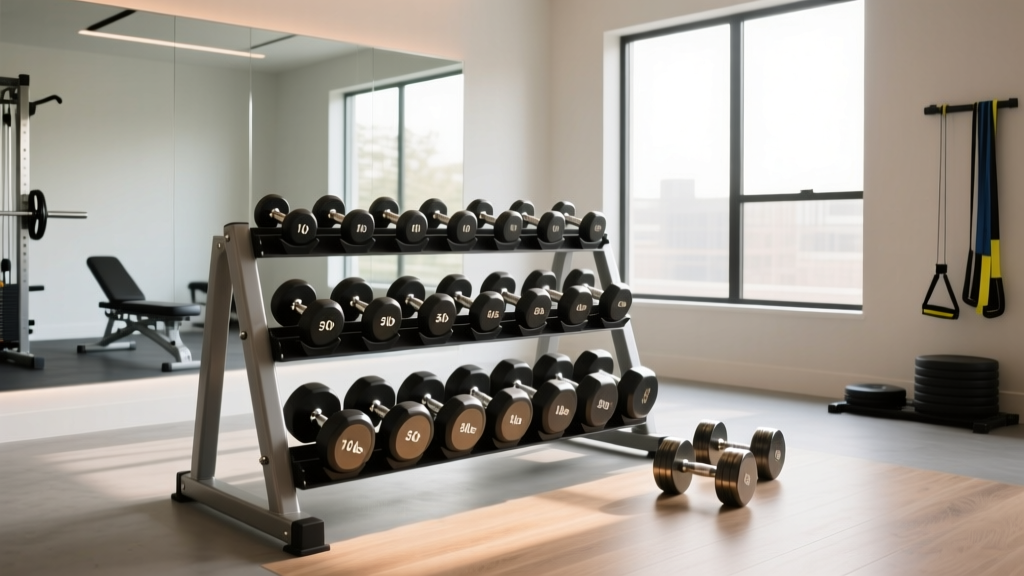
Dumbbell Rack Layouts for a Dumbbell Only Back and Bicep Workout
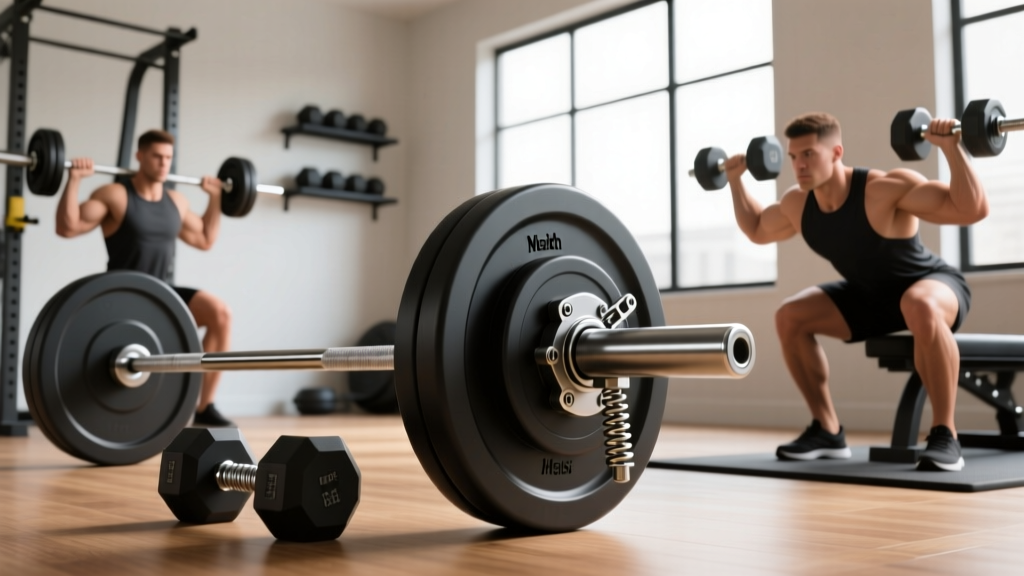
Barbell Collar vs Clamp Comparison & Dumbbell Exercises With Pictures

Quick Full Body Dumbbell Workout Mistakes: Olympic vs Standard Plates
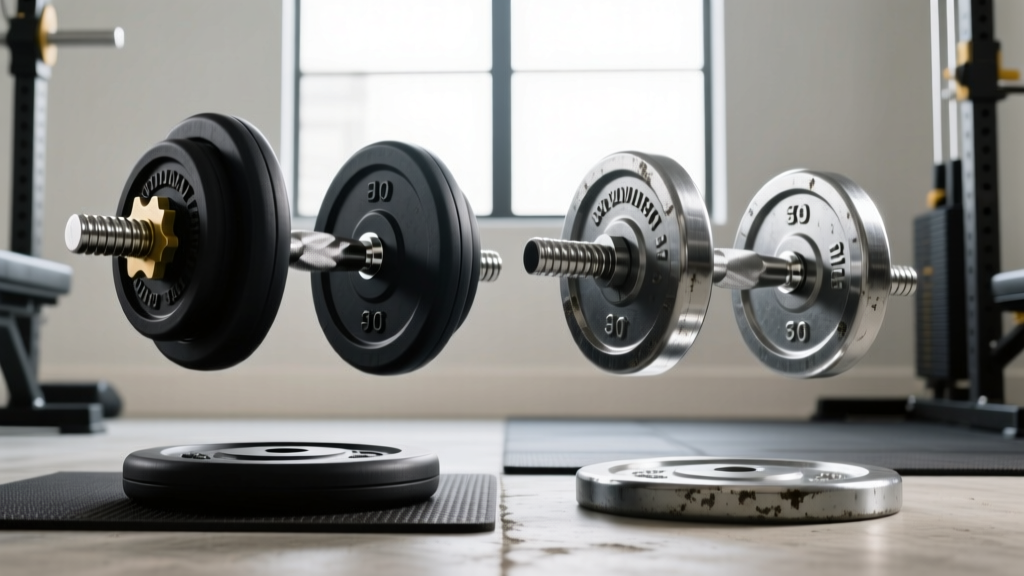
Bumper Plate vs Iron Plate: Best for the Double Dumbbell Swing?
