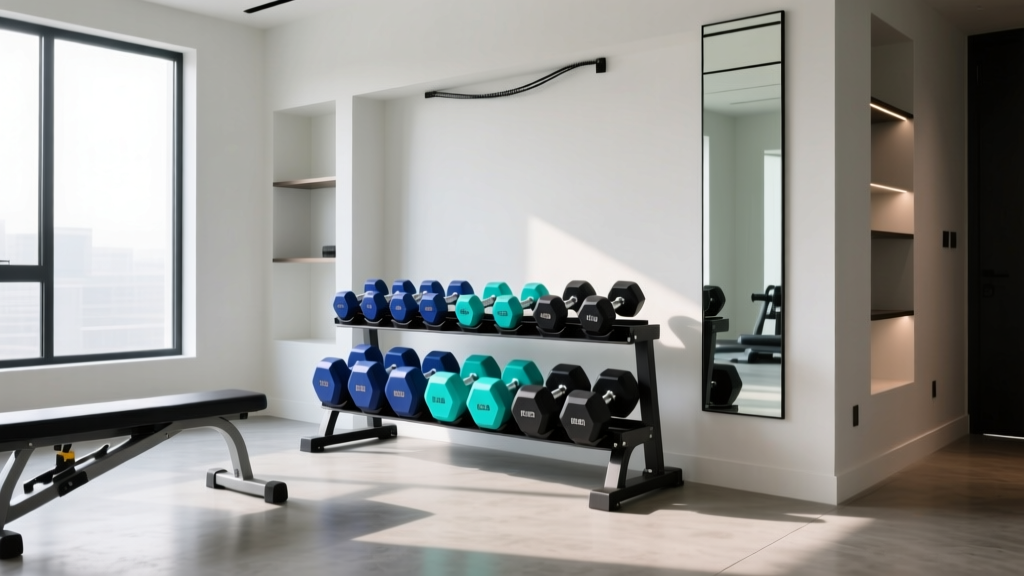
Kettlebells vs Dumbbell Exercises for Flabby Arms: Cast Iron Guide
Discover why kettlebells beat dumbbell exercises for flabby arms. Our 2026 hands-on guide compares cast iron vs competition kettlebells for arm toning.

The Arm Toning Debate: Moving Beyond Isolation
Every January, search engines see a massive spike in queries for dumbbell exercises for flabby arms. Beginners flood the internet hoping that endless sets of triceps kickbacks, overhead extensions, and bicep curls will magically spot-reduce adipose tissue on the back of their arms. As a fitness equipment reviewer and strength coach, I need to be blunt: spot reduction is a physiological myth. According to the American Council on Exercise (ACE), targeted fat loss is impossible; you must reduce overall body fat percentage while building underlying muscle density to achieve a toned appearance.
This is precisely where the kettlebell outshines the traditional dumbbell for arm composition. While dumbbells are excellent for strict isolation, kettlebells force you into compound, multi-joint ballistics and grinds. Movements like the kettlebell strict press, push press, and snatch recruit the triceps, anterior deltoids, and core simultaneously, driving a vastly superior metabolic response and systemic fat loss. But to execute these movements safely and effectively, you need the right tool. In this 2026 hands-on buying guide, we break down the metallurgy, dimensions, and real-world performance of cast iron versus competition kettlebells to help you build the ultimate home armory.
Standard Cast Iron Kettlebells: The Garage Gym Workhorse
Cast iron kettlebells are the traditional, single-piece gravity-cast tools you find in most commercial gyms and garage setups. They are typically coated in powder coat, e-coat, or enamel to prevent rust and improve grip friction.
Dimensions and Handle Geometry
Unlike competition bells, cast iron kettlebells scale in physical size as the weight increases. A 12kg cast iron bell will be noticeably smaller than a 24kg bell. Handle diameters generally range from 32mm to 35mm, and the distance between the handle and the bell (the "horns") widens as the bell grows. For arm-dominant pressing movements, a thicker handle (35mm) demands more grip strength and forearm recruitment, which indirectly builds denser arm musculature.
Furthermore, the center of mass in a cast iron bell shifts outward as the bell grows larger. This means a 24kg cast iron bell will pull your wrist into slight ulnar deviation during a front rack hold, whereas a 12kg bell sits closer to the forearm. This shifting biomechanical profile makes cast iron excellent for developing dynamic grip stabilization, but frustrating for lifters trying to dial in strict pressing mechanics across multiple weight classes.
Expert Warning: Avoid cheap, vinyl-coated cast iron kettlebells found in big-box stores. The vinyl creates a slippery surface when you sweat, and the handles are often poorly polished, leading to severe callus tearing during high-rep snatches or cleans.Top 2026 Cast Iron Pick: Rogue Fitness Powder Coat
The Rogue Fitness Powder Coat Kettlebell remains the gold standard for cast iron. The matte powder coat finish holds chalk exceptionally well, which is crucial when your hands get sweaty during high-volume arm and shoulder conditioning circuits. Priced at roughly $1.75 per pound (a 16kg/35lb bell costs around $60 in 2026), it offers unmatched durability. The flat, machined base ensures it won't wobble during renegade rows or plank-to-press transitions.
Competition Kettlebells: Precision for the Serious Lifter
If your goal is to master kettlebell sport or you want a uniform rack position for heavy pressing, competition kettlebells are mandatory. Originating from Eastern European strength standards and heavily popularized by organizations like StrongFirst, competition bells are made of solid steel (or hollow steel filled with calibrated ball bearings) to maintain exact dimensions regardless of weight.
The Biomechanical Advantage for Arm Training
Every competition kettlebell, from 8kg to 32kg, shares the exact same physical dimensions: a 210mm x 280mm body and a strict 33mm handle diameter. The horns are narrow and squared off. Why does this matter for your arms? When you clean a kettlebell to the "rack position" (resting against your forearm and chest before a press), a competition bell sits flush against the forearm. A bulky cast iron bell will dig into your wrist and forearm, causing bruising and limiting your ability to perform high-rep strict presses or jerks. If you want to replace dumbbell exercises for flabby arms with high-volume kettlebell pressing to build dense, defined triceps, the competition bell's ergonomic rack position is non-negotiable.
Top 2026 Competition Pick: Kettlebell Kings Steel Competition
Kettlebell Kings continues to dominate the competition space. Their single-cast steel bells feature a 33mm handle with a slight texture that grips chalk without requiring aggressive sanding. At approximately $4.50 per pound, a 16kg bell will set you back about $160. It is a premium investment, but the uniform geometry means your muscle memory for the clean and press remains identical whether you are warming up with a 12kg or working up to a 24kg max effort set.
Head-to-Head Comparison Matrix
| Feature | Standard Cast Iron (e.g., Rogue) | Competition Steel (e.g., KB Kings) |
|---|---|---|
| Material | Gravity-cast solid iron | Single-cast steel or calibrated hollow |
| Handle Diameter | 32mm - 35mm (varies by weight) | Strict 33mm (universal) |
| Bell Dimensions | Scales up with weight | 210mm x 280mm (universal) |
| Rack Position Comfort | Moderate (can bruise forearm on heavy cleans) | Excellent (sits flush on forearm) |
| Avg. Cost per lb (2026) | $1.50 - $2.00 | $3.50 - $4.50 |
| Best For | Ballistics, general fitness, budget buyers | Grinds, presses, kettlebell sport, technique |
Programming: Replacing Dumbbell Isolation with Kettlebell Compound Movements
To effectively transition away from ineffective isolation routines and build lean, dense arm tissue, implement this 3-day weekly kettlebell protocol. This focuses on time-under-tension and metabolic demand.
- The Strict Military Press (Triceps & Shoulders): 5 sets of 5-8 reps per arm. Focus on the eccentric (lowering) phase, taking a full 3 seconds to lower the bell back to the rack position. This eccentric load triggers massive hypertrophy in the triceps brachii.
- The Bottoms-Up Press (Grip & Forearms): 3 sets of 4-6 reps per arm. Holding the kettlebell upside down forces your forearm flexors and brachioradialis to work in overdrive to stabilize the weight, eliminating the need for separate wrist curls.
- The Kettlebell Snatch (Systemic Fat Burn): 10 sets of 10 reps per arm (EMOM - Every Minute on the Minute). This ballistic movement spikes the heart rate, driving the systemic caloric expenditure required to shed the fat layer hiding your arm musculature.
Nutritional & Recovery Context for Arm Composition
Equipment is only half the battle. To reveal the muscle density built by heavy kettlebell pressing, you must maintain a slight caloric deficit (roughly 300-500 calories below maintenance) while prioritizing protein intake at 0.8g to 1g per pound of body weight. The systemic trauma induced by heavy kettlebell snatches and presses requires adequate sleep and hydration to repair the micro-tears in the triceps and anterior deltoids. Unlike the low-impact nature of dumbbell exercises for flabby arms, kettlebell ballistics tax the central nervous system (CNS). Limit high-volume snatch sessions to twice a week to prevent CNS fatigue and elbow tendonitis.
"The kettlebell is an extension of the human body. When you press a competition bell, the alignment of the wrist, elbow, and shoulder is perfectly stacked, allowing for maximum force transfer directly into the triceps and deltoids without joint leakage."
Expert Verdict: Which Should You Buy?
If your primary goal is general fitness, swings, goblet squats, and you are on a strict budget, cast iron kettlebells are the undisputed champions of value. The Rogue Powder Coat line will last multiple lifetimes and provide all the resistance you need to overhaul your physique.
However, if you are specifically targeting arm composition, heavy overhead pressing, and want to master the technical nuances of the clean and jerk, competition kettlebells are worth the premium. The uniform 33mm handle and flush rack position will save your forearms from bruising and allow you to accumulate the high-volume pressing sets required to build serious muscle density. Stop wasting time on endless isolation routines; grab a pair of 12kg or 16kg competition bells, master the press, and watch your arm composition transform.
More gear to consider
All reviews
Collar Clamp Types Comparison: Beyond Good Forearm Workouts with Dumbbells
Best Angle for Incline Dumbbell Press: Adjustable Dumbbell Showdown

Barbell Collar & Clamp Types Compared: Secure Lifts Before a 20 Minute Dumbbell Workout

Power Rack vs Squat Rack: Are RDLs Better With Dumbbells or Barbell?
Loadable Dumbbells & The Seated Dumbbell Deadlift: 2026 Trend Report