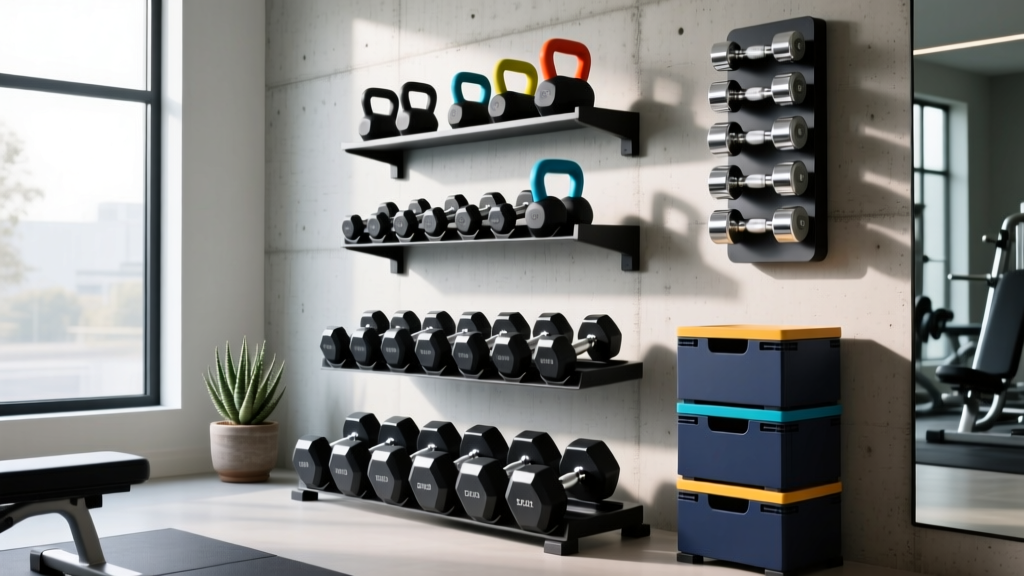
2026 Storage Trends to Optimize Your Simple Dumbbell Workout
Discover 2026 market trends for dumbbell racks and storage. Optimize your home gym footprint and elevate your simple dumbbell workout with expert gear analysis.

The 2026 Home Gym Shift: From Clutter to Flow
The home fitness landscape has matured significantly since the initial boom of the early 2020s. As we navigate 2026, the market has shifted away from makeshift, temporary garage setups toward highly optimized, ergonomically sound training environments. At the core of this evolution is the recognition that equipment storage is not merely an afterthought; it is a critical component of workout efficiency. When executing a simple dumbbell workout, the transition between sets and exercises dictates your heart rate maintenance and overall training density. Tripping over scattered 40-pound hex bells or struggling to peel rubber-coated weights off a wire shelf disrupts your flow and compromises lumbar safety.
According to the American College of Sports Medicine (ACSM), home gym permanence and space optimization remain top global fitness trends. Consumers are no longer just buying weights; they are investing in the infrastructure to house them. This trend report analyzes the 2026 dumbbell rack and storage market, breaking down the dominant architectural tiers, structural failure modes, and the biomechanical impact of storage on your training.
2026 Market Data Highlight
The global home fitness equipment storage sub-segment is currently outpacing general equipment sales, growing at an estimated 7.8% CAGR. The primary driver is the urbanization of home gyms, with 64% of new equipment buyers prioritizing a vertical footprint of less than 6 square feet for their primary storage solutions.
Market Segmentation: Three Dominant Storage Tiers
The 2026 storage market is neatly divided into three architectural categories, each catering to specific spatial constraints and dumbbell modalities (hex, urethane round, or adjustable).
Tier 1: Vertical A-Frames (The Urban Standard)
For micro-gyms and apartment setups, the A-Frame remains the undisputed king of spatial efficiency. The benchmark for this category is the Rogue Fitness A-Frame Dumbbell Rack. Constructed from 11-gauge 3x3-inch steel tubing, it features a compact 23.5 x 23.5-inch footprint while accommodating up to 10 pairs of dumbbells (typically 5 to 50 pounds).
- Pros: Minimal floor space, heavy-duty load capacity (over 800 lbs), aesthetic matte black powder coat.
- Cons: Requires strict load balancing. Loading all heavy pairs on the front pegs shifts the center of gravity forward, creating a severe tipping hazard on uneven surfaces.
- 2026 Price Point: $225 - $250
Tier 2: Horizontal 3-Tier Racks (The Garage Workhorse)
For dedicated garage gyms housing full 5-to-100-pound sets, horizontal tiered racks are the standard. Models like those found in the Rep Fitness Storage Solutions lineup utilize 12-gauge 2x2-inch steel. These racks typically span 35 to 45 inches in width and feature flat or slightly angled shelves.
- Pros: High visibility, easy access for heavy pairs, expandable modularity.
- Cons: Large footprint (approx. 8 sq ft). Flat shelves are notorious for allowing round urethane dumbbells to roll off if the rubber grips degrade or if the rack is not perfectly leveled with shims.
- 2026 Price Point: $149 - $299
Tier 3: Wall-Mounted Peg Systems (The 2026 Disruptor)
The most significant market disruption in 2026 is the rise of heavy-duty wall-mounted storage. By utilizing structural wall studs, lifters are reclaiming 100% of their floor space. These systems use 5/8-inch or 1-inch solid steel pegs anchored via 3/8-inch lag bolts directly into wooden studs or masonry.
- Pros: Zero floor footprint, highly customizable layout, keeps weights at exact ergonomic heights.
- Cons: Requires structural modification (drilling), limited to lighter/medium dumbbell pairs (typically maxing out at 40 lbs per peg due to sheer force on the drywall/stud interface).
- 2026 Price Point: $80 - $160 per modular panel
2026 Specification Matrix: Top Contenders Compared
| Model / Architecture | Steel Gauge | Footprint | Max Capacity | Best For |
|---|---|---|---|---|
| Rogue A-Frame (Vertical) | 11-Gauge (3x3) | 23.5 x 23.5 in | 800+ lbs | Hex & Adjustable |
| Rep Fitness 3-Tier (Horizontal) | 12-Gauge (2x2) | 36 x 22 in | 1,000 lbs | Full Hex Sets |
| Bells of Steel 5-Tier | 14-Gauge (2x2) | 26 x 20 in | 600 lbs | Light Neoprene/Vinyl |
| Custom Wall-Mount Pegs | Solid Steel (1 in) | 0 sq ft (Wall) | 50 lbs / peg | Micro-Gyms |
The Biomechanics of Storage: Matching Rack to Workflow
A well-designed simple dumbbell workout shouldn't be complicated by poor ergonomics. The physical act of retrieving and racking weights places significant shear force on the lumbar spine, particularly during high-fatigue states. When selecting a storage solution, you must map the rack's geometry to your biomechanical workflow.
The 36-Inch Rule for Heavy Pairs
For dumbbells exceeding 40 pounds, the storage shelf or peg should ideally sit between 32 and 36 inches from the floor. This height aligns with the natural hip-hinge mechanics of an average adult, allowing you to brace your core and deadlift the weight off the rack without excessive spinal flexion. Horizontal 3-tier racks often fail this test on the bottom tier, which sits just 6 inches off the ground. Expert Tip: Use the bottom tier exclusively for lightweight accessories, resistance bands, or 5-to-15-pound warm-up bells, and reserve the top and middle tiers for your primary working weights.
Urethane vs. Rubber Hex: The Friction Factor
Material science plays a massive role in storage compatibility. Virgin rubber hex dumbbells possess high-friction edges that grip steel shelves, preventing sliding. Conversely, premium urethane round dumbbells (which are odorless and more durable) have a smoother, harder exterior. If placed on a flat steel tier rack, urethane bells can easily roll off when bumped. If you invest in urethane, you must purchase a rack with welded angled cradles or apply aftermarket 3mm rubber matting to the shelves to increase the coefficient of friction.
Structural Edge Cases and Failure Modes
As an equipment reviewer, I frequently see lifters make critical structural oversights when installing heavy storage. Here are the edge cases you must account for in 2026:
- Residential Floor Joist Overloading: A standard 10-pair set of hex dumbbells (5-50 lbs) weighs approximately 275 pounds. Add a 75-pound steel rack, and you have 350 pounds concentrated on a 4-square-foot area (87.5 PSF). Standard residential building codes rate second-floor living spaces for a 40 PSF live load. If placing a massive rack on an upper floor or over a long span, position the rack perpendicular to the floor joists and directly against a load-bearing wall to distribute the point-load.
- Drywall Anchor Catastrophes: Wall-mounted peg systems are incredibly popular, but relying on toggle bolts or drywall anchors for dynamic loading is a recipe for disaster. The repeated impact of racking a 30-pound dumbbell generates kinetic shockwaves that will eventually pulverize the gypsum core of your drywall, leading to catastrophic pull-outs. You must anchor exclusively into the center of wooden studs or use concrete wedge anchors for masonry walls.
- Powder Coat Degradation: Cheaper import racks use thin, low-bake powder coating. When cast-iron or rubber dumbbells are repeatedly slammed onto these shelves, the coating chips, exposing raw steel to ambient humidity. Within 6 to 12 months, oxidation (rust) will stain your dumbbell handles. Always look for racks specifying a minimum 2-mil powder coat thickness or apply clear UHMW (Ultra-High Molecular Weight) polyethylene tape to the contact points.
'The modern home gym is shifting from a storage unit for fitness gear into a dedicated performance space. In 2026, we are seeing consumers treat their dumbbell racks with the same spatial planning rigor as a commercial kitchen prep station. If the equipment isn't within an arm's reach at the optimal ergonomic height, it's considered a design failure.'
— Home Fitness Ergonomics & Space Planning Report, 2025-2026
Final Market Verdict
The 2026 dumbbell storage market rewards intentionality. If your primary training space is constrained, the vertical A-Frame remains the gold standard for balancing footprint with heavy-load capacity. For those with expansive garage setups running full commercial-style sets, the horizontal 3-tier rack with angled urethane cradles is the necessary investment to protect both your equipment and your spine.
Ultimately, optimizing your storage is about removing friction from your training. A simple dumbbell workout thrives on rhythm, density, and focus. By investing in the right rack architecture, matching the steel gauge to your load requirements, and respecting the biomechanics of weight retrieval, you transform your home gym from a cluttered storage closet into a high-performance training facility.
More gear to consider
All reviews
Barbell Clamp Comparison & Dumbbell Wood Chopper Exercise Tips

Bumper vs Iron Plates: Layout Tips & Dumbbell Earrings

Barbell Collar and Clamp Comparison: Biceps Workouts with Dumbbells

Olympic vs Standard Plates Guide: Dumbbell Press Works What Muscles?

How to Work Lats with Dumbbells vs Kettlebells: 2026 Guide
