2026 Rack Trends: Storage Solutions for Chest Presses with Dumbbells
Explore 2026 dumbbell storage market trends. Discover the best rack solutions to safely organize heavy weights for chest presses with dumbbells.

The 2026 Paradigm Shift: From Accumulation to Ergonomic Integration
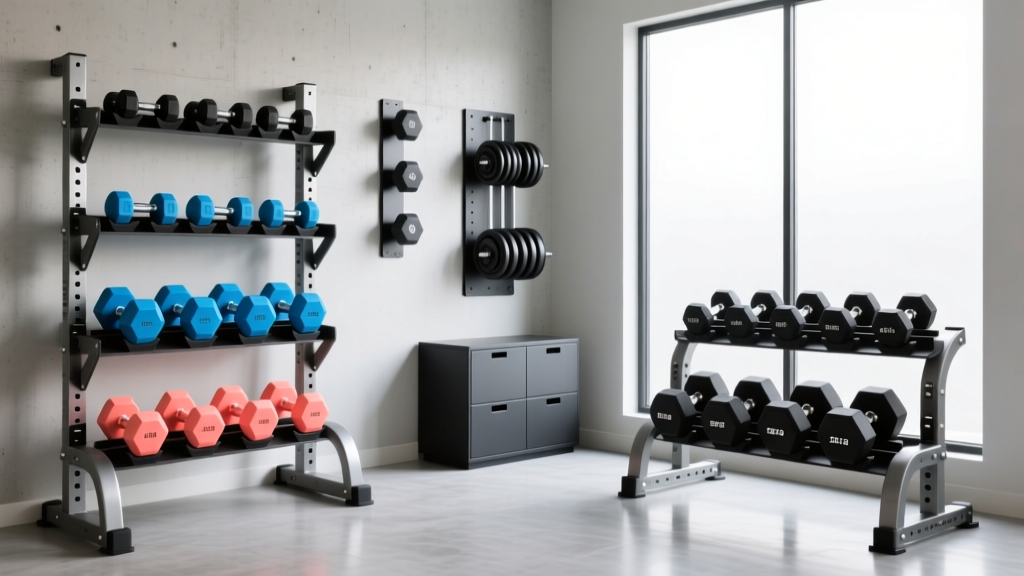
The home and commercial fitness equipment market has undergone a massive maturation process over the last few years. As we navigate 2026, the focus for serious lifters has shifted from simply accumulating free weights to optimizing the ergonomics, safety, and spatial efficiency of storing them. This evolution is largely driven by the increasing popularity of heavy, hypertrophy-focused movements—most notably, heavy chest presses with dumbbells. When athletes regularly press pairs of 80, 100, or even 120-pound dumbbells, the storage solution is no longer just an organizational tool; it is a critical piece of safety equipment that dictates the biomechanics of the pickup and the drop-off.
In this trend report and market analysis, we break down the current state of dumbbell racks, why legacy designs are failing modern lifters, and the innovative storage configurations dominating the 2026 fitness equipment landscape.
Why Legacy A-Frames Are Failing Heavy Lifters
For over a decade, the vertical A-frame dumbbell rack was the undisputed king of the garage gym. They were cheap, had a small footprint, and held up to 10 pairs of hex dumbbells. However, market data and physical therapy reports from 2025 and 2026 indicate a sharp decline in A-frame purchases among advanced lifters.
The primary culprit is the biomechanical risk associated with retrieving heavy weights. When setting up for heavy chest presses with dumbbells, picking up a pair of 100-pound bells from the bottom tier of an A-frame requires a deep, loaded spinal flexion combined with an awkward rotational pull. Furthermore, returning those weights to a sloped, narrow A-frame shelf while fatigued frequently results in pinched fingers, torn urethane coatings, and damaged flooring.
⚠️ Market Safety Insight: The Fatigue Factor
According to recent sports medicine analyses, over 60% of non-impact dumbbell injuries occur during the pickup or racking phase, not during the lift itself. As lifters push the boundaries of their pressing volume, the market has demanded storage solutions that allow for a neutral-spine, hip-hinge retrieval method.
Market Data: 2026 Dumbbell Storage Tiers & Pricing
The 2026 market has segmented into three distinct tiers based on material integrity, load-bearing capacity, and spatial design. Below is a comprehensive breakdown of current pricing and structural standards.
| Tier / Category | Material & Build | Max Load Capacity | 2026 Avg. Price Range | Ideal User Profile |
|---|---|---|---|---|
| Entry-Level | 14-Gauge Steel, Bolt-Together | ~800 lbs | $149 - $229 | Light/Medium Hex & Neoprene Sets |
| Mid-Tier (The Sweet Spot) | 11-Gauge Steel, Welded, UHMW Liners | 1,500 - 2,000 lbs | $299 - $499 | Heavy Urethane & Rubber Sets (5-100s) |
| Commercial / Integrated | 7-Gauge Steel, Power Rack Attachments | 3,000+ lbs | $550 - $850+ | Elite Home Gyms & Commercial Facilities |
For lifters routinely performing chest presses with dumbbells weighing over 70 pounds per hand, the mid-tier and commercial tiers are no longer optional—they are mandatory. The inclusion of UHMW (Ultra-High-Molecular-Weight) polyethylene liners on the shelves has become a standard market expectation in 2026 to prevent the metal-on-metal degradation and noise associated with knurled handle ends.
Innovative Storage Configurations for Pressing Movements
The most significant trend in the 2026 equipment market is the move away from standalone furniture and toward integrated ecosystem storage. Brands are designing racks that interact directly with the lifting environment.
1. Power Rack Integrated Storage Attachments
Space optimization is driving the market. Companies like REP Fitness and Titan Fitness have popularized heavy-duty dumbbell storage attachments that mount directly to the uprights of power racks. By storing dumbbells at chest and waist height on the exterior of the rack, lifters can sit on their bench, hinge forward, and retrieve heavy bells with a neutral spine before immediately lying back into position for chest presses with dumbbells. This eliminates the need to walk across the gym floor holding 200 pounds of combined free weight.
2. Sloped-Deck Horizontal Racks
Horizontal 3-tier racks, such as the industry-standard Rogue Fitness 3-Tier Dumbbell Rack, continue to dominate the premium market. The 2026 iterations of these racks feature steeper sloped decks (up to 15 degrees) and higher retention lips (up to 2 inches). This ensures that round-handled or heavily worn urethane dumbbells do not roll off the rack when a lifter aggressively pulls an adjacent pair for their pressing sets.
Biomechanics of the Pickup: Rack Lips and Wrist Health
An often-overlooked aspect of dumbbell storage is the 'lip'—the raised edge of the shelf that keeps the weights from sliding off. In the context of heavy pressing, the lip dictates wrist extension during the initial pickup.
"If a rack lip is too high, the lifter is forced into extreme wrist extension to grip the dumbbell handle while it rests on the shelf. When pulling a 100-pound dumbbell, this extended wrist position places immense shear force on the carpal tunnel and radioulnar joints before the lift even begins."
— Biomechanics & Ergonomics in Resistance Training, 2025 Industry Review
To combat this, premium 2026 storage solutions feature 'flush-lip' designs or recessed shelving where the handle of the dumbbell overhangs the edge by exactly 1.5 to 2 inches, allowing the lifter to grip the handle with a perfectly neutral wrist before breaking the weight off the shelf. For those utilizing adjustable dumbbells (like PowerBlocks or Nuobells), specialized cradles with zero-lip drop zones have become a massive market sub-niche.
Expert Buying Framework for 2026
When auditing your gym's storage needs, particularly if your programming relies heavily on progressive overload for chest presses with dumbbells, apply this 4-point decision framework:
- Footprint vs. Clearance: Ensure your horizontal rack has at least 36 inches of clearance in front of it. You need room to perform a proper hip-hinge deadlift motion to retrieve bottom-tier weights safely.
- Steel Gauge Verification: Ignore marketing terms like 'heavy-duty.' Look strictly for 11-gauge or 7-gauge steel. 14-gauge steel will visibly bow and warp over time when subjected to the static load of 1,000+ pounds of urethane.
- Shelf Depth Compatibility: If you use oversized competition-style dumbbells or thick-handled fat grips, verify the shelf depth. Standard shelves are 8-10 inches deep; oversized bells require 12-inch deep shelves to prevent overhang and tipping hazards.
- Modularity: The best investment in 2026 is a modular rack system that allows you to add a 4th tier or swap out tier heights as your pressing strength increases and you purchase heavier pairs.
For a deeper dive into specific model recommendations and load-testing data, the Garage Gym Reviews' Dumbbell Rack Guide remains an essential, up-to-date resource for cross-referencing manufacturer claims against real-world garage gym testing.
Final Market Outlook
The era of treating the dumbbell rack as an afterthought is officially over. As the 2026 fitness market continues to cater to advanced home gym owners and boutique strength facilities, storage solutions have evolved into highly engineered ergonomic platforms. Whether you opt for a sleeved power-rack attachment or a welded, UHMW-lined horizontal behemoth, upgrading your storage is a direct investment in your longevity, safety, and performance—ensuring that the most dangerous part of your heavy chest presses with dumbbells isn't the setup, but the lift itself.
More gear to consider
All reviews
EZ Bar vs Straight Bar & Lower Back Exercises with Dumbbells

Barbell Buying Guide: Weight, Knurling & Dumbbell Side Bend GIF

Beyond a Good Dumbbell Bench Press Weight: Bumper vs Iron Plate Care
Gear Care: Cast Iron vs Competition & Beginner Dumbbell Arm Workout

Power Rack vs Squat Rack & Dumbbell to Barbell Converter Calculator
