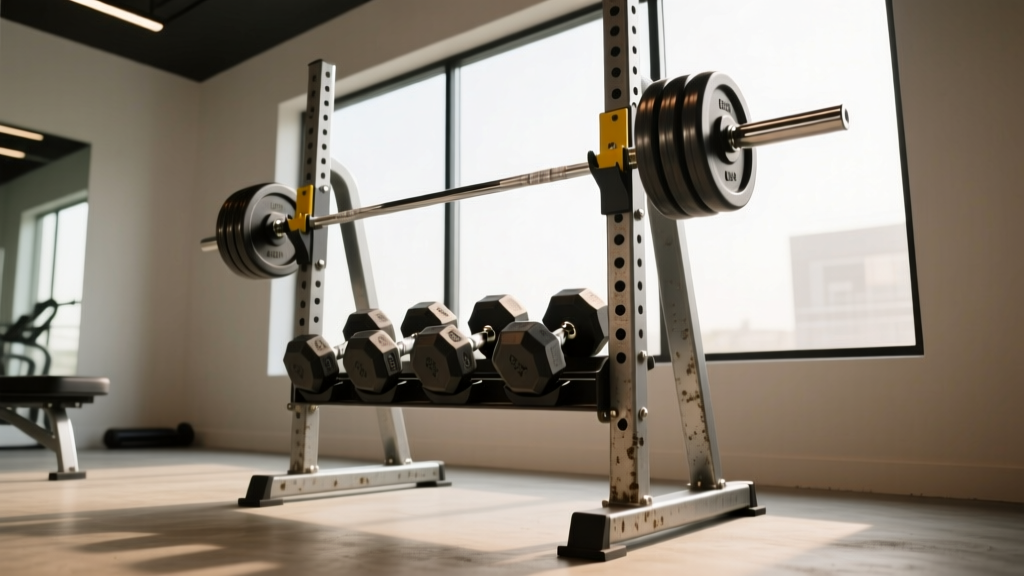
Dumbbell Rack Care for Heavy Compound Movements with Dumbbells
Learn essential maintenance and reinforcement tips to protect your dumbbell rack from the heavy impact of compound movements with dumbbells.

The Hidden Toll of Heavy Lifting on Storage Equipment
When designing a home or commercial gym, most lifters obsess over the quality of their barbells and plates, yet treat the storage equipment as an afterthought. However, if your programming relies heavily on compound movements with dumbbells—such as heavy Romanian deadlifts, goblet squats, walking lunges, and floor presses—your dumbbell rack is subjected to extreme mechanical stress. Unlike selectorized machines where weight is smoothly pinned, free weight compound circuits demand repeatedly loading and unloading massive iron or urethane bells. When fatigue sets in during the final reps of a heavy set, users rarely place 100-pound dumbbells gently back onto the tier; they drop, slam, and scrape them.
This repetitive impact accelerates metal fatigue, compromises tier welds, and degrades the structural plumb of your rack. In 2026, with commercial-grade dumbbell racks from brands like Rogue Fitness and Rep Fitness representing a significant financial investment (often ranging from $299 to over $600), proactive maintenance and strategic reinforcement are non-negotiable for longevity.
Expert Insight: Dropping a 100-lb hex dumbbell from waist height (approx. 36 inches) onto a steel rack tier generates an instantaneous impact force exceeding 450 lbs of shear stress on the tier's supporting welds. Over hundreds of cycles, this leads to micro-fractures that eventually result in catastrophic tier failure.Evaluating Rack Integrity: A Step-by-Step Inspection Protocol
To ensure your rack can withstand the rigorous demands of compound movements with dumbbells, you must implement a bi-annual inspection routine. According to biomechanical load analyses referenced by the National Strength and Conditioning Association (NSCA), asymmetric loading and dynamic impacts are the primary culprits behind equipment degradation in high-use facilities.
The 4-Point Structural Audit
- Weld Penetration Check: Inspect the underside of each tier where it meets the uprights. Look for hairline cracks or 'paint cracking'—a subtle indicator that the steel beneath is flexing and the weld is beginning to fail. Pay special attention to the bottom tier, which bears the heaviest dumbbells (70-120 lbs) and experiences the most violent drops.
- Hardware Torque Verification: If your rack uses bolt-together construction (like the Bells of Steel 3-Tier Rack), vibration from heavy drops will loosen M10 and M12 hex bolts. Use a calibrated torque wrench to tighten all structural bolts to the manufacturer's specification, typically between 60 and 80 ft-lbs. Apply a medium-strength threadlocker (e.g., Loctite 243) to prevent future backing out.
- Upright Plumb and Level: Place a 24-inch magnetic torpedo level against the main uprights. Heavy, off-center drops can slowly twist the base frame. If the uprights are out of plumb by more than 1/8th of an inch over 3 feet, the rack's load distribution is compromised, and the base feet must be shimmed or the floor anchors reset.
- Foot Pad and Base Inspection: Check the UHMW plastic or rubber foot caps. If they are cracked or compressed flat, the steel frame is grinding directly against your concrete floor, transferring shockwaves up the uprights and accelerating tier fatigue.
Material Degradation: How Dumbbell Coatings Affect Rack Tiers
The type of dumbbells you use for your compound movements directly dictates the wear pattern on your rack. A comprehensive equipment review by Garage Gym Labs highlights that the interaction between the dumbbell handle/head and the steel tier is a major factor in long-term equipment survival. Below is a comparison of how different dumbbell materials impact your storage solution.
| Dumbbell Material | Impact on Steel Tiers | Maintenance Requirement |
|---|---|---|
| Cast Iron (Chrome/Black Oxide) | Severe. Metal-on-metal contact strips the rack's powder coat, leading to rapid oxidation and deep gouges in the tier steel. | High. Requires tier padding and frequent rust treatment. |
| Virgin Rubber | Moderate. Absorbs vertical shock well, but the thick rubber heads can scrape and catch on tier edges during angled loading. | Medium. Clean tiers monthly to prevent rubber residue buildup. |
| Urethane (PU) | Low. Highly durable, dense, and smooth. Slides onto tiers with minimal friction and offers excellent shock dispersion. | Low. Standard visual inspections and wipe-downs. |
Upgrading and Reinforcing Your Storage Setup
If your training involves high-volume compound movements with dumbbells, relying on bare steel tiers is a recipe for premature equipment failure. Here are actionable, cost-effective methods to reinforce your current rack, whether you own a premium Rogue 3-Tier Dumbbell Rack (approx. $495) or a budget-friendly Rep Fitness SR-4300 (approx. $299).
1. The Horse Stall Mat Tier Liner Technique
Purchase a 3/4-inch thick, heavy-duty horse stall mat (typically $40-$50 at agricultural supply stores). Using a utility knife and a straight edge, cut precise strips that match the depth and width of your rack's tiers. Adhere these rubber strips to the steel tiers using 3M Super 77 Multipurpose Adhesive. This creates a sacrificial, high-density shock-absorbing layer that completely eliminates metal-on-metal impact, preserving the rack's powder coat and dampening the acoustic shockwave of dropping heavy bells.
2. Install UHMW Polyethylene Edge Guards
The front lip of a dumbbell rack tier takes the brunt of the abuse when users drag heavy dumbbells onto the shelf. Adhering 1/4-inch UHMW (Ultra-High-Molecular-Weight) polyethylene strips to the front edge of each tier provides a self-lubricating, incredibly tough surface that allows heavy dumbbell heads to slide up and over the lip without gouging the underlying steel.
3. Strategic Rack Placement and Anchoring
For racks holding pairs above 80 lbs, free-standing placement is a safety hazard during dynamic compound movements. If a user trips while holding 100-lb dumbbells and crashes into the rack, the lateral force can tip an unanchored unit. Always anchor the rear uprights to your wall studs or concrete floor using 3/8-inch wedge anchors or heavy-duty lag shields.
Environmental Factors: Rust, Humidity, and Preventative Coating
Even the most robust rack will fail if environmental degradation compromises the steel's tensile strength. According to exercise kinesiology databases like ExRx.net, proper facility management is just as critical as exercise selection for long-term safety. Humidity is the silent killer of gym equipment.
- Humidity Thresholds: Maintain your gym environment below 55% Relative Humidity (RH). In garage gyms or basements where RH frequently spikes above 70% during summer months, cold-rolled steel uprights will begin to oxidize, particularly in the micro-pores of the powder coating.
- Weld Point Protection: Welds are the most vulnerable points on a rack due to the thermal changes the metal undergoes during manufacturing, which can compromise the protective coating. Once a year, apply a thin layer of Fluid Film or a silicone-based protectant to all welded joints to displace moisture and halt creeping rust.
- Sweat and Chloride Corrosion: If you perform high-rep compound movements with dumbbells near the rack, airborne sweat droplets and direct hand contact transfer chlorides to the steel. Wipe down the top tier and handles of the rack weekly with a pH-neutral cleaner. Avoid bleach-based or highly acidic gym wipes, which will strip powder coatings and accelerate rust.
Frequently Asked Questions
How often should I inspect my dumbbell rack if I lift heavy daily?
If you are performing heavy compound movements with dumbbells 4 to 5 times a week, conduct a visual weld and hardware inspection every 3 months. Perform a full torque check on all bolts every 6 months. High-frequency, high-impact loading drastically accelerates hardware loosening.
Can I use a standard barbell rack to store heavy dumbbells?
While some lifters place dumbbells on the safety straps or J-cups of a power rack, this is not recommended for long-term storage. Barbell racks are engineered for linear, vertical loads along the X-axis, not the concentrated, asymmetric point-loads created by dumbbell heads resting on thin steel pins or straps. Dedicated dumbbell racks feature wider, gusseted tiers specifically designed for this load profile.
What is the safest way to load heavy dumbbells back onto the rack?
Never drop or slam the dumbbells. Grip the handles firmly, step close to the rack, and use your legs to absorb the descent. Slide the rear head of the dumbbell onto the tier first, then gently lower the front head. This controlled eccentric 'rack-in' minimizes shear force and can extend the life of your tier welds by years.
More gear to consider
All reviews
Barbell Collar Types & Tricep Exercises with Dumbbells for Women

Beyond the 15 Pound Dumbbells Workout: 2026 Loadable Plate Trends

Dumbbell Exercises for Underarms: Adjustable DB Review 2026

Best Loadable Dumbbells CrossFit Athletes Use for Small Spaces
Beyond the 30 lb Dumbbell: Cast Iron vs Competition Kettlebells
