
Power Rack vs Squat Rack: Best for Barbell or Dumbbell Bent Over Rows?
Compare power racks, squat racks, and squat stands to find the safest, most efficient setup for heavy barbell or dumbbell bent over rows in your home gym.

The Hidden Variable in Back Day Programming: Rack Footprint
When programming for posterior chain development, the debate over whether to prioritize the barbell or dumbbell bent over rows usually centers on muscle isolation, spinal loading, and grip width. However, home gym owners frequently overlook a critical hardware variable: how your rack configuration dictates the safety, range of motion, and execution of these heavy pulls. A setup that perfectly accommodates a heavy barbell Pendlay row might completely restrict the bench placement needed for heavy single-arm dumbbell rows.
In this head-to-head comparison, we evaluate the Power Rack (Full Cage), the Squat Rack (Half Rack), and the Squat Stand exclusively through the lens of back day execution. By analyzing upright depths, crossmember clearances, and spotter arm configurations, you will learn exactly which rig supports your specific rowing mechanics without compromising safety or spatial efficiency in 2026.
Biomechanics and Clearance: Why Rack Depth Matters
According to biomechanical analyses of spinal loading during hinged movements, maintaining a neutral spine under heavy loads requires precise bar path tracking and unrestricted eccentric lowering phases. When performing barbell bent over rows, the bar must often travel to the floor (Pendlay style) or just below the knee.
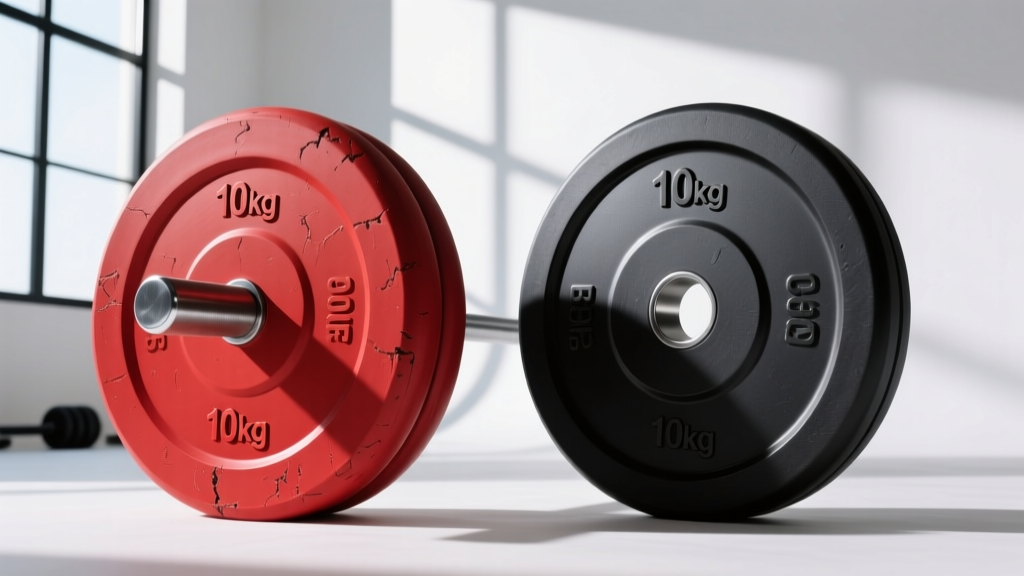
This introduces a major spatial conflict: bottom crossmember interference. A standard 45-pound Olympic bumper plate has a diameter of 17.7 inches, meaning the center of the barbell sits 8.85 inches off the floor at rest. If your squat stand or half rack features a low front crossmember positioned at 10 inches, the plates will clip the steel tubing before the bar touches the floor, ruining the dead-stop mechanics of the lift and potentially scratching your plates or destabilizing the rack.
The Dumbbell Row Dilemma: Bench Integration
Conversely, heavy single-arm dumbbell rows (often popularized as Kroc Rows) require an adjustable bench for torso support. To stay within the safety envelope of your spotter arms, the bench must be dragged into the rack. If your power rack is only 24 inches deep, the rear uprights will collide with the bench frame, forcing you to row outside the cage and negating the safety benefits of the rig.
Head-to-Head Equipment Matrix
Below is a structural comparison of the three primary rack categories, evaluated on their suitability for heavy horizontal pulling movements.
| Feature | Power Rack (Full Cage) | Squat Rack (Half Rack) | Squat Stand (Open) |
|---|---|---|---|
| Standard Depth | 30" to 41" (Internal) | 24" to 30" (External) | 18" to 24" (Base) |
| Upright Profile | 3x3" or 3x3.4" (11-gauge) | 3x3" (11-gauge) | 2x2" or 2x3" (Varies) |
| Barbell Row Clearance | Excellent (No front crossbar) | Good (Depends on crossmember height) | Poor to Fair (High tipping risk on floor resets) |
| Dumbbell Bench Fit | Excellent (If 30"+ depth) | Fair (Bench extends past uprights) | Excellent (360-degree open access) |
| Avg. Price Range (2026) | $650 - $1,200 | $450 - $850 | $180 - $400 |
| Top Model Example | Rep Fitness PR-4000 (v2) | Titan T-3 Half Rack | Rogue S-2 Squat Stand 2.0 |
Deep Dive: Power Racks for the Heavy Puller
The full power rack, such as the widely acclaimed Rep Fitness PR-4000 (v2) or the Rogue R-3, is the undisputed champion of safety. Because the front uprights are set back (usually 41 inches from the rear), there is zero front crossmember to interfere with a barbell path. You can perform heavy Pendlay rows, touching the plates to the rubber flooring with absolute freedom.
Expert Tip: The Westside Hole Spacing Advantage
When setting up pin-pipe safeties for bent over rows, you want the safeties set just below your knee hinge point to catch the bar if your lower back gives out. Power racks with 1-inch Westside hole spacing in the lower half allow you to micro-adjust these safeties with millimeter precision, a feature missing in most budget squat stands.
The Drawback: Power racks dominate floor space (often 4x4 feet or larger). Furthermore, if you opt for a shorter 80-inch cage to accommodate low ceilings, racking the barbell after a grueling set of bent over rows can feel claustrophobic, as you must navigate the bar around the front safety spotter arms to re-holster it in the J-cups.
Deep Dive: The Half Rack Compromise
Half racks, like the Titan T-3 Half Rack, offer an open-front design that bridges the gap between the cage and the stand. As highlighted in extensive testing by Garage Gym Labs, half racks provide the heavy-duty 3x3 upright stability of a cage but allow you to step forward freely. This is highly advantageous for standard barbell bent over rows where the bar starts from a hang position rather than the floor.
- Pro: You can leave the barbell on the floor in front of the rack, step into the footprint, hinge, and row without the bar path ever crossing the plane of the uprights.
- Con: Many half racks utilize a front stabilizer crossmember to prevent forward tipping. If this crossmember is not designed with a low-profile or recessed plate clearance, it will block 45lb plates from resting fully on the floor.
Deep Dive: Squat Stands and the Tipping Hazard
Squat stands are the minimalist's choice. Rigs like the Rogue S-2 Squat Stand 2.0 or the Bells of Steel Residential Stand consist of two independent uprights with extended base feet. For dumbbell bent over rows, squat stands are phenomenal. You can drag an adjustable bench directly between the uprights, set the safeties, and perform heavy unilateral pulls with zero steel tubing blocking your elbows or torso angle.
⚠️ Critical Failure Mode: The Eccentric Bump
Never perform heavy dead-stop barbell rows inside standard squat stands. When fatigued, the natural bar path of a bent over row drifts forward. If a 300+ lb barbell rolls forward and strikes the front base foot of a squat stand, the kinetic transfer can easily tip the entire stand forward, bringing the J-cups and barbell down onto your feet or shins.
According to equipment safety reviews on BarBend, squat stands must be bolted to a wooden platform or heavily sandbagged on the rear base feet if you intend to use them for any barbell movements that involve floor contact or aggressive forward momentum.
Decision Framework: Matching Your Rack to Your Row
To finalize your purchasing decision, apply this practical framework based on your primary training modality:
1. The Powerlifter / Strength Athlete (Barbell Dominant)
If your programming relies heavily on heavy, dead-stop Pendlay rows and strict barbell bent over rows, buy a 30-inch or 41-inch deep Power Rack. The enclosed cage ensures that if you lose your grip or your lumbar spine rounds under a 400lb load, the pin-pipe safeties will catch the bar before it compromises your hamstrings or lower back. Ensure the rack lacks a front floor crossmember.
2. The Bodybuilder / Hypertrophy Focus (Dumbbell Dominant)
If you prefer the deep stretch and unilateral isolation of heavy dumbbell bent over rows (Kroc rows, chest-supported variations), a high-capacity Squat Stand or an open-front Half Rack is superior. The open footprint allows you to position an adjustable FID bench at any angle without fighting the rear uprights of a full cage. Just ensure your dumbbells are stored on independent towers rather than rack-mounted cradles to save space.
3. The Garage Gym Generalist (Mixed Modality)
If you alternate between barbell and dumbbell bent over rows within the same mesocycle, the Half Rack with a recessed front crossmember offers the best compromise. It provides the tipping stability required for barbell work while leaving the front open enough to slide a bench in and out for dumbbell variations without requiring a 4-foot walking path inside the cage.
Final Thoughts on Rig Configuration
The choice between barbell or dumbbell bent over rows shouldn't just be a matter of muscle recruitment; it must be a conversation with your hardware. A $1,000 power rack is a liability if its 24-inch depth prevents your bench from fitting inside for dumbbell work. Conversely, a $200 pair of squat stands is a hazard if you attempt to use them for heavy barbell floor resets. Measure your plates, map your bar path, and select the rack that respects the biomechanics of the pull.
More gear to consider
All reviews
Rubber Hex vs Urethane Dumbbells: Space Layouts & Rotating Options
Beyond Holding Dumbbells: Bumper Plate vs Iron Plate Comparison

Best Loadable Dumbbells for a Complete Upper Body Dumbbell Workout (2026)
Barbell Collar and Clamp Types Comparison: Securing the Drag Curl with Dumbbells

Wide Grip Dumbbell Row Safety: Barbell Collars and Clamps Compared
