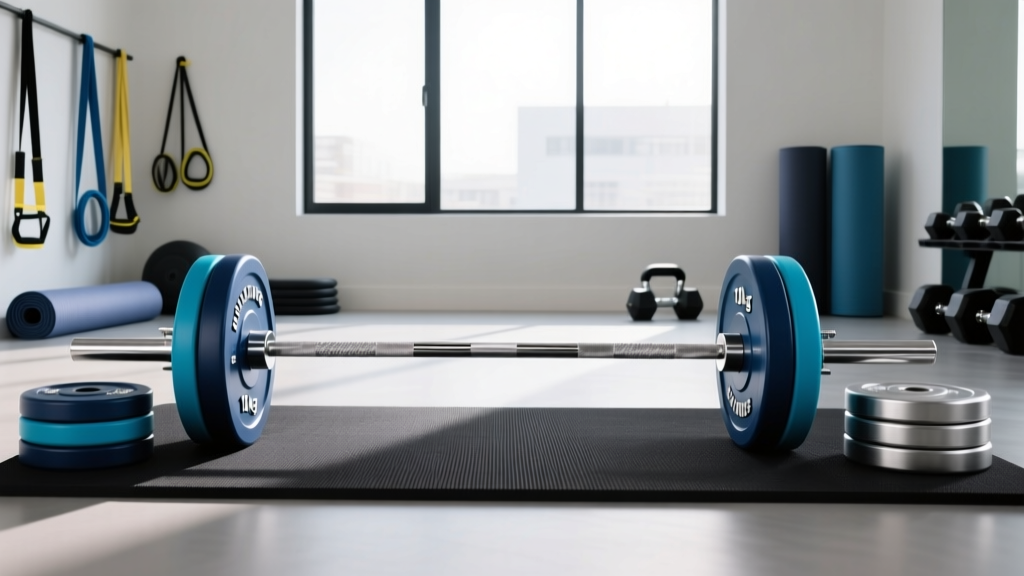
Power Rack vs Squat Rack vs Stand: Dumbbells & Cholinergic Fatigue
Troubleshoot power rack vs squat rack vs squat stand choices. Learn how equipment impacts CNS load, dumbbell flow, and cholinergic fatigue management.

The Neurological Bottleneck: Why Your Rack Choice Matters
When lifters hit a plateau or experience unexplained burnout, they rarely blame their equipment footprint. Yet, the choice between a full power rack, a traditional squat rack, and a minimalist squat stand dictates your workout flow, exercise variation, and ultimately, your Central Nervous System (CNS) recovery. In 2026, the most advanced home gym builders aren't just looking at steel gauge and hole spacing; they are troubleshooting how their rack setup influences exercise selection and neurological fatigue.
This guide addresses a highly specific, often overlooked troubleshooting angle: managing CNS taxation and cholinergic fatigue through strategic equipment selection and the integration of heavy dumbbell variations.
Power Rack vs. Squat Rack vs. Squat Stand: The Troubleshooting Matrix
Before we can troubleshoot your programming and fatigue, we must establish the physical constraints of your equipment. Below is a 2026 comparison matrix of the three primary barbell housing options.
| Equipment Type | Top 2026 Model Example | Footprint & Space | Safety & Spotter Capability | Avg. Price Range |
|---|---|---|---|---|
| Full Power Rack | REP Fitness PR-4000 (1000lb capacity) | 4x4 ft (Massive, requires dedicated zone) | Excellent (Full pin-pipe safeties, enclosed) | $1,199 - $1,899 |
| Squat Rack (Half Rack) | Titan T-3 Series Half Rack | 4x2 ft (Open front, wall-bolted or weighted) | Very Good (Front spotter arms, open escape) | $699 - $999 |
| Squat Stand | Rogue SML-2C Monster Lite Stand | 2x2 ft (Modular, easily moved/stored) | Moderate (Requires separate spotter arms) | $450 - $650 |
Common Mistake #1: Ignoring Cholinergic Depletion in Heavy Barbell Work
To troubleshoot why you are stalling on your barbell squats or feeling 'fried' after a session inside a full power rack, we have to look at exercise physiology. The cholinergic system relies on acetylcholine to drive muscle contraction and CNS arousal. Heavy, pinned barbell work (like maxing out in a power rack) demands massive, sustained CNS output, rapidly depleting cholinergic resources.
The Physiology of the Stall: When acetylcholine levels drop, you experience 'brain fog,' weakened grip strength, and a sudden inability to move submaximal weights. Lifters often misdiagnose this as a need for a better rack or more safety equipment, when the real issue is neurological depletion.
The Dumbbell & Cholinergic Fatigue Connection
How does this relate to your rack choice? A full power rack locks you into a barbell-centric workflow. When your CNS is taxed, you need to pivot to accessory work to maintain volume without redlining your cholinergic system. This is where dumbbells become the ultimate troubleshooting tool.
Dumbbell variations (like Bulgarian split squats or heavy goblet squats) require different stabilization patterns and joint angles, altering the CNS demand. However, if your garage gym is dominated by a massive 4x4 power rack, you often lack the open floor space required to safely execute heavy dumbbell movements. Research on cholinergic agonists like Alpha-GPC shows that supporting acetylcholine production helps, but modifying your physical training environment to allow for dumbbell integration is the most practical long-term fix.
Common Mistake #2: Overbuying the Power Rack for a Garage Gym
Many lifters default to buying a full power rack, assuming it is the 'safest' and most complete option. But in a standard 2-car garage gym, a full rack creates a spatial bottleneck.
- The Mistake: Placing a 4x4 power rack in the center of the gym, leaving no clearance for heavy dumbbell lunges, farmer's carries, or open-floor mobility work.
- The Fix: Downsize to a Squat Stand or a Half Rack. Squat stands like the Rogue SML-2C Monster Lite can be unbolted and pushed against a wall in seconds, instantly converting a barbell zone into an open dumbbell and kettlebell training floor.
Troubleshooting Space, Safety, and Flow: A Step-by-Step Guide
If you are currently experiencing workflow issues or fatigue mismanagement, follow this 4-step troubleshooting protocol to optimize your free weight and rack setup.
Step 1: Audit Your Hole Spacing and J-Cup Heights
If you are wasting energy unracking heavy weights, your CNS is taxed before the set even begins.
- Standard Spacing (2-inch): Fine for general lifting, but frustrating for bench press and low-bar squats where an inch matters.
- Westside Spacing (1-inch in the bench zone): Mandatory for serious lifters. If your current rack lacks this, troubleshoot by purchasing aftermarket 1-inch spaced uprights or swap to a modern rack like the Titan Fitness X-2 Squat Stand which features precision laser-cut hole spacing.
Step 2: Evaluate Your Spotter Arm Clearance
A common mistake with squat stands is buying spotter arms that are too short (e.g., 18 inches). If you fail a heavy squat, an 18-inch arm might not catch the barbell if you pitch forward. Troubleshooting rule: Always buy spotter arms that extend at least 24 inches past the uprights, or upgrade to a Half Rack with integrated flip-down safeties.
Step 3: Implement the 'Barbell-to-Dumbbell' CNS Pivot
Structure your training blocks to manage cholinergic fatigue. Use the rack for your primary heavy barbell movement (e.g., 3 sets of 5 squats). Once the CNS arousal peaks and grip strength begins to fail, immediately transition to the open floor space created by your squat stands for heavy dumbbell accessory work. This maintains hypertrophy stimulus while allowing the cholinergic system to recover from the intense isometric tension of barbell stabilization.
Step 4: Check Upright Gauge and Weight Capacity
Do not compromise on steel thickness. In 2026, the industry standard for safe, wobble-free lifting is 11-gauge steel with a 3x3 inch profile. If your current squat stand uses 2x2 inch 14-gauge steel and shakes during barbell re-racking, it is a safety hazard. Upgrade to 3x3 uprights with 5/8-inch hardware for a commercial-grade feel.
Frequently Asked Questions (FAQ)
Can I use a squat stand safely without a spotter?
Yes, but only if you purchase extended spotter arms (minimum 24 inches) and use the 'dump and roll' technique for squats, or ensure you are lifting within your RPE 8 limits. For bench pressing alone without a spotter, a full power rack with cross-members and pin-pipe safeties is highly recommended over a squat stand.
Why do I feel more fatigued after power rack squats than dumbbell lunges?
Barbell squats require full-body isometric contraction and massive spinal loading, which heavily taxes the CNS and depletes acetylcholine (the cholinergic neurotransmitter). Dumbbell lunges, while painful, distribute the load differently and require less peak CNS arousal, resulting in less systemic neurological fatigue.
Is a half rack better than a squat stand for dumbbell integration?
A half rack offers better safety for barbell work but has a fixed footprint. A squat stand offers superior versatility for dumbbell integration because the uprights can be completely removed from the training area, maximizing your usable floor space for free weight movements.
More gear to consider
All reviews
Best Dumbbell Racks for All Dumbbell Exercises: 2026 Review

Front Squats With Dumbbells: Loadable Dumbbell Care & Longevity

Loadable Dumbbell Maintenance for a Perfect Static Dumbbell Hold

Barbell Collar Types & Setup for a Dumbbell Lateral Raise Drop Set

Best Neoprene Dumbbells for the Single Leg Dumbbell Squat (2026)