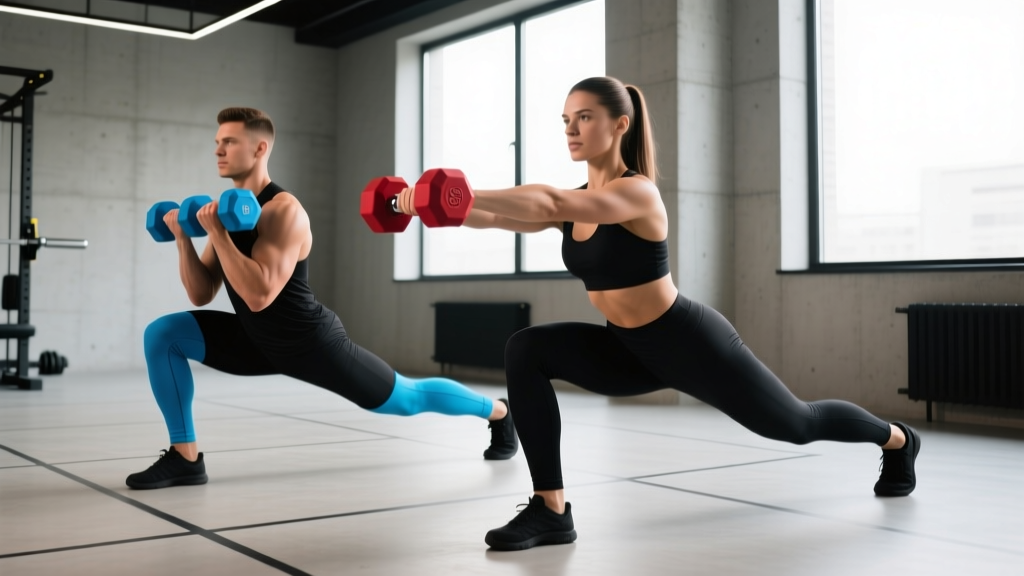
Power Rack vs Squat Rack vs Stand: Push Press With Dumbbells
Compare power racks, squat racks, and squat stands for overhead lifting. Discover the best setup for a safe push press with dumbbells in your home gym.

The Overhead Dilemma: Clearance and Safety in the Home Gym
Building a functional home gym in 2026 requires balancing spatial constraints with lifting ambitions. While barbell squats and bench presses usually dictate the initial equipment purchase, overhead movements present a unique set of engineering challenges. Specifically, executing a push press with dumbbells demands explosive vertical clearance, lateral stability, and precise safety spotter placement. Choosing between a full power rack, a half squat rack, and a minimalist squat stand is not just a matter of budget; it is a matter of biomechanical compatibility with your ceiling height and training style.
According to Mayo Clinic's strength training safety guidelines, maintaining proper form and a safe environment during overhead pressing is critical to avoiding shoulder impingements and catastrophic equipment failure. In this head-to-head comparison, we break down how each rack type handles the unique demands of heavy dumbbell overhead work.
Quick Definitions: The Rack Hierarchy
- Full Power Rack: A four-post steel cage with top and bottom crossmembers (e.g., REP PR-4000, Rogue RM-3).
- Squat Rack / Half Rack: A two-post open-top design with a rear base for spotter arms (e.g., Titan T-2, Rogue SML-2).
- Squat Stand: Two independent or lightly braced uprights with a minimal footprint (e.g., Rogue S-2, Fitness Reality X-Class).
1. Full Power Racks: Maximum Safety, Minimum Freedom?
Full power racks are the gold standard for heavy barbell lifting, constructed from 11-gauge 3x3-inch steel. However, for a push press with dumbbells, they can be surprisingly restrictive. The primary issue is vertical clearance. A standard power rack features 90-inch uprights. When you add the length of a 15-inch dumbbell, plus your arm length and the biomechanical lockout position, you need a minimum ceiling height of 115 inches (9.5 feet) to perform the movement inside the cage without smashing the weights into the top crossmember.
Pros and Cons for Overhead Dumbbell Work
- Pros: Unmatched safety. If you fail a rep, the interior safety straps or spotter arms will catch the dumbbells. You can also attach lat pulldown and cable attachments for a complete gym setup.
- Cons: The top crossmembers physically block overhead lockout for athletes taller than 5'8' in standard 8-foot ceilings. You are forced to step outside the rack to finish the push press, negating the safety of the interior spotters.
Expert Insight: If you must buy a power rack for dumbbell overhead work in a standard room, opt for a 'Short' 72-inch model like the Rogue S-1 or a custom-cut REP PR-4000. This allows you to stand inside the rack, press overhead without hitting the ceiling, and still utilize safety arms set at shoulder height.
2. Squat Racks (Half Racks): The Open-Top Compromise
Half racks, such as the highly popular Titan Fitness T-2 or the Rogue SML-2 Monster Lite, feature two main uprights and an extended rear base to support long safety spotter arms. Because there is no top crossmember connecting the uprights above your head, they are vastly superior for tall athletes performing a push press with dumbbells indoors.
The open-top design means your ceiling height is the only limiting factor. Furthermore, the extended base provides excellent forward-and-backward stability, which is crucial when you are utilizing aggressive leg drive to propel heavy dumbbells upward. However, lateral (side-to-side) stability can be a weak point if the rack is not bolted to a platform or loaded with rear weight storage pegs.
'When performing explosive Olympic-style movements like the push press, the lateral torque applied to the equipment is immense. Half racks must be counterbalanced with heavy weight plates on the rear storage horns to prevent tipping during a failed dumbbell dump.' — BarBend's expert equipment reviews
3. Squat Stands: Budget-Friendly but Risky?
Squat stands like the Rogue S-2 Squat Stand 2.0 or the Fitness Reality X-Class are essentially two independent metal posts. They are incredibly affordable (typically $200 to $350 in 2026) and take up barely any floor space. For strict, slow military presses, they are adequate. But for a dynamic push press with dumbbells? They present significant edge-case dangers.
The failure mode of a squat stand during overhead work is lateral tipping. If you push off-center or need to dump a heavy 80 lb dumbbell to your side due to shoulder fatigue, the kinetic energy can easily tip an unanchored squat stand. To use squat stands safely for overhead dumbbell work, you must bolt them to a reinforced wooden platform or use specialized ground-anchoring brackets. Furthermore, many budget squat stands lack adequate spotter arm placements for dumbbells, meaning you are entirely unshielded if you fail a rep at the apex of the movement.
Feature Comparison Matrix: Specs & Overhead Viability
| Feature | Full Power Rack | Half Rack / Squat Rack | Squat Stand |
|---|---|---|---|
| Avg. Price (2026) | $699 - $1,200+ | $350 - $650 | $200 - $350 |
| Footprint | 48' x 48' (16 sq ft) | 48' x 60' (20 sq ft) | 24' x 36' (6 sq ft) |
| Standard Upright Height | 90' (Blocks overhead) | 90' (Open top) | 72' to 92' |
| Push Press DB Clearance | Poor (Requires stepping out) | Excellent | Excellent |
| Lateral Stability | Maximum (4-post cage) | Moderate (Needs rear weight) | Poor (Must be bolted) |
| Safety Spotter Efficacy | High (Interior straps) | High (Long catch arms) | Low (Narrow catch zone) |
Biomechanics: Executing a Safe Push Press With Dumbbells
Regardless of the rack you choose, setting up your equipment correctly for the push press is non-negotiable. The push press relies on a dip-and-drive mechanic. Therefore, your safety spotters must be placed to catch the dumbbells at the bottom of the dip, not at the overhead lockout position.
- Spotter Arm Placement: Set your safety arms or straps exactly 2 to 3 inches below the bottom of your dumbbell dip position. If you set them too high, you will crash the dumbbells into the steel arms during your leg drive, risking wrist and shoulder injuries.
- The Stance: Stand slightly behind the centerline of the rack. This ensures that if your core gives out and the dumbbells drift backward, they will hit the safety arms rather than your face or clavicle.
- The Dump Protocol: Never attempt to catch a failed overhead dumbbell rep on the way down with your shoulders. If you miss the lockout, open your hands and let the dumbbells drop straight down to the safety straps or the floor. According to sports medicine literature on shoulder mechanics, eccentric loading of a failed overhead press is a primary cause of rotator cuff tears.
The Ceiling Height Factor: A Mathematical Reality Check
Before purchasing any rack for overhead dumbbell work, run this exact formula based on your anthropometrics:
Standing Reach + Dumbbell Length (approx. 15') + 4' (Clearance) = Minimum Ceiling Height
For a 6-foot tall athlete with a 7-foot standing reach, adding a 15-inch dumbbell and 4 inches of safety clearance equals 91 inches (7 feet 7 inches). If you have standard 8-foot (96-inch) ceilings, a 90-inch power rack will leave you with only 6 inches of clearance above the rack—meaning you will strike the crossmember during a full lockout. This math is exactly why the half rack or a 72-inch short power rack dominates the home gym market for overhead athletes.
Final Verdict: Which Should You Buy?
If your training heavily prioritizes the push press with dumbbells alongside heavy barbell work, the Half Rack (Squat Rack) is the undisputed champion of the home gym. It provides the open-top clearance necessary for full lockout while offering robust safety spotter arms for when you reach muscular failure. Models like the Titan T-2 or Rogue SML-2 offer the perfect intersection of safety, spatial efficiency, and overhead freedom.
Reserve the Full Power Rack for commercial spaces or garages with 10-foot+ ceilings, and relegate the Squat Stand to strict budget setups where the user is willing to bolt the uprights into a reinforced concrete or wooden platform.
Frequently Asked Questions
Can I use a squat stand for heavy dumbbell overhead presses?
You can, but it is highly discouraged unless the stands are bolted to the floor. The lateral force generated during a heavy push press can easily tip freestanding squat stands, leading to severe injury or property damage.
Are safety straps better than steel spotter arms for dumbbells?
Yes. UHMW plastic-lined safety straps (like those offered by REP Fitness and Rogue) are vastly superior for dumbbell work. They catch the knurled handles without damaging the chrome or aluminum, and they reduce the bounce-back effect that occurs when heavy rubber hex dumbbells hit solid steel rails.
More gear to consider
All reviews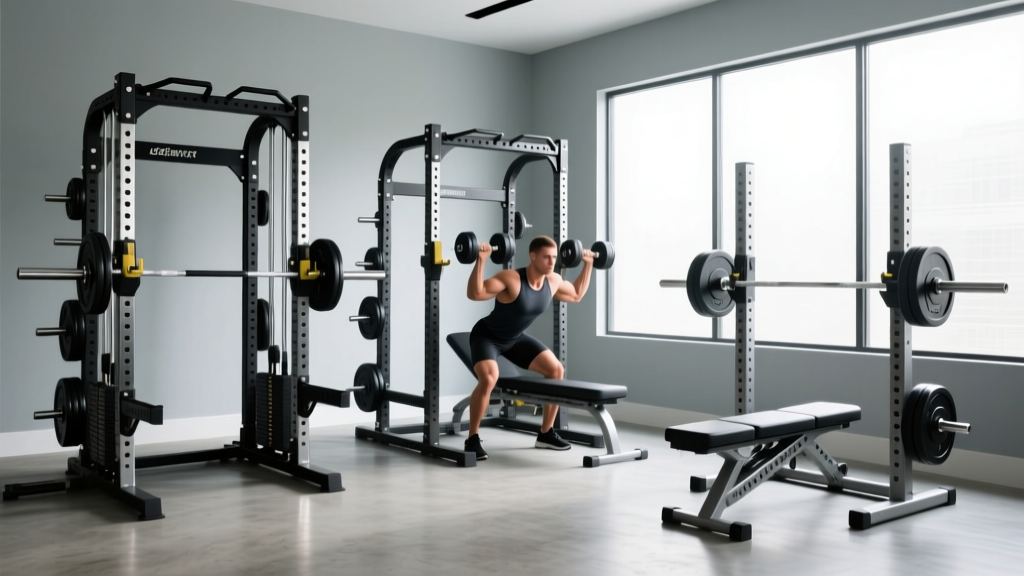
Power Rack vs Squat Rack vs Squat Stand: Incline Dumbbell Raises

EZ vs Straight Bar: Enhancing the Single Arm Dumbbell Preacher Curl
EZ Curl vs Straight Bar: Space Layout & Dumbbell Image
Rubber Hex vs Urethane: 2026 Gear for a Biceps Routine With Dumbbells
EZ Curl Bar vs Straight Bar & What Does Dumbbell Pullover Work