
Rack Maintenance for Standing Dumbbell Workouts: Storage & Care
Learn how standing dumbbell workouts impact your rack and storage. Expert maintenance tips, hardware audits, and material care for longevity.

The Hidden Toll of Standing Dumbbell Workouts on Storage
As functional fitness programming continues to dominate home and commercial gym spaces in 2026, the prevalence of standing dumbbell workouts has surged. Movements like standing overhead presses, dumbbell Romanian deadlifts (RDLs), and walking lunges are staples for building athletic power and core stability. However, while most lifters obsess over the biomechanics of the lift itself, few consider the mechanical toll these routines take on their dumbbell rack and storage solutions.
When performing seated exercises, dumbbells are typically rested on the knees and gently placed back onto a rack. Standing dumbbell workouts, conversely, involve a "standing return". Fatigued after a heavy set of standing goblet squats or renegade rows, lifters often return 50lb to 100lb dumbbells to the rack from waist or chest height. This creates high-impact shear forces, micro-vibrations, and severe torque on the rack’s welded joints, tray lips, and adjustable cradle mechanisms. According to training principles outlined by the National Strength and Conditioning Association (NSCA), the deceleration phase of any functional movement generates significant ground-reaction and equipment-reaction forces. If your storage solution isn't maintained to absorb this specific type of abuse, you risk catastrophic hardware failure, ruined knurling, and broken adjustable selector pins.
Rack Typology: Vulnerability Matrix for Standing Returns
Not all racks handle the aggressive re-racking associated with standing routines equally. Below is a vulnerability matrix comparing the most popular storage architectures on the market, analyzing how they withstand the unique drop-angles of standing exercises.
| Rack Architecture | Popular 2026 Models | Price Range | Primary Failure Mode (Standing Workouts) | Maintenance Focus |
|---|---|---|---|---|
| 3-Tier Horizontal | Rep Fitness 3-Tier, Titan 3-Tier | $179 - $249 | Tray lip deformation from dropping heavy hex DBs from waist height. | Weld inspection; tightening 14mm tier bolts. |
| Rack-Mount Shelves | Rogue RM-6 Monster, PRx Wall-Mount | $150 - $210 | UHMW plastic liner gouging; mounting bracket shear. | Liner replacement; checking lag bolt torque in studs. |
| A-Frame Vertical | CAP Barbell A-Frame, Marcy A-Frame | $60 - $95 | Tipping hazard during unilateral standing lunges; base weld fatigue. | Base plate leveling; anti-tip wall-tethering. |
Adjustable Dumbbell Cradle Maintenance: The Dust Factor
Standing dumbbell workouts often incorporate dynamic footwork, such as walking lunges or lateral raises. This foot traffic kicks up microscopic dust, chalk, and rubber debris from the gym floor. When you return adjustable dumbbells (like Nuobell 80lbs, PowerBlock Elite EXP, or Bowflex SelectTech) to their cradles, this debris is pushed directly into the cradle tracks and the dumbbell's internal selector mechanisms.
By mid-2026, the most common warranty claim for adjustable dumbbells isn't dropping damage—it's dust-induced dial failure. The selector dials jam, or the internal retaining pins fail to engage because the cradle hasn't been cleaned.
The 3-Step Cradle Purge
- Compressed Air Flush: Once a month, use a can of compressed air (or an air compressor set to a maximum of 50 PSI) to blow out the tracks of the storage cradle. Do this before wiping down the cradle to avoid turning dust into a paste.
- Track Lubrication: Apply a microscopic amount of PTFE (Teflon) dry lubricant to the plastic guide rails of the cradle. Never use WD-40 or wet silicone sprays, as these attract more dust and will eventually gum up the adjustable dumbbell's dial mechanism.
- Alignment Verification: Standing returns often result in the dumbbell being placed slightly crooked in the cradle. Over time, this bends the plastic alignment tabs. Check these tabs quarterly and gently bend them back to a true 90-degree angle using a heat gun on a low setting if they have warped.
Step-by-Step Quarterly Hardware Audit
The kinetic energy transferred to a rack when dropping 70lb dumbbells from a standing position can loosen structural hardware over time. According to biomechanics data referenced by ExRx.net, the force multiplier of a dropped weight can exceed its static resting weight by up to 3x depending on the drop height. To prevent rack wobble and catastrophic weld failure, implement this quarterly audit:
- Step 1: The Torque Check. Using a torque wrench and the appropriate hex socket (usually 14mm or 15mm for commercial racks), tighten all structural tier bolts to 60 Nm (Newton-meters). Do not overtighten, as this can strip the threads on cheaper import racks.
- Step 2: Threadlocker Application. If you find bolts that have loosened more than a quarter-turn, remove them completely. Apply a single drop of Loctite Blue 242 (medium strength, removable) to the threads before reinstalling. Never use Red Loctite on gym equipment hardware.
- Step 3: Weld Penetrant Inspection. Shine a high-lumen LED flashlight along the inside corners of the tray welds. Look for hairline rust streaks—this is a telltale sign of micro-fractures in the weld bead caused by repetitive impact from standing returns. If spotted, the weld must be re-touched by a professional TIG welder immediately.
Material Chemistry: Caring for Urethane vs. Rubber Coatings
The type of dumbbell you use in your standing routines dictates how you must maintain both the weight and the rack tray. The friction of dragging a dumbbell across a rack tray while fatigued will degrade coatings if not properly maintained.
"The biggest mistake gym owners and home-gym builders make is treating polyurethane and virgin rubber the same way. Using harsh degreasers on urethane will cause micro-fissuring, while failing to condition rubber will lead to dry-rot and a permanently foul odor." — Industrial Polymer Maintenance Guidelines
Urethane (Premium Dumbbells)
Urethane is highly resistant to UV light and moisture, making it the gold standard for 2026. However, it is susceptible to chemical degradation from alcohol-based cleaners. To clean urethane dumbbells and the urethane-lined trays of high-end racks (like the Rogue RM-6), use only a mild dish soap diluted in warm water (1:10 ratio). Wipe with a microfiber cloth. Never use Simple Green, bleach, or isopropyl alcohol on urethane.
Virgin Rubber (Budget/Mid-Tier Dumbbells)
Rubber coatings dry out and oxidize, especially in garages where temperature fluctuations are extreme. To maintain rubber-coated hex dumbbells and prevent them from leaving black scuff marks on your rack trays, apply a water-based UV protectant (like 303 Aerospace Protectant) every six months. This keeps the rubber supple and prevents the "gym smell" caused by off-gassing degrading polymers.
Optimizing Rack Height for the "Standing Return"
Finally, longevity isn't just about cleaning; it's about ergonomic setup. If your top tier is too low, you will naturally drop or scrape the dumbbells against the rack edge when returning them from a standing shoulder press. For optimal equipment preservation, the top tier of your dumbbell rack should sit exactly at the height of your hip crease (roughly 36 to 40 inches from the floor for most adults). This allows you to hinge slightly at the hips and slide the dumbbells onto the tray with zero vertical drop, eliminating impact shear entirely. Measure your hip crease height, and if your current rack is too low, consider adding heavy-duty rubber caster wheels with locking brakes to the base to elevate the entire unit safely.
By understanding the unique mechanical stresses that standing dumbbell workouts place on your equipment, and by adhering to a strict, chemistry-aware maintenance schedule, you can easily extend the lifespan of your storage solutions and adjustable dumbbells well past the decade mark.
More gear to consider
All reviews
Bumper vs Iron Plates: Bent Over Rows Dumbbell Bench Care
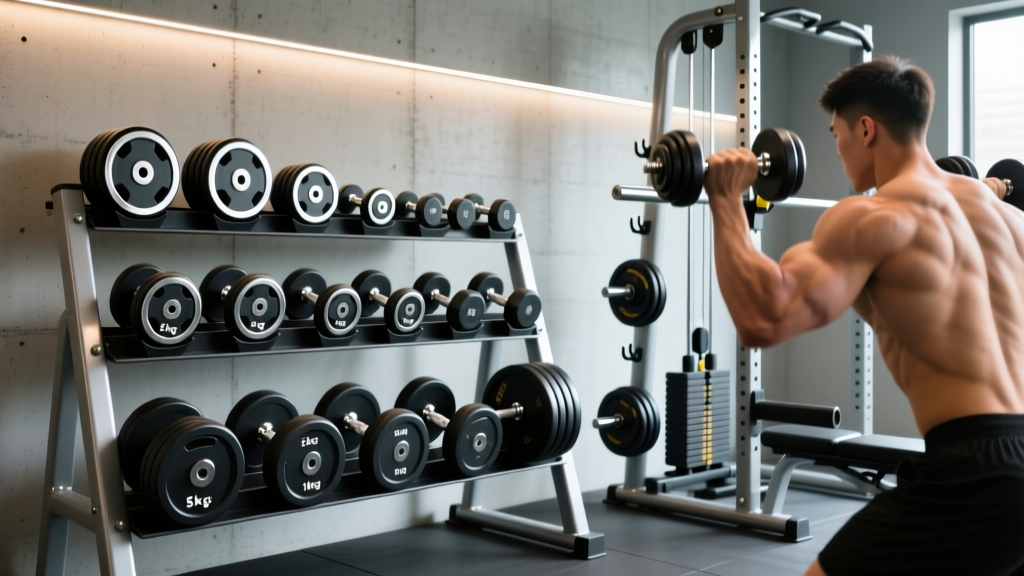
Home Gym Setup: Plate Types & Correct Dumbbell Press Form
Best Angle for Incline Dumbbell Press: Adjustable Dumbbell Showdown

Rubber Hex vs Urethane: Space Layouts & Dumbbell Bent Over Rowing
Maintaining Loadable Dumbbells for Flawless Cross Body Dumbbell Curls
