Dumbbell to Barbell Calculator Mistakes: Olympic vs Standard Plates
Discover common Olympic vs standard plate mistakes that ruin your dumbbell to barbell calculator math, and learn how to troubleshoot home gym setups.

The Hidden Variable Ruining Your Dumbbell to Barbell Calculator Math
You have spent months building a formidable dumbbell pressing strength and are finally ready to transition to the barbell. You log your stats into a popular dumbbell to barbell calculator, which confidently tells you that your 100-pound total dumbbell bench press equates to a 135-pound barbell press. You load up the bar, step up to the rack, and the weight feels impossibly heavy—or suspiciously light. What went wrong?
The hidden culprit derailing your strength progression is rarely your central nervous system; it is almost always a fundamental misunderstanding of weight plate types: Olympic vs standard. While online conversion calculators are excellent tools for estimating equivalent loads by factoring in the stabilizer muscles required for dumbbells, they operate on a strict assumption: you are using a standardized 45-pound (20kg) Olympic barbell and accurately calibrated Olympic weight plates. If your home gym is outfitted with standard 1-inch hole plates and a lightweight standard bar, the mathematical foundation of that calculator completely collapses.
⚠️ Troubleshooting Alert: A standard dumbbell to barbell calculator assumes a 45 lb barbell. If you are using a standard 15 lb bar with 1-inch plates, your actual loaded weight is 30 pounds lighter than the calculator's output. This discrepancy leads to massive overestimations of your 1-rep max and dangerous barbell overload attempts.Mistake #1: Confusing the 2-Inch vs. 1-Inch Sleeve Standard
The most catastrophic error home gym owners make when buying plates is ignoring the sleeve diameter of their barbell. According to BarBend's comprehensive guide on Olympic vs standard weight plates, the physical dimensions dictate not just compatibility, but the structural integrity of your lifts.
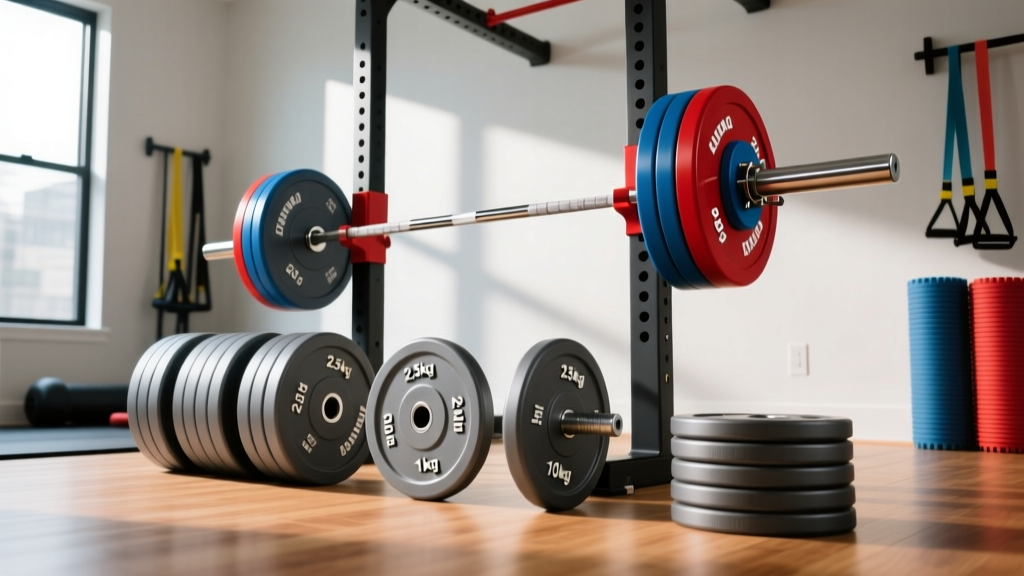
- Olympic Plates (2-Inch / 50mm): Designed for serious lifting. The large center hole fits over the thick, rotating sleeves of an Olympic barbell. These bars are engineered to handle dynamic loads exceeding 1,000 pounds and feature needle bearings that allow the sleeves to spin independently of the shaft.
- Standard Plates (1-Inch / 25mm): Typically cast iron with a smaller center hole, meant for lightweight, solid-shaft bars commonly found in big-box sporting goods stores. These bars lack rotating sleeves and generally have a maximum weight capacity of 200 to 300 pounds before they risk permanent bending or snapping.
The Failure Mode: Lifters often attempt to transition from heavy dumbbell work to barbell deadlifts using standard plates. Once the total load surpasses 250 pounds, the standard barbell begins to bend plastically. This not only ruins the bar but alters the mechanics of the lift, rendering any subsequent calculator conversions useless and dangerous.
Mistake #2: Ignoring Weight Tolerances and Diameter Shifts
When you use a dumbbell to barbell calculator, you are trusting that a "45-pound plate" actually weighs 45 pounds. In the realm of standard cast iron plates, this is a dangerous assumption. Economy standard plates are poured into sand molds with minimal quality control. It is incredibly common for a standard 45-pound plate to actually weigh anywhere from 41 to 48 pounds. When you load four of these onto a bar, your calculator's math is off by over 15 pounds.
Conversely, the International Weightlifting Federation (IWF) technical rules mandate that certified Olympic competition plates must be accurate to within 10 grams. Even high-quality consumer Olympic plates, like Rogue Fitness calibrated steel specifications, guarantee a tight tolerance that ensures your loaded bar matches your digital calculations exactly.
Furthermore, standard 45-pound plates often feature a smaller physical diameter (around 11 to 12 inches) compared to the universal 17.7-inch (450mm) diameter of Olympic 45-pound plates. If you are troubleshooting a stalled conventional deadlift after switching from dumbbell Romanian deadlifts, the smaller diameter of standard plates forces you to pull from a deficit, artificially increasing the range of motion and making the weight feel significantly heavier than the calculator predicted.
Mistake #3: The Adapter Sleeve Safety Hazard
A frequent troubleshooting question we see is whether lifters can use 1-inch to 2-inch adapter sleeves to use their old standard plates on a new Olympic barbell. While this seems like a cost-effective bridge, it introduces severe mechanical flaws.
Adapters add unnecessary lateral play, shift the center of gravity, and frequently crack under heavy eccentric loads. More importantly, they negate the spin of the Olympic barbell sleeve, transferring rotational torque directly into your wrists during Olympic lifts like cleans and snatches.
The Fix: If you are investing in an Olympic barbell to handle the heavy loads generated by your dumbbell-to-barbell progression, you must invest in Olympic plates. As of 2026, economy Olympic cast iron averages $1.50 to $2.00 per pound, making the safety upgrade highly accessible compared to the medical costs of a wrist injury from a locked-up barbell sleeve.
Troubleshooting Matrix: Olympic vs. Standard Weight Plates
| Feature | Standard Plates (1-Inch) | Olympic Plates (2-Inch) |
|---|---|---|
| Center Hole | 25mm (1 Inch) | 50mm (2 Inches) |
| Weight Tolerance | +/- 10% to 15% | +/- 1% (Calibrated: +/- 10g) |
| 45lb Plate Diameter | Variable (11 - 14 inches) | Standardized 17.7 inches (450mm) |
| Bar Compatibility | Solid shaft, non-rotating | Rotating sleeves with bushings/bearings |
| Max Safe Load | 200 - 300 lbs (Bar dependent) | 500 - 1,500+ lbs |
| 2026 Avg. Cost | $1.00 - $1.50 / lb | $1.75 - $9.00+ / lb |
Step-by-Step: Recalibrating Your Lifts After an Equipment Audit
If you suspect your equipment mismatch is sabotaging your strength conversions, follow this troubleshooting protocol to reset your baseline.
- Weigh Your Plates: Do not trust the casting numbers. Take a digital bathroom scale, weigh yourself, then weigh yourself holding each plate. Record the exact weight of every standard or economy Olympic plate in your gym.
- Identify Your Barbell Weight: Standard bars are rarely exactly 45 pounds; they are often 15, 20, or 30 pounds. Check the manufacturer stamp on the end of the shaft. If it is unmarked, weigh the empty bar using a luggage scale and a sling.
- Adjust the Calculator Input: Most advanced dumbbell to barbell calculators allow you to manually input the barbell weight. Change the default 45 lbs to your actual bar weight.
- Calculate True Load: Add the exact, weighed mass of your plates to the true weight of your bar. This is your actual working weight.
- Standardize Your ROM: If you are using standard plates with varying diameters, elevate your barbell on blocks or mats to match the 8.75-inch radius of a true Olympic 45-pound plate. This ensures your deadlift and rack pull ranges of motion remain consistent with your previous training cycles.
Frequently Asked Questions
Can I use a dumbbell to barbell calculator if I only have standard plates?
Yes, but you must manually adjust the output. The calculator will assume you are lifting a 45-pound Olympic bar. If you are using a 15-pound standard bar, you must mentally add 30 pounds to the calculator's suggested barbell load to achieve the same total systemic weight, though the stability demands will still differ.
Why do my standard plates crack when I drop them?
Standard cast iron plates are typically poured with higher carbon content and thinner cross-sections to save manufacturing costs. They are brittle and not designed for impact. If you are doing heavy barbell rows or drop-sets, you must upgrade to Olympic bumper plates or at least thick-cast Olympic iron plates to prevent shattering and floor damage.
Are Olympic plates worth the extra cost for a beginner?
Absolutely. The secondary market for Olympic plates is vastly superior to standard plates. If you outgrow your standard plates, they are nearly impossible to resell. Olympic plates retain immense resale value and allow you to safely scale your weights as your dumbbell-to-barbell conversions demand heavier, more precise loads.
More gear to consider
All reviews
Olympic vs Standard Plates: Shoulder Workouts with Dumbbells Women

Cast Iron vs Competition Kettlebells & Lat Dumbbell Trends

Neoprene Dumbbell Setup: The Best Tricep Dumbbell Exercise

Olympic Barbell Guide: Knurling & Lean In Dumbbell Lateral Raise

Dumbbell Chest Press Muscles Worked & Budget Storage Rack Breakdown