Barbell Collar Comparison: Securing the Dumbbell Row Without Bench
Compare the best barbell collar and clamp types for 2026. Learn which locking mechanisms secure heavy lifts and landmine dumbbell row without bench setups.

A barbell without a collar is a loaded weapon. Whether you are dropping 300 lbs on the platform or anchoring a landmine rig, your clamping mechanism is the only thing standing between a successful rep and a catastrophic plate slide.
When building a comprehensive free-weight setup, lifters obsess over barbell whip, plate calibration, and rack stability. Yet, the humble barbell collar is frequently an afterthought. In 2026, the market is saturated with spring clips, locking collars, and composite clamps, each claiming superior grip. But how do they actually perform under extreme lateral loads, repetitive drops, and angled sleeve setups?
In this head-to-head comparison, we break down the exact mechanics, failure modes, and real-world applications of the top barbell collar types. We will also explore a highly specific, often-overlooked use case: securing the barbell alternatives to the dumbbell row without bench, where gravity and sleeve angles turn inferior collars into safety hazards.
The Physics of Sleeve Tension and Barbell Whip
Barbell collars do more than prevent plates from sliding off; they fundamentally alter the kinematics of the bar. According to biomechanical analyses of Olympic weightlifting, a tightly secured collar reduces the harmonic oscillation (whip) of the barbell sleeve. When plates are loose, they create micro-impacts against the inner sleeve lip during the catch phase of a clean or snatch, destabilizing the lifter's wrists.
Expert Insight: The International Weightlifting Federation (IWF) mandates that competition collars must weigh exactly 2.5 kg (5.5 lbs). This mass is factored into the total lifted weight and is specifically designed to provide enough lateral compression to fuse the plates and barbell into a single, rigid lever.Head-to-Head Matrix: Spring vs. Locking vs. Clamp
| Collar Type | Mechanism | Clamping Force | Best Application | Avg. Price (Pair) |
|---|---|---|---|---|
| Olympic Spring | Tensioned Steel Coil | Moderate (Lateral) | Olympic Lifts, Bench Press | $40 - $70 |
| Locking (Aluminum) | Lever-Action Cam | Extreme (150+ lbs) | Landmine, Squats, Powerlifting | $40 - $55 |
| Composite Clamp | Plastic Jaw Squeeze | Low to Moderate | Light Accessories, Home Gyms | $20 - $35 |
2026 Contender Breakdown: The Big Three
1. Rogue Monster Locking Collars
Machined from high-grade aluminum with a rubberized grip, the Rogue Monster Locking Collars are the gold standard for commercial and serious home gyms. Weighing in at 0.75 lbs per collar, they utilize a cam-lever system that bites down on the 50mm sleeve with immense pressure.
- Pros: Unmatched lateral clamping force; will not slip on angled sleeves; highly durable metal construction.
- Cons: Heavier than spring collars; the rubber grip can degrade if left in direct UV sunlight for years.
- Price: ~$45.00
2. Eleiko Olympic Spring Collars
For Olympic weightlifters, the Eleiko Olympic Spring Collars remain undefeated. These are not the cheap $5 spring clips found on Amazon. Eleiko uses precision-calibrated steel tension designed to withstand the violent rotational forces of a missed snatch.
- Pros: IWF competition compliant (2.5 kg pair weight); rapid application; allows necessary micro-movements of plates during rotational bar whip.
- Cons: Requires significant hand strength to apply; can slip on heavily chalked, worn-down sleeves.
- Price: ~$65.00
3. Lock-Jawz Pro Clamps
Constructed from a proprietary glass-filled nylon composite, Lock-Jawz rely on a squeeze-and-snap plastic jaw mechanism. They are lightweight and incredibly easy to use, making them popular in high-volume CrossFit affiliates.
- Pros: Extremely fast to apply and remove; lightweight; inexpensive.
- Cons: Plastic teeth strip after repeated drops from overhead; prone to catastrophic cracking in cold garage gyms.
- Price: ~$30.00
The Landmine Connection: Securing the Dumbbell Row Without Bench Alternative
Why are we discussing barbell collars in the context of the dumbbell row without bench? The answer lies in exercise progression and biomechanical alternatives.
Many lifters rely on the dumbbell row without bench (often executed in a tripod stance with one hand braced on a rack or knee) to build unilateral back thickness and correct muscular imbalances. However, as athletes advance, 150 lb dumbbells become unwieldy, and the grip becomes the limiting factor before the lats are fully fatigued.
The ultimate heavy-duty alternative to the dumbbell row without bench is the Landmine T-Bar Row. This setup mimics the exact torso angle and unilateral pull of the dumbbell row, but utilizes a barbell anchored in a corner or landmine base. Here is where collar selection becomes a critical safety issue:
WARNING: Gravity Defeats SpringsWhen a barbell is placed in a landmine base for T-bar rows, the sleeve is angled diagonally upward. Gravity constantly pulls the weight plates down the sleeve toward the lifter's feet. Standard spring collars and plastic clamps rely on lateral friction, which is easily overcome by the downward gravitational shear of heavy plates on an angled sleeve. You must use a locking cam collar (like the Rogue Monster) for landmine rows to prevent plates from sliding off and crushing your feet.
Edge Cases and Real-World Failure Modes
Through extensive testing across various barbell brands, we have documented specific failure modes that manufacturers rarely advertise:
- The Chalk Buildup Factor: Locking collars feature an inner rubber gasket designed to grip the steel sleeve. In high-chalk environments, this gasket becomes packed with magnesium carbonate, turning it slick. Solution: Wipe the inner gasket with a damp microfiber cloth monthly to maintain friction coefficients.
- Sleeve Tolerance Variations: A standard Olympic sleeve is 50mm. However, cheaper, uncalibrated barbells often feature sleeves measuring 49.2mm to 49.5mm. Spring collars will fail to grip these undersized sleeves securely. Locking collars with adjustable cam depths can bridge this gap, but composite clamps will simply snap shut without applying adequate pressure.
- Cold Weather Brittleness: If you train in an unheated garage gym during winter, avoid composite plastic clamps (like Lock-Jawz). The nylon becomes brittle below 50°F (10°C) and is known to shatter when dropped from shoulder height.
Maintenance and Care for Longevity
To maximize the lifespan of your collars, implement a basic maintenance routine. For spring collars, periodically apply a light coat of 3-in-One oil to the steel coil to prevent rust, which increases friction and makes the collar harder to squeeze. For locking collars, inspect the cam hinge pin for metal fatigue. If the lever no longer snaps into the locked position with an audible click, the internal spring has failed, and the collar must be replaced immediately.
Frequently Asked Questions
Do I need collars for bench pressing?
Yes. While the sleeve is horizontal during a bench press, uneven loading or a slight tilt in the bench rack can cause plates to slide outward. Furthermore, if you fail a rep and have to dump the bar, loose plates will shift violently, potentially flipping the barbell and causing severe shoulder or neck injuries. Always use collars, but avoid locking collars if you train alone without a spotter, as you cannot safely dump the weights.
Can I use locking collars for Olympic weightlifting?
It is not recommended. Locking collars fuse the plates to the sleeve, eliminating the micro-movements that absorb rotational torque during the turnover phase of a clean and jerk. This can transfer excessive stress to the lifter's wrists. Use calibrated spring collars for Olympic lifts.
What is the best setup for a heavy dumbbell row without bench alternative?
Use a landmine base, an Olympic barbell, and a V-grip handle. Load your desired weight, and strictly secure the sleeve with a Rogue Monster Locking Collar. This provides the heavy, unilateral back stimulation of a dumbbell row without bench, while ensuring the angled plates remain safely locked in place.
Ultimately, your barbell collar is a vital piece of safety equipment. Match the mechanism to your specific training style, and never compromise on sleeve tension when performing angled or high-impact lifts.
More gear to consider
All reviews
Cast Iron vs Competition Kettlebells: Space & Different Dumbbells
Beyond Seated Dumbbell Workouts: Barbell Weight & Knurl Guide
Reverse Grip Dumbbell Curl: Rubber Hex vs Urethane Review
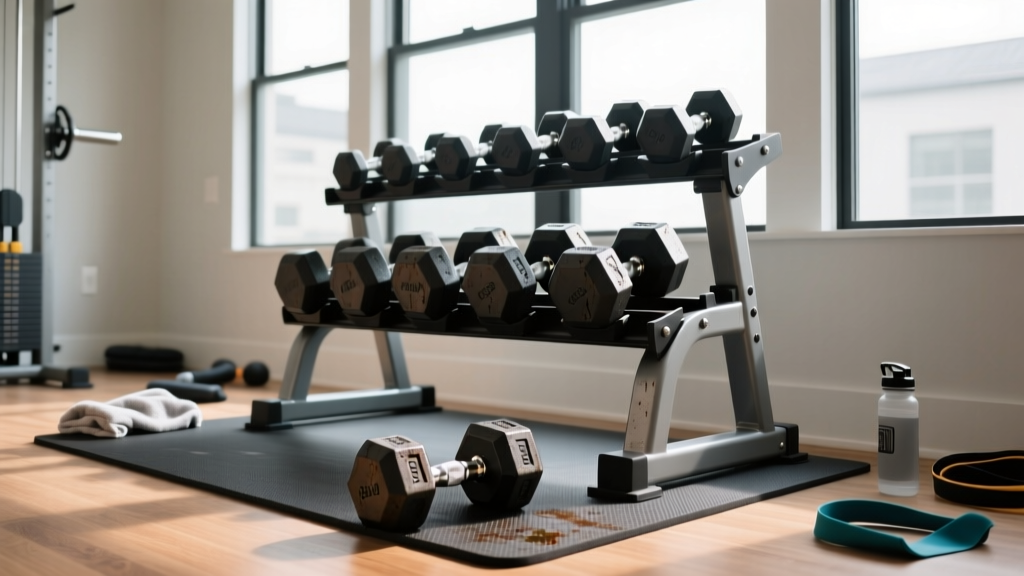
Dumbbell Rack Care and Storage After a Heavy Legs Dumbbell Workout

Budget Loadable Dumbbells for Your Three Day Dumbbell Workout